
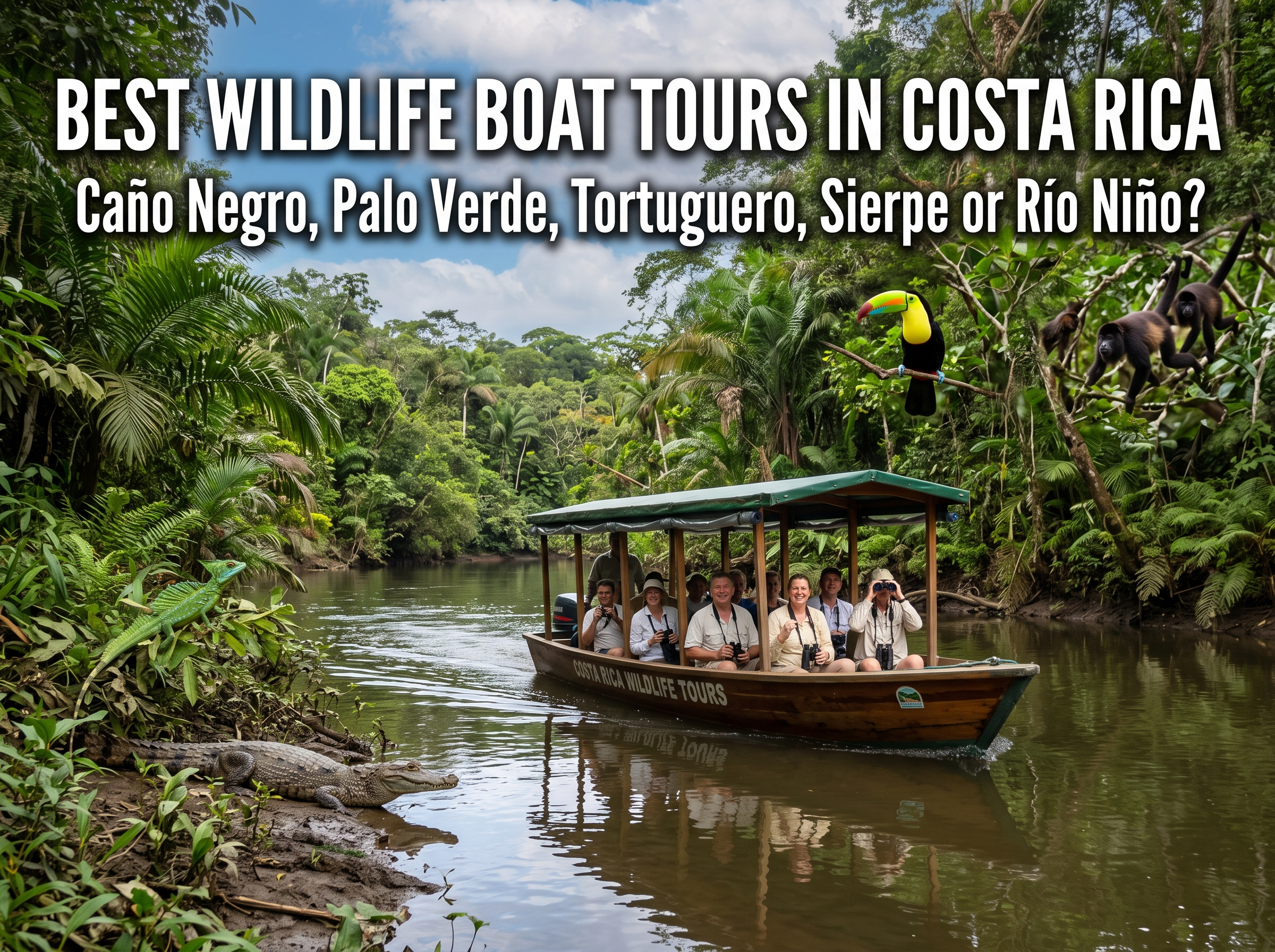
Costa Rica’s rivers, wetlands, canals and mangroves let travellers see the country from a completely different angle. But a boat trip through an open seasonal wetland is not the same experience as a narrow rainforest canal—and neither one is automatically the right choice for every family or photographer.
This guide compares five very different contenders for the best wildlife boat tours in Costa Rica: Caño Negro, Palo Verde, Tortuguero, Sierpe and our smaller Río Niño experience in the north. The goal is not to crown one universal winner. It is to help you choose the habitat, pace and travel route that fit your trip.
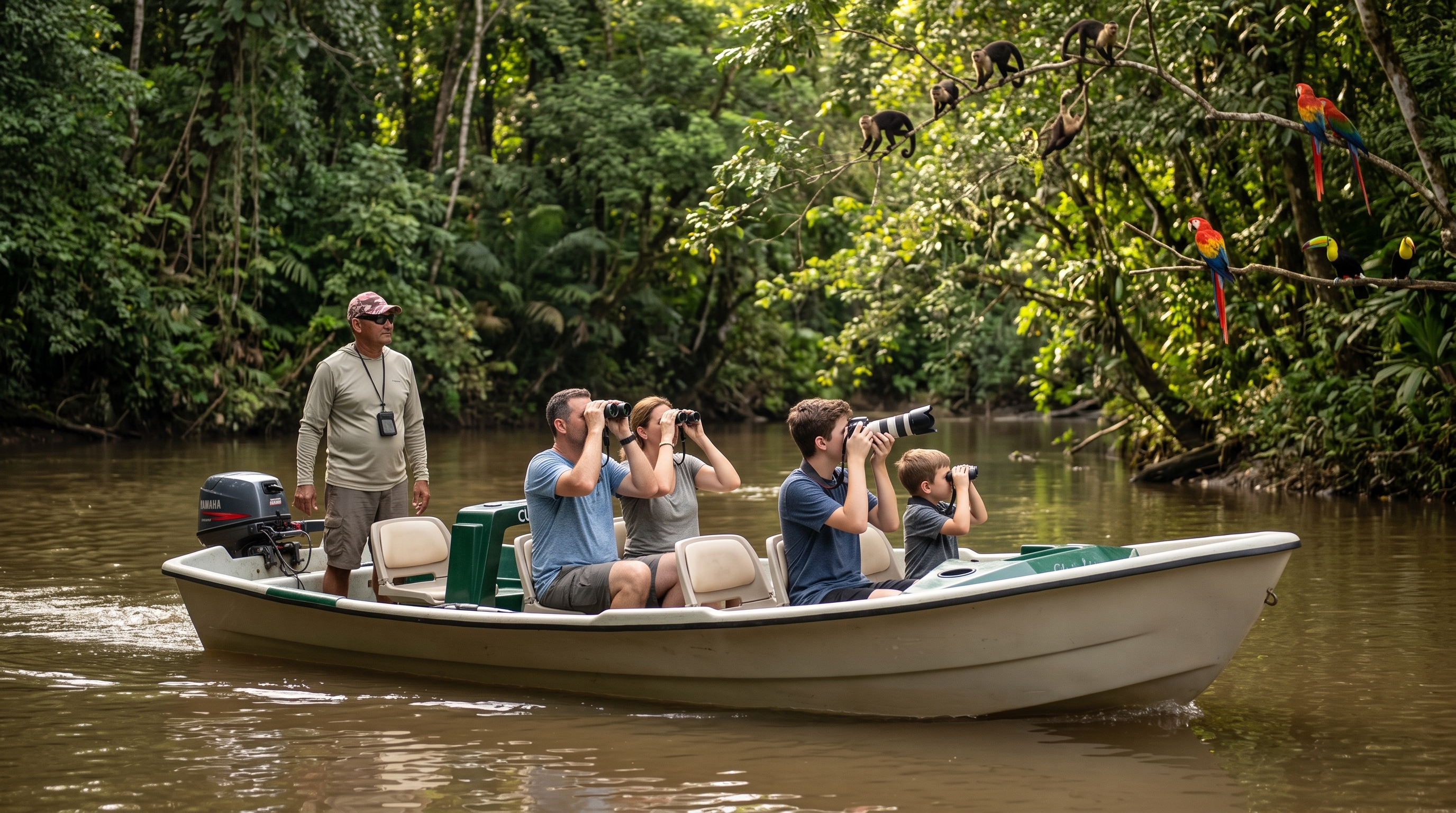
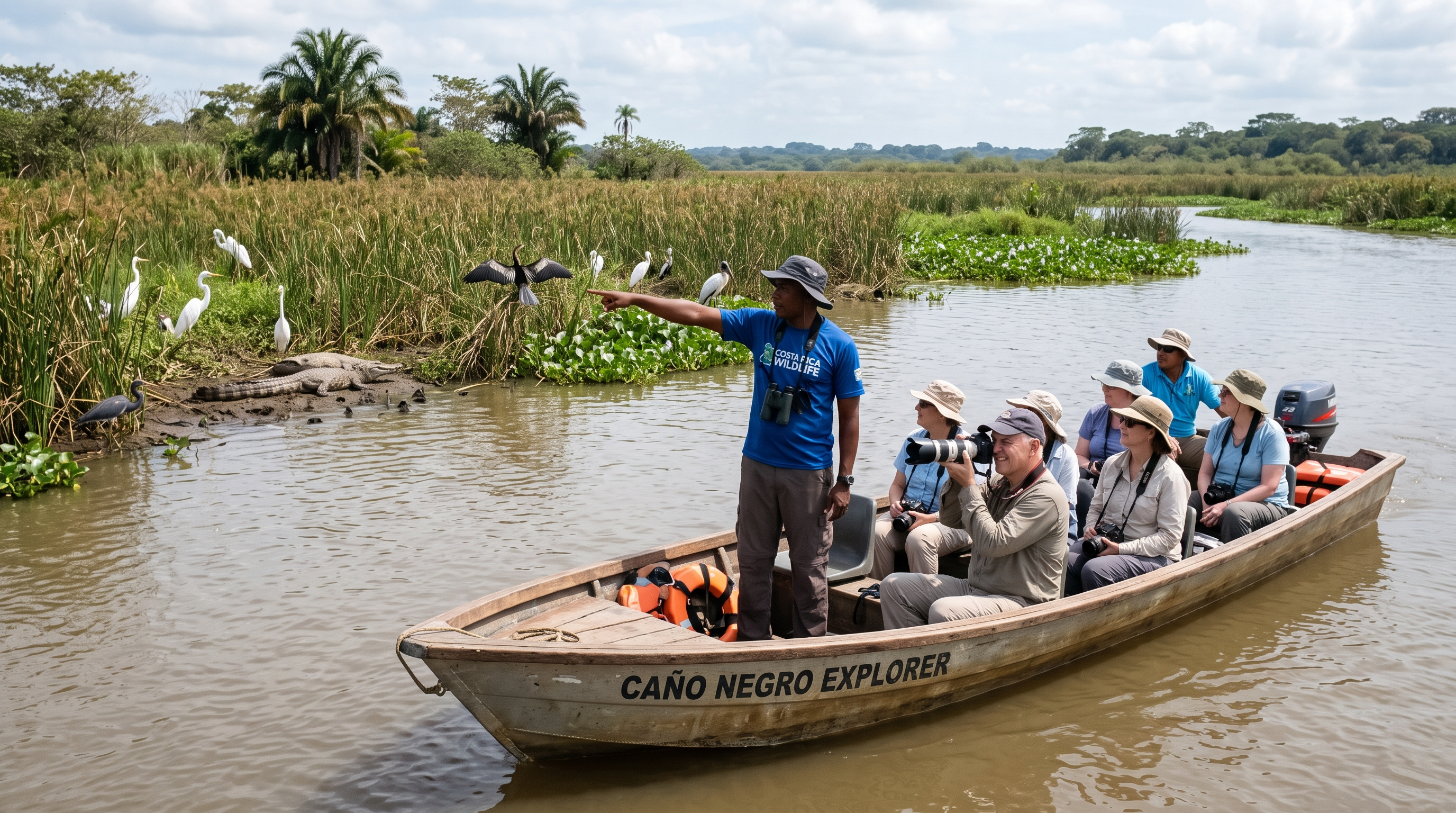
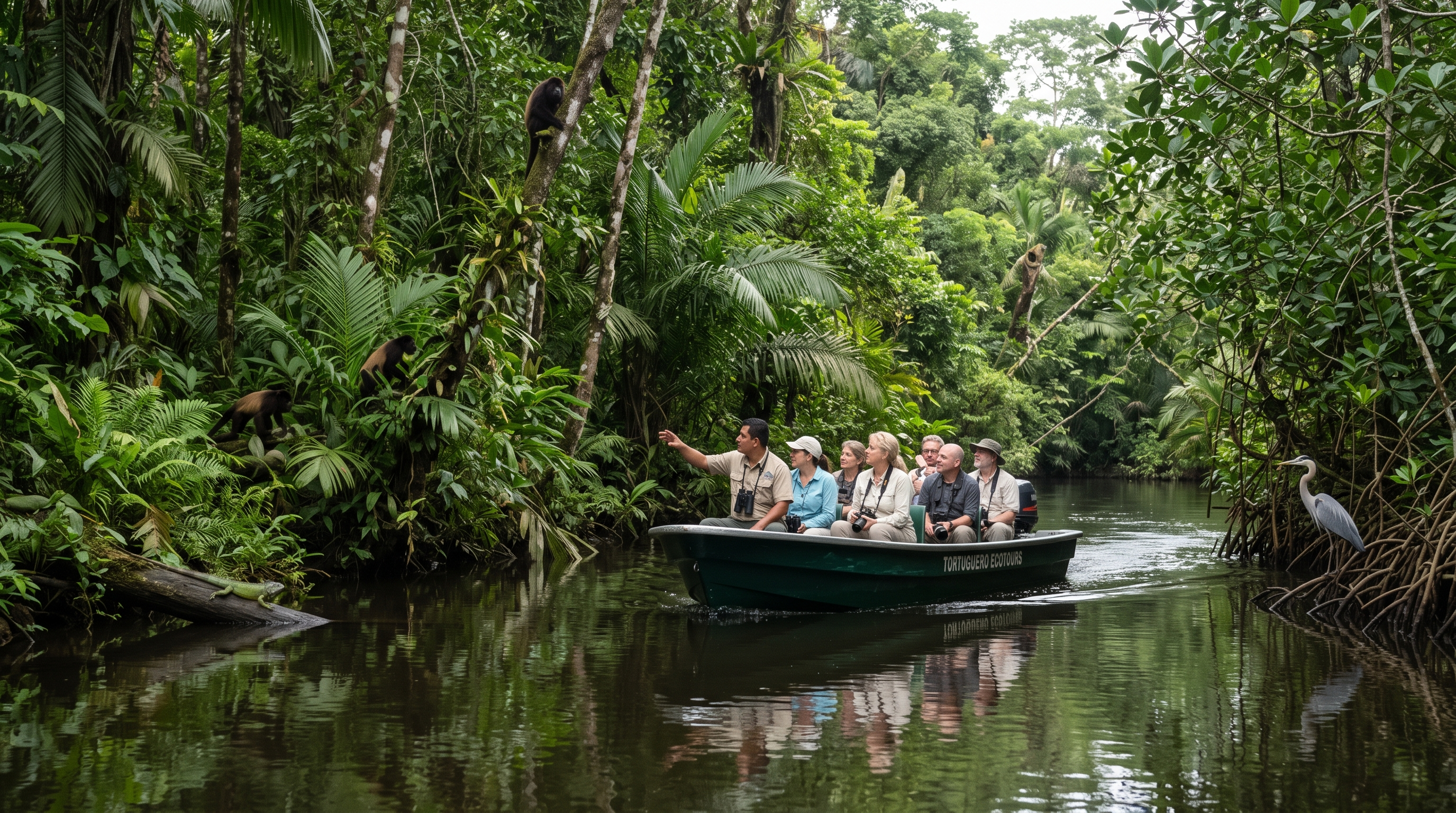
Image transparency: The four editorial illustrations in this article were generated with AI. Wildlife is shown at safe, realistic viewing distances and sightings are never guaranteed.
Quick answer: Choose Caño Negro for northern wetlands and serious bird interest; Palo Verde for a Guanacaste-friendly Tempisque River excursion; Tortuguero for an immersive Caribbean canal stay; Sierpe for mangroves and a South Pacific itinerary; or Río Niño for a quiet, small-scale float near Upala that can be combined with a lodge stay. Access, season, boat style and group size matter as much as the name.
Wildlife boat tours compared
| Area | Habitat and feel | Best fit | Main planning trade-off |
|---|---|---|---|
| Caño Negro | Northern seasonal wetland, lagoon and Río Frío system | Birders, photographers and travellers based near La Fortuna, Los Chiles or Upala | Water levels and wildlife distribution change strongly with the season. |
| Palo Verde | Tempisque River, floodplain and tropical dry-forest region | Guanacaste itineraries and day-trip travellers | Often a longer drive-and-boat excursion from beach areas; heat can be intense. |
| Tortuguero | Humid Caribbean rainforest canals, lagoons and coast | Travellers wanting a destination built around boats and nature | No road goes into Tortuguero village; the transport and stay are part of the trip. |
| Sierpe | Large South Pacific mangrove and river system | Osa, Drake Bay and Costa Ballena routes | Some boats use Sierpe mainly as transit, so confirm that wildlife interpretation is the purpose. |
| Río Niño | Smaller rural river in northern Costa Rica | Couples, families, non-anglers and guests wanting a quiet float | It is an intimate local experience, not a national-park canal expedition or mass-market tour. |
1. Caño Negro: northern wetland and birding country
Caño Negro Wildlife Refuge is internationally recognized as a wetland of importance and is tied to the Río Frío system near Los Chiles. Its water, mudflats, lagoons and surrounding vegetation support resident and migratory wildlife. The experience changes with rainfall and river levels, which is part of what makes it interesting—and why a current local operator is more useful than a fixed online promise.
Caño Negro is a strong choice when birds and wetland ecology are the main event. Depending on conditions and luck, travellers may look for herons, anhingas, kingfishers, spoonbills, jacanas, caimans, iguanas, turtles and monkeys. Rare or dramatic species should be treated as possibilities, not inclusions.
Choose Caño Negro if…
You are already travelling through northern Costa Rica, want a specialist wetland experience or care more about patient observation and photography than fitting the tour between beach activities.
2. Palo Verde: the Tempisque side of Guanacaste
Palo Verde National Park protects important dry-forest and wetland environments in the lower Tempisque basin. Many wildlife boat excursions associated with this region operate on the Tempisque River, sometimes marketed from towns such as Filadelfia, Ortega or communities around the Nicoya Peninsula.
This can be a practical choice for travellers staying in Guanacaste who do not plan to cross the country. Riverbanks may offer opportunities to see crocodiles, monkeys, iguanas and a range of waterbirds. Ask where the boat actually departs, how much of the quoted duration is road transfer and whether the price includes park admission, meals or hotel pickup.
Choose Palo Verde if…
Your itinerary is centred on Liberia or the Guanacaste coast and you want to add a river-and-wetland day without rebuilding the whole trip around a remote destination.
3. Tortuguero: canals as the destination
Tortuguero is not simply a boat tour added to a road trip. The Caribbean village is reached by boat or air, and its surrounding canals, rainforest, lagoons and coast define the visit. That makes it the most immersive option in this comparison—and often the one requiring the most planning time.
Guided canal outings may use motorboats, canoes or kayaks, depending on the operator and route. Smaller or quieter craft can change what travellers hear and how they photograph, while covered motorboats may be more comfortable for some passengers. Turtle nesting is a separate seasonal, regulated activity and should not be implied as part of an ordinary daytime canal tour.
Choose Tortuguero if…
You want the waterways to shape several days of the trip and are comfortable treating boat transfers, tropical rain and a remote village as part of the experience.
4. Sierpe: mangroves on the South Pacific route
Sierpe is the gateway for many boats heading toward Drake Bay and the Osa Peninsula, but a transfer boat is not automatically a wildlife tour. A dedicated mangrove excursion should slow down, interpret the wetland and give passengers time to observe rather than simply move from dock to destination.
The Térraba-Sierpe wetland contains Costa Rica’s largest mangrove system. Travellers may look for monkeys, crocodilians, boas, bats, herons, kingfishers and other wildlife, but visibility depends on tide, weather, boat traffic, guide skill and animal behaviour.
Choose Sierpe if…
Your trip already includes Uvita, Drake Bay, Corcovado or the Osa region and you want a mangrove-focused experience that fits the South Pacific route.
5. Río Niño: a quieter northern alternative
Our Scenic Wildlife River Float is intentionally smaller in scope. It is a relaxed half-day guided experience on the Río Niño near Upala, typically spending about two to three hours on the water depending on river conditions. Flexible launch points let the local guide choose an appropriate section of river.
The float is designed for wildlife viewing, scenery and an unhurried pace rather than fishing pressure or a checklist. Possible sightings include monkeys, birds, iguanas and turtles. We confirm current conditions and group suitability before booking because the river—not a fixed attraction schedule—sets the day.
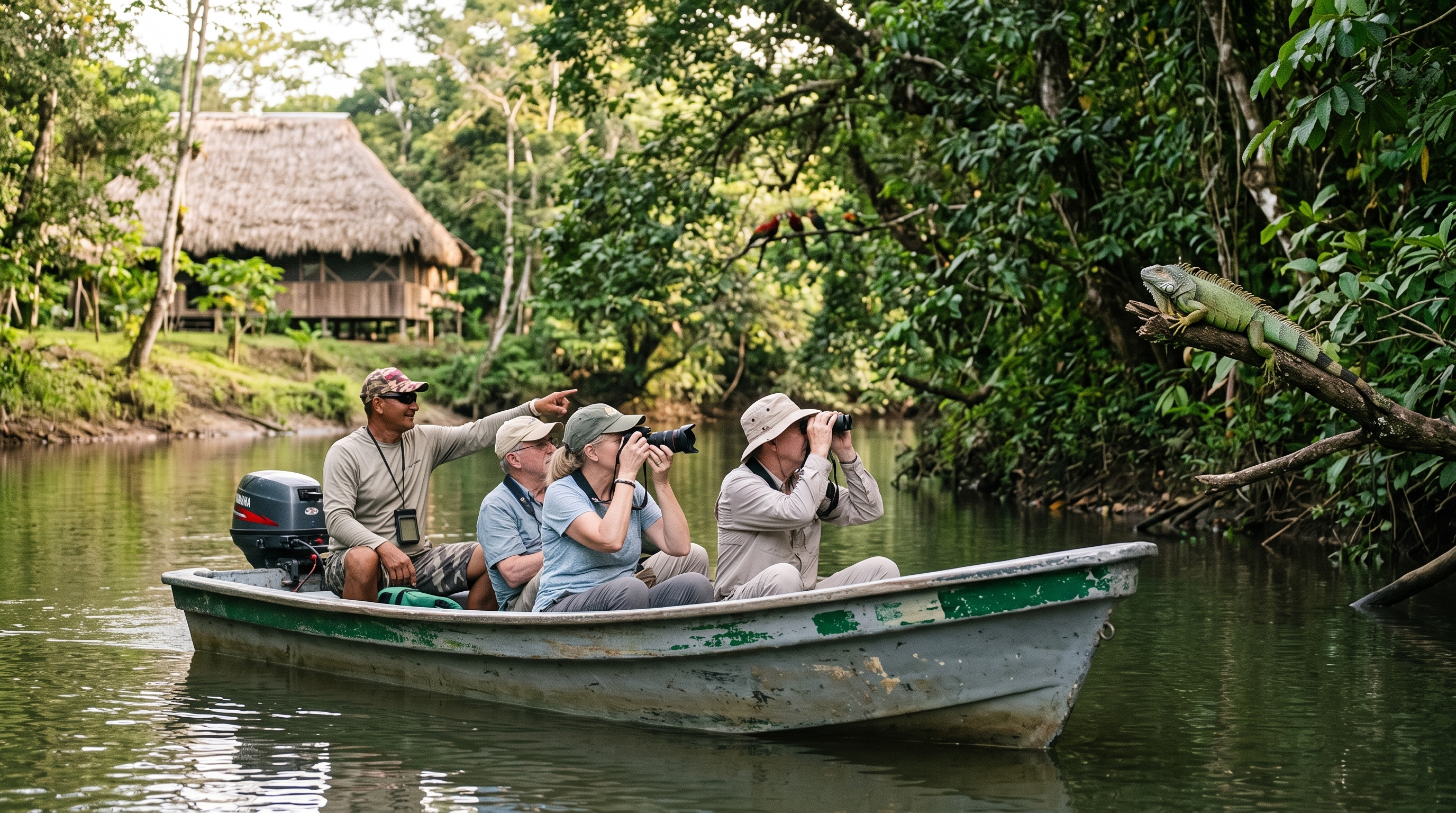
Current Río Niño options: The half-day Scenic Wildlife River Float starts from $95 per person. A two-night Nature & Wildlife Escape with a private air-conditioned room, breakfasts, dinners and one guided float starts from $550 per person. Verify current pricing and river suitability on the booking page before making travel arrangements.
Travellers arriving through Guanacaste can pair this with our firsthand Liberia Airport to Upala and Río Niño Lodge route guide. Those driving south from Nicaragua can use the northern overlanding guide through Upala.
How to choose the right wildlife boat tour
For birding
Prioritize a specialist guide, early timing, slower boat speed and a habitat appropriate to the season. Caño Negro is the clearest wetland-first choice here.
For photography
Ask about boat capacity, seating position, roof obstruction, lens space, direction of light and whether the operator slows for observation.
For families
Ask about life jackets by size, shade, washroom access, total transfer time, boat noise, rain plans and whether children can remain seated safely.
Ask these questions before paying
- Is this a dedicated guided wildlife tour or mainly transportation?
- How many passengers are normally in the boat?
- Is the boat covered, and will the roof affect photography?
- Are life jackets available in appropriate sizes?
- What is included: pickup, admission, guide, food, water or tax?
- What changes when water levels, tides or weather change?
- What is the cancellation policy?
- Does the guide have the credentials required for the protected area?
Best time for wildlife boat tours in Costa Rica
There is no single national answer. Costa Rica has different weather patterns between the northern Pacific, Caribbean and South Pacific, and wetlands change as water rises or recedes.
- Early morning often provides cooler conditions, softer light and more bird activity.
- Dry-season concentration can make some wetland wildlife easier to locate as water contracts, but navigation routes may also change.
- Greener months can deliver lush scenery, fuller waterways and fewer visitors, with a greater chance of rain.
- Tides matter in mangrove systems such as Sierpe, so ask the operator which departure suits the experience you want.
- Caribbean weather does not follow the Pacific dry-season pattern neatly. Tortuguero plans need destination-specific advice.
Wildlife ethics: A good tour does not promise a specific wild animal, crowd it, bait it, touch it or block its movement for a photograph. Keep voices controlled, follow the guide and let the animal decide how long the encounter lasts.
Do you need a famous park to have a good wildlife day?
No. Protected areas preserve irreplaceable habitats and often support specialist guiding infrastructure. A smaller community river can offer a more personal pace and fit a route that would not justify crossing the country. They are different products.
If one partner wants to fish while another prefers a camera, read our guide to Costa Rica fishing trips for couples and non-fishers. The lodge and float can keep the trip shared without requiring every person to want the same activity.
Want a quiet wildlife float in northern Costa Rica?
Contact us before booking. We will confirm current river conditions, the likely pace and whether the Río Niño experience is appropriate for your group. We would rather set the right expectation than sell the wrong trip.
Frequently asked questions
What are the best wildlife boat tours in Costa Rica?
Caño Negro, Palo Verde and the Tempisque River, Tortuguero, Sierpe and smaller rivers such as the Río Niño offer distinct experiences. The best choice depends on your route, desired habitat, trip length, boat style and interest in birds, photography or general wildlife.
When is the best time for a wildlife boat tour?
Early morning is often comfortable and productive, but season and water conditions vary by region. Ask a current local operator about water levels, tides and wildlife patterns for your travel dates.
Can I see sloths on a Costa Rica boat tour?
Sloths occur in parts of Costa Rica, but no responsible wildlife tour should guarantee one. Habitat, guide knowledge, weather and the animal’s behaviour all influence a sighting.
Are wildlife boat tours suitable for children or seniors?
Many can be, but suitability depends on boarding steps, seating, sun, rain, washroom access, noise and total duration. Confirm individual mobility and safety needs with the operator before booking.
What should I bring?
Bring sun and rain protection, water, insect repellent, secure footwear, binoculars and a camera protected from spray. Use a small dry bag and avoid loose equipment on the boat.
Are animals guaranteed?
No. These are wild habitats, not controlled exhibits. Ethical guides know where to look and how to interpret the environment, but wildlife decides whether it appears.