

A drift boat carries you through miles of river. Wading lets you slow down, feel the current and work one piece of water from several angles. One is not the advanced version of the other, and neither is automatically easier.
The useful drift boat vs wading fly fishing question is not “Which one catches more fish?” It is “Which approach fits this river, today’s conditions, my body, my casting and the experience I want?” On the Río Niño, the honest answer is often a combination of both.
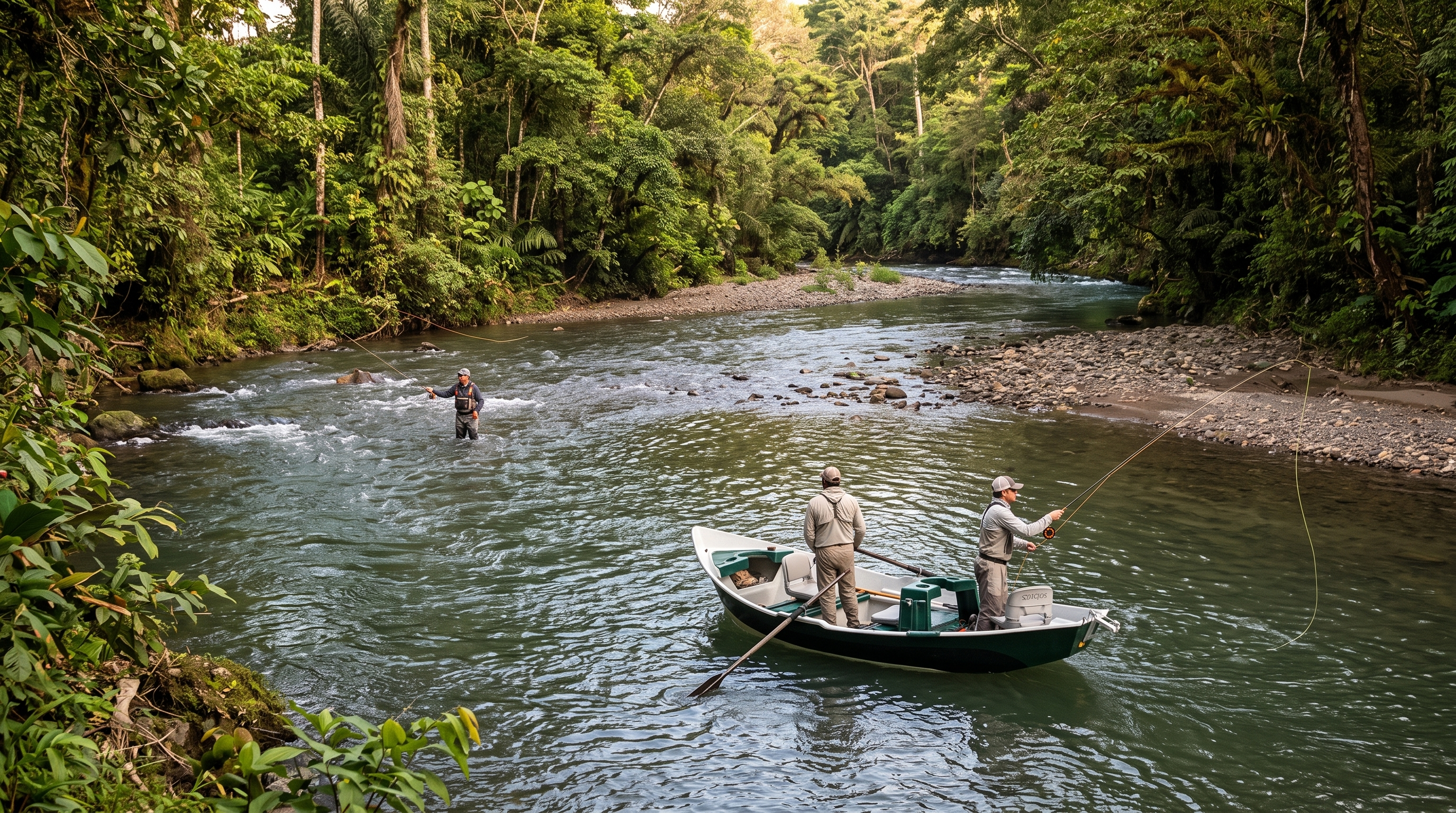
Image transparency: The four editorial fly-fishing images in this article were generated with AI to illustrate drift-boat and wading situations. River conditions and safe access vary.
Quick answer: Choose a drift boat when covering more water, reaching separated sections, carrying gear or including a non-wading guest matters most. Choose wading when you want deliberate positioning, repeated presentations and close engagement with one section. Choose a mixed day when the river, guide and access allow it—which is how many Río Niño days naturally unfold.
Drift boat vs wading at a glance
| Factor | Drift boat | Wading | Mixed day |
|---|---|---|---|
| Water covered | More river in one session | Less distance, more time per lie | Travel between focused stops |
| Casting | Moving platform; timing and line control matter | Stable stance if footing is secure | Changes with each section |
| Physical demand | Less walking, but balance and boat entry still matter | Current, rocks, heat and terrain add effort | Can be adjusted to the guest |
| Gear | More storage and easier access | Carry only what fits securely | Leave extra gear in the boat |
| Experience | Scenic movement and changing water | Immersive and deliberate | Variety without choosing one all day |
What drift-boat fly fishing actually feels like
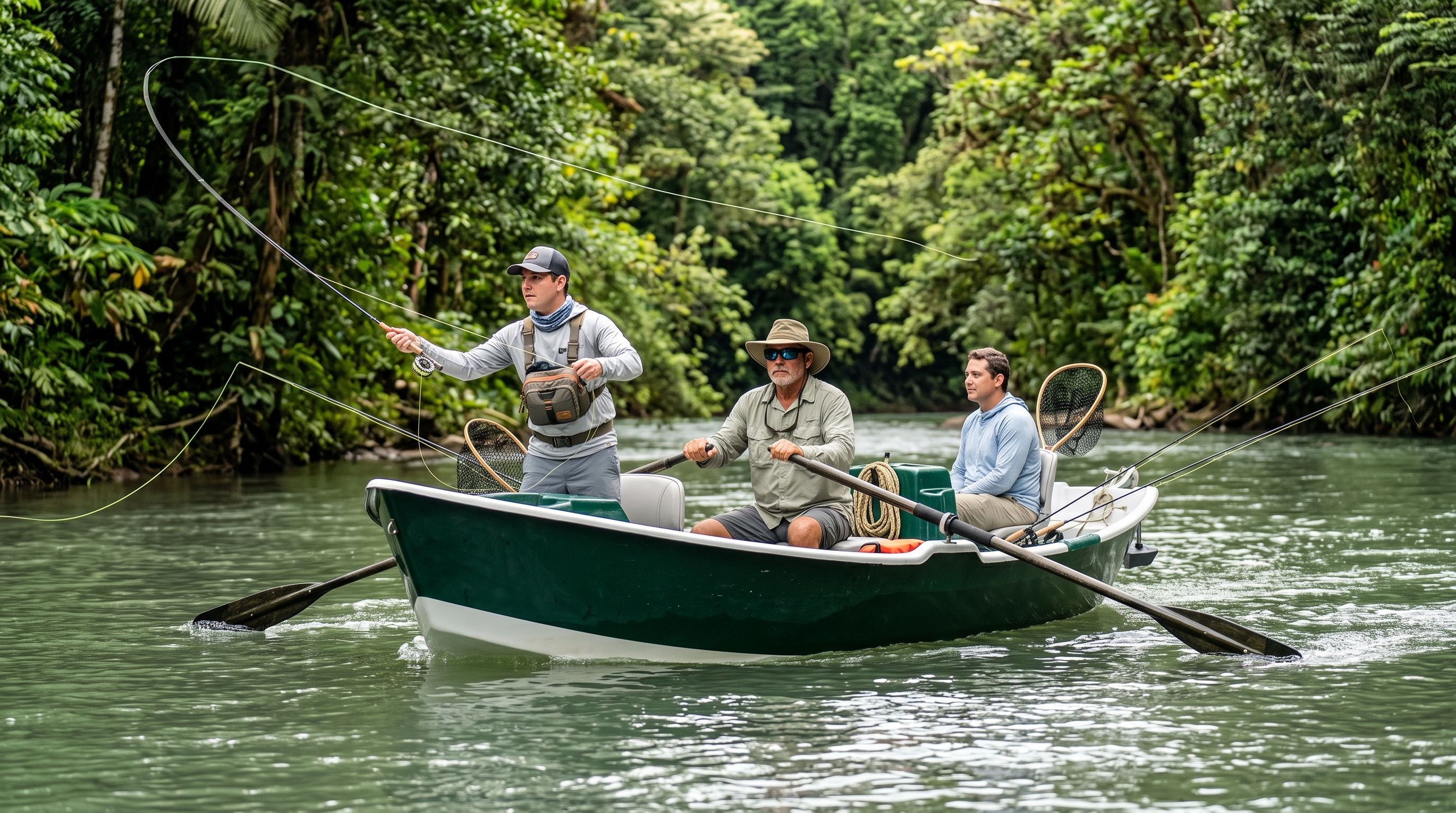
A drift boat is rowed to control speed, position and angle while the river supplies much of the downstream movement. The guide reads structure, current and hazards while anglers prepare for opportunities that can appear quickly.
The boat is not simply transportation. It can become the casting platform, gear base, lunch stop and way to reach water that would be inefficient—or impossible—to walk between. On a tropical river, that mobility can also reduce repeated travel through brush, roots and uneven banks.
Best for coverage
Move through multiple bends, current seams and habitat types during one session.
Best for gear
Keep rain protection, extra tackle, water and camera equipment available without carrying it all.
Best for shared days
A guest may enjoy the scenery and wildlife even if they do not want to wade every stop.
How to fly fish from a drift boat
The biggest adjustment is timing. The boat, fly and target may all be moving relative to one another. The guide may ask for a quick cast, a mend, a shorter pickup or no cast at all while passing an obstruction.
- Listen before launching a cast. Agree on who fishes which side and what commands the guide will use.
- Keep line organized. Loose loops can catch gear, footwear, seats or another angler.
- Use efficient casts. Accuracy and speed often matter more than maximum distance.
- Watch the other angler. Never assume the space behind or beside you is clear.
- Stay balanced. Stand only where and when the guide approves; sudden weight shifts affect the boat.
- Let the guide position the boat. An awkward angle may be temporary and safer than forcing a cast.
Why anglers choose wading
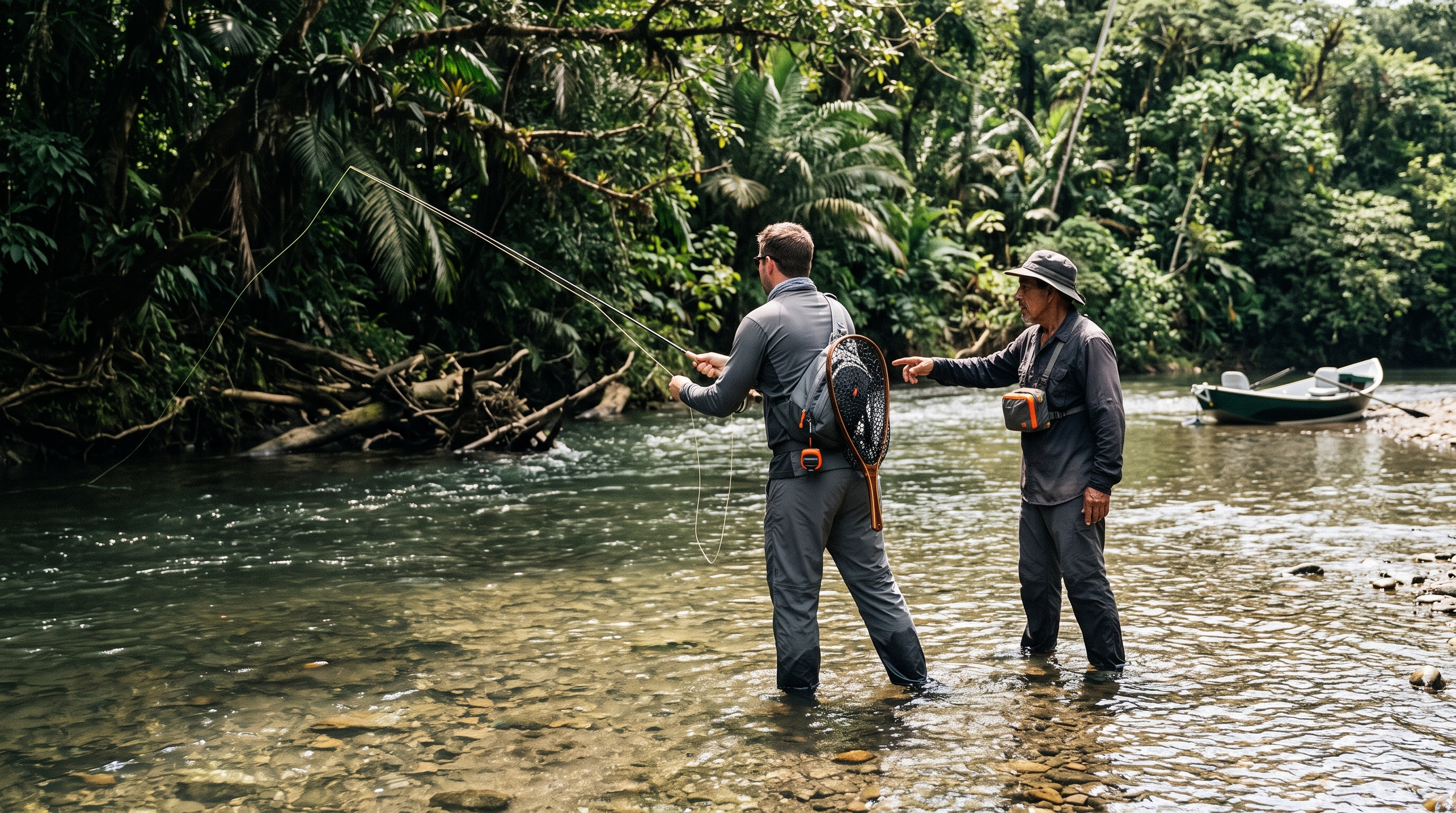
Wading lets an angler settle into one area and change position deliberately. You can study current tongues, shade, bank structure and depth, then repeat a presentation with a different angle or fly. For some anglers, standing in the river is the essence of fly fishing.
That intimacy comes with physical and safety demands. Tropical rivers can have uneven stones, sudden drop-offs, submerged wood and changing current. Clear-looking water is not permission to cross. The local guide decides whether a section is appropriate.
Wading is a strong fit if…
You enjoy slowing down, are comfortable with uneven footing, want repeated attempts at specific structure and prefer casting from a fixed position. Tell the guide about knee, hip, balance or fatigue concerns before the day begins.
Safety is different—not optional
A boat reduces some walking but introduces moving-water, balance, hook and collision risks. Wading removes the boat but puts your body directly against the current and riverbed. Either way, follow the guide’s instructions and use required personal flotation equipment.
Stop-the-day rule: Tell the guide immediately if you feel unstable, overheated, unwell or pressured beyond your ability. A fish is never worth hiding a balance problem or continuing through unsafe water.
- Wear secure footwear appropriate to the guide’s recommendation.
- Use eye protection and a hat around hooks.
- Keep bags and straps from becoming snag or trip hazards.
- Enter, exit and change seats only when directed.
- Do not wade beyond the route the guide identifies.
- Protect electronics and medication from rain and immersion.
Why Río Niño uses both approaches
Río Niño trips are built around current river conditions and guest goals, not a promise that every day follows one rigid method. A guided day may involve fishing from the drift boat, stopping to wade or combining the two.
Río Niño uses a ClackaCraft hard-sided drift boat suited to controlled river movement and fishing positions. We are not naming a specific model here because model and specification details should be confirmed from the boat itself rather than guessed from appearance.
Gilberto’s local river knowledge is the key part of the decision. He has spent his life in the region and also served for years with the Costa Rican Red Cross as a lifeguard. Dale brings long-term experience fishing the Río Niño. Jeremy handles marketing and booking support, but river calls should come from the people who know that water.
Group planning: The drift boat can accommodate up to three anglers in a session, although practical capacity may be reduced depending on staffing and fishing style. Wading usually works best with one or two anglers at a time. Larger groups may rotate so each person receives useful guide attention.
Common river craft around the fly-fishing world
“Drift boat” is not one universal design. Rivers, access, regulations and local traditions shape the craft. This table describes broad patterns—not rules for every operator or country.
| Region or setting | Common approach | Why it fits | What to ask |
|---|---|---|---|
| Western North America | Hard-sided McKenzie-style drift boats; ClackaCraft and Hyde are well-known examples | Rowing control, casting platforms and gear capacity on established floats | Boat capacity, standing rules and launch-to-takeout time |
| Remote or rough-access rivers | Inflatable rafts and catarafts | Portability, shallow-water tolerance and load flexibility | Self-bailing design, frame layout and guest seating |
| New Zealand and other walk-access fisheries | Wading often dominates; rafts or helicopters may connect remote reaches | Sight-fishing, access patterns and widely separated water | Walking distance, crossings and actual transport method |
| United Kingdom and Europe | Wading, bank fishing and locally traditional boats depending on river or loch | Water rights, beat systems, terrain and local practice | Access rules, guide or ghillie role and required gear |
| Tropical rivers | Hard boats, skiffs, canoes, rafts or wading depending on depth and obstructions | No single craft fits every launch, current and riverbed | Shade, safety gear, guide experience and seasonal access |
The logo on a boat matters less than whether the craft, guide and fishing plan match the river. If you are comparing a freshwater river day with an offshore trip, read our guide to freshwater versus saltwater fly fishing in Costa Rica.
Which experience is right for you?
Choose drifting
You want scenery, broader coverage, gear access or a trip that can include someone who prefers not to wade.
Choose wading
You want close river contact, repeated presentations and are comfortable with the guide-approved terrain.
Choose both
You value flexibility and want the guide to match each section with the strongest method that day.
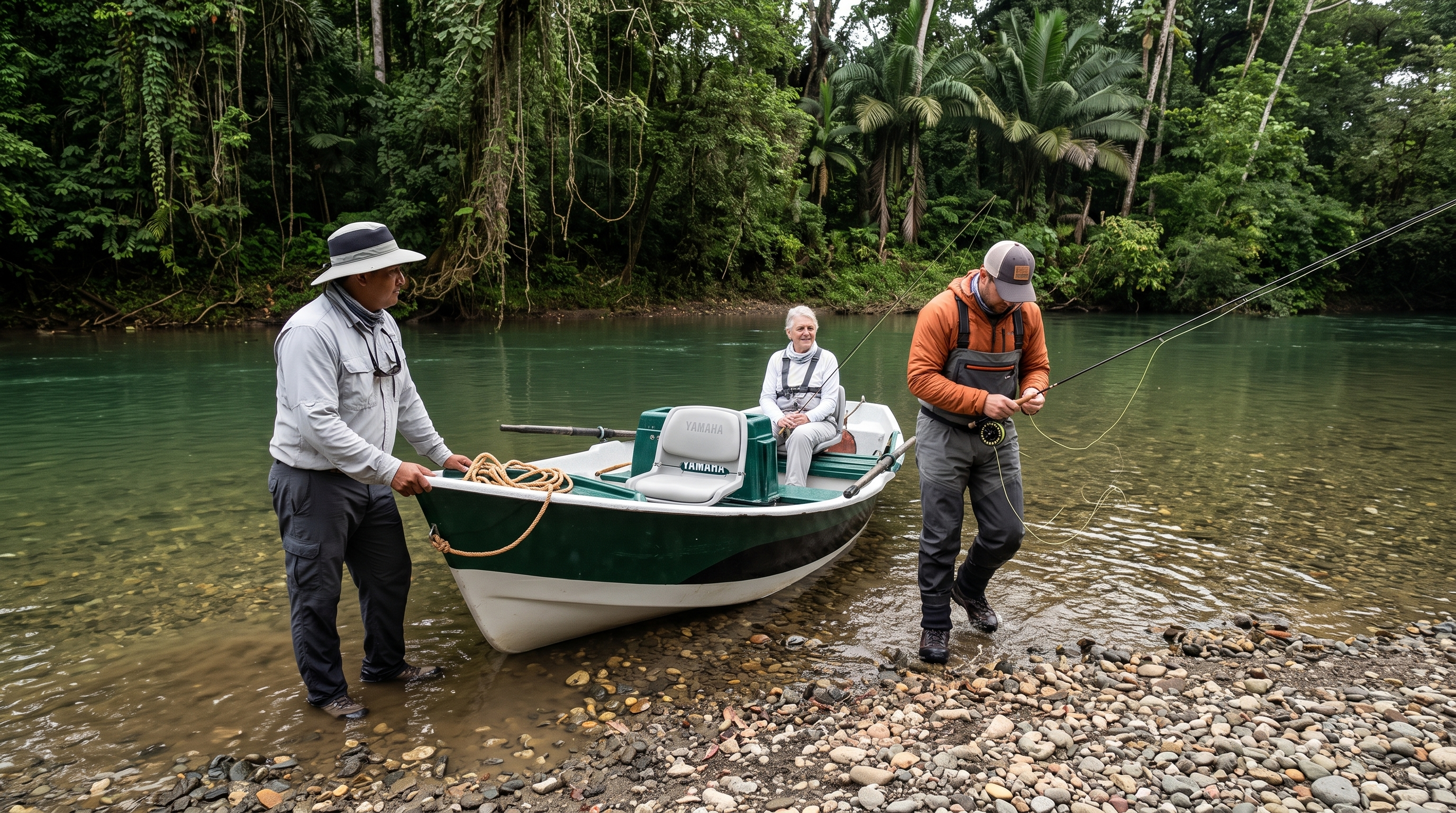
Before booking, tell us your fishing experience, mobility, preferred pace, group size and whether a non-fishing partner is joining. Our couples and non-fishers guide explains how a shared lodge stay can work even when not everyone wants the same day on the water.
Let the river choose the method
Review the current Río Niño fishing packages, then ask us what drifting, wading or a mixed day may look like for your dates and group. We will confirm expectations rather than promise a fixed script the river may not support.
Frequently asked questions
Is drift-boat fishing better than wading?
Neither is universally better. Drift boats cover more water and carry gear; wading offers deliberate positioning and close river contact. Conditions, safety and guest goals decide.
Can beginners fly fish from a drift boat?
Yes, with a guide and clear safety briefing. Beginners should focus on compact casts, line control, communication and the guide’s instructions rather than distance.
Do I need to wade on a Río Niño trip?
Not necessarily. A day may use the drift boat, wading or both. Discuss mobility and comfort before booking so the team can set realistic expectations.
What should I wear for drift-boat fishing?
Use sun and rain protection, secure footwear, eye protection and clothing suited to heat and spray. Ask the operator about personal flotation equipment and current gear recommendations.
How many anglers fit in the Río Niño drift boat?
Up to three anglers may fit in a session, but practical capacity can change with staffing, fishing style and conditions. Wading generally works best with one or two anglers at a time.
Can a non-fisher join the boat?
Possibly, depending on group size, river conditions and the day’s plan. Ask before booking because adding a passenger changes space, balance and fishing rotation.