
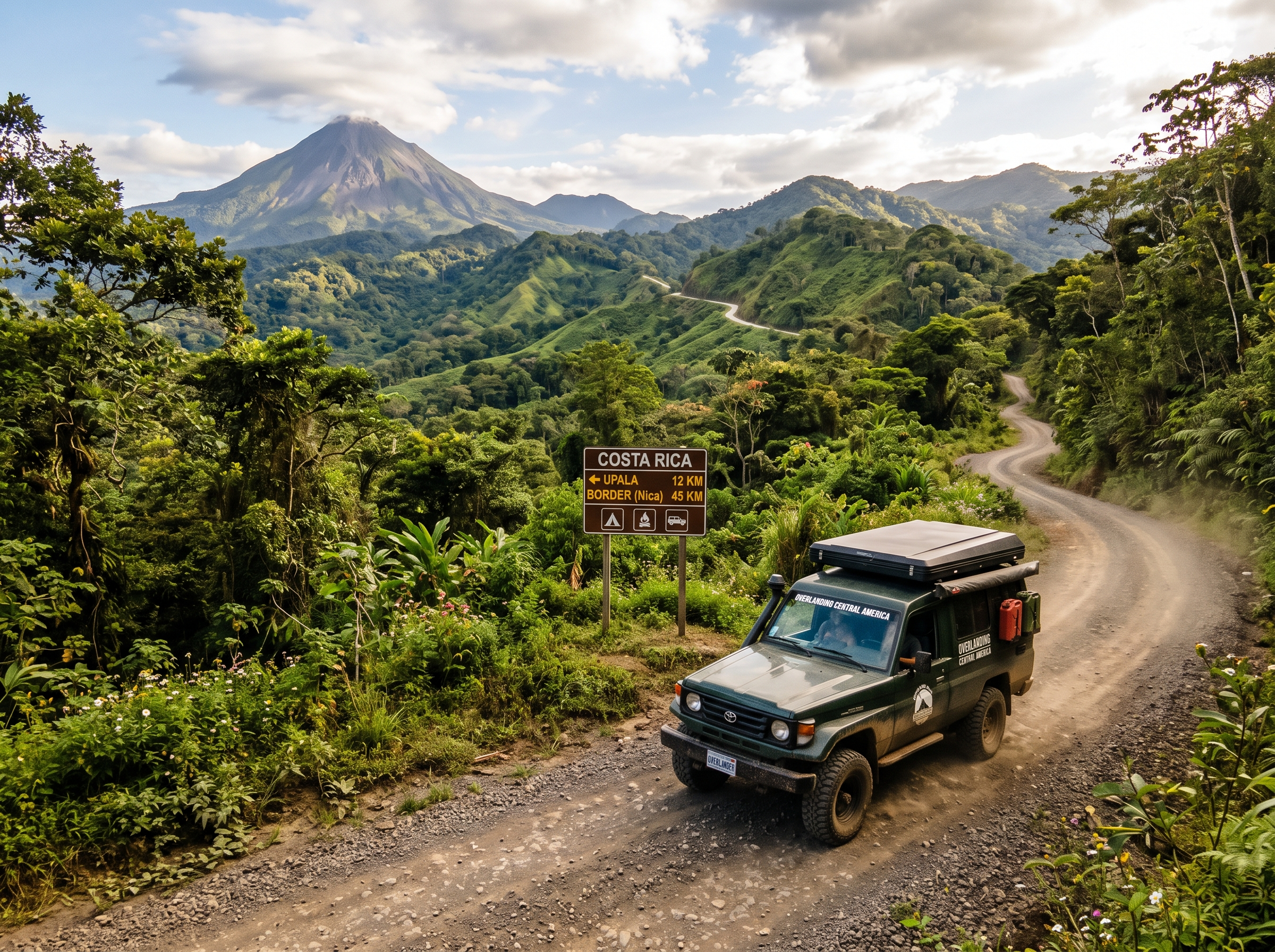
Crossing into Costa Rica by land changes the trip. You are not choosing an airport transfer; you are managing a border, a foreign vehicle permit, local insurance, road conditions, overnight parking and a rig that may be carrying everything you own.
This overlanding Costa Rica guide focuses on the northern entry from Nicaragua at Peñas Blancas and a practical route that can connect La Cruz, Liberia, Bijagua, Río Celeste, Upala and Río Niño Lodge. It also compares actual campground-style options with the lodge, because a US$6 camping space and a private air-conditioned room with meals solve very different problems.
Before the Road: Crossing at Peñas Blancas
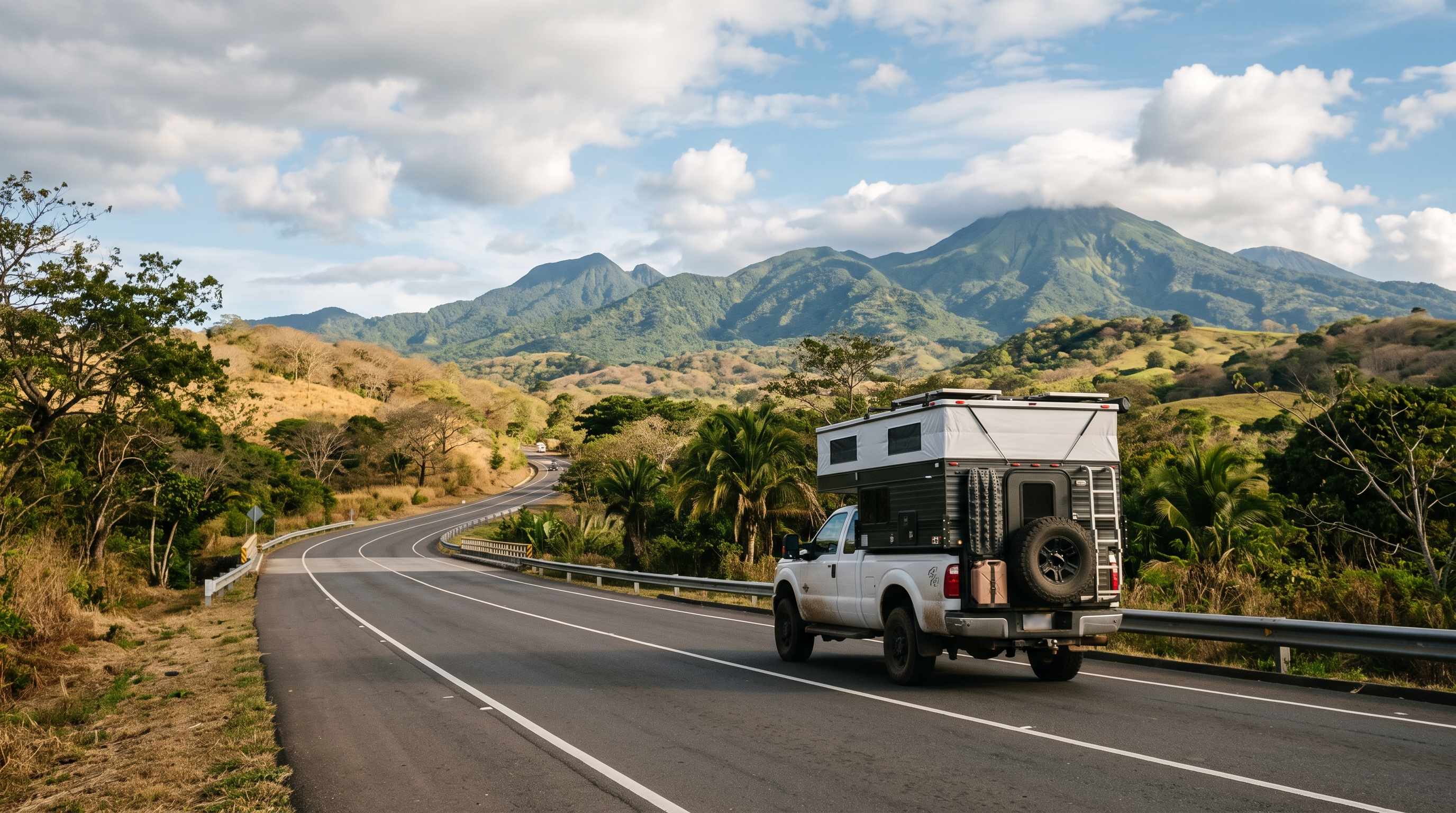
Peñas Blancas is the major road crossing between Nicaragua and Costa Rica. A traveller and a foreign-plated vehicle complete separate processes. Expect immigration plus vehicle paperwork rather than one drive-through booth.
Requirements and fees change, so confirm both countries immediately before travel. A practical document folder normally includes:
- Passport and any required entry documentation
- Original vehicle title or registration showing the owner
- Driver’s licence
- Proof of authority if the driver is not the registered owner
- Copies of the main documents
- Proof of onward travel or departure if requested
- Temporary vehicle-import documents from the country you are leaving
- Payment methods and small local currency
Foreign vehicles entering Costa Rica generally require a temporary import permit and mandatory local vehicle insurance. Do not rely on an old blog’s fee or permit length: the authorized stay for the person and the vehicle may differ, and the issued documents control. Check every name, plate, VIN and expiry date before leaving the border area.
Two Sensible Ways to Start the Costa Rica Leg
Scenic main-road route
Peñas Blancas → La Cruz → Liberia → Bagaces/Cañas → Bijagua → Upala.
Best when Río Celeste, supplies and predictable primary roads matter more than reaching the lodge as fast as possible.
Direct-to-Upala planning
Ask Río Niño Outfitters for the current approach, compare it in Waze and confirm surface and weather locally.
Best when Upala is the destination and you do not want the Liberia/Bijagua detour. This article does not endorse a northern shortcut sight unseen.
The existing Liberia Airport to Upala guide explains the Bijagua approach in detail and separates Jeremy’s repeatedly driven paved route from faster app suggestions he has not personally tested. Overlanders entering at Peñas Blancas can join that same corridor after La Cruz and Liberia.
Do You Need a 4×4?
The main Peñas Blancas–Liberia–Bijagua–Upala corridor should not be described as a 4×4-only route. Jeremy’s known approach uses paved highways. A standard vehicle in suitable condition may be enough for that plan.
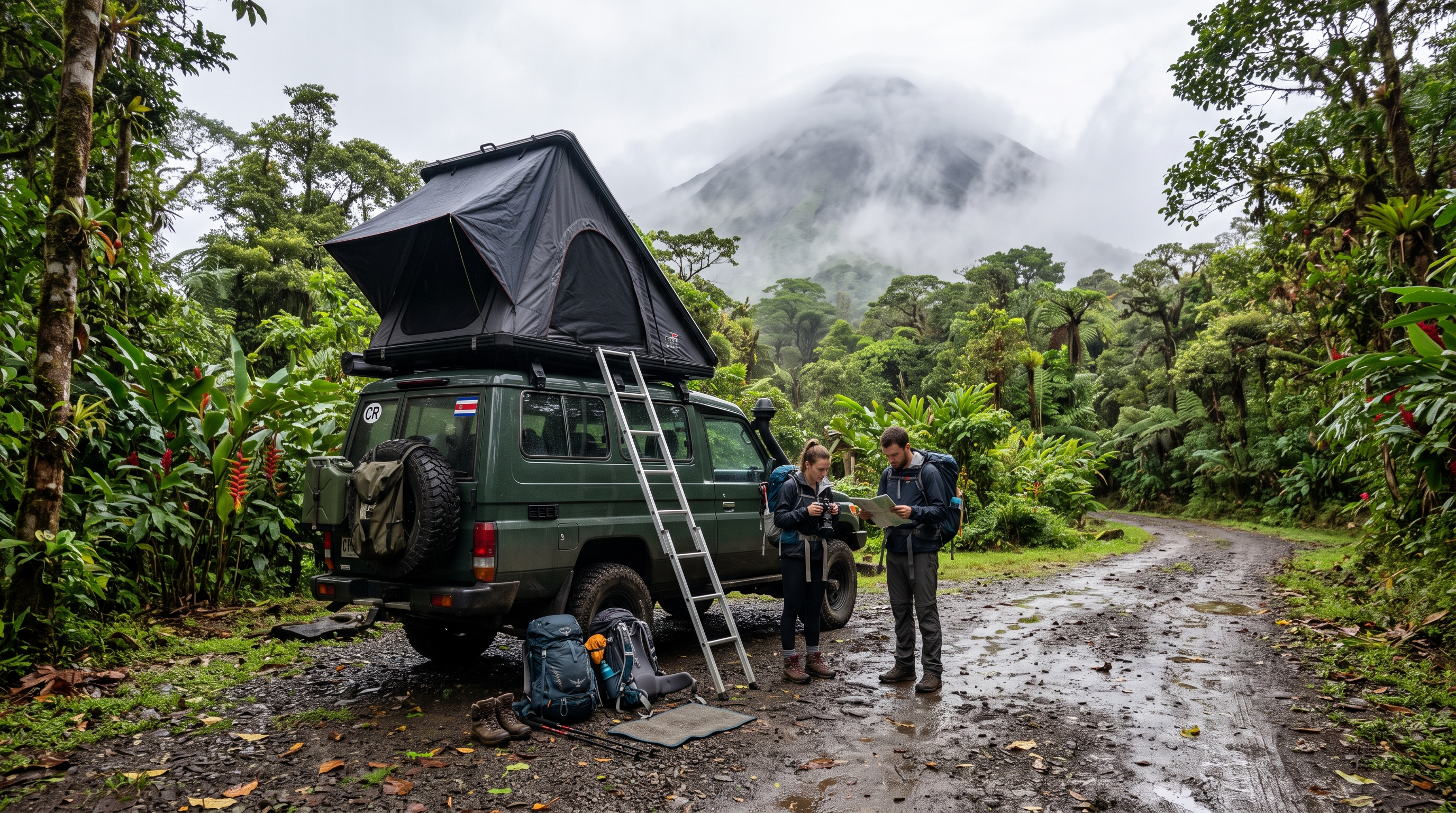
High clearance or four-wheel drive becomes more valuable when you add unpaved beach access, farm stays, steep campsites, river crossings or rainy-season side roads. It does not make a heavy vehicle invincible. Mud tires, recovery points, weight distribution, turning radius and driver judgment matter more than a badge.
Small 4×4 / rooftop tent
Easy to turn and park; good for side roads. Limited inside space and payload require disciplined packing.
2WD campervan
Comfortable on main roads and established sites. Confirm ground clearance and avoid letting an app choose an unknown wet shortcut.
Truck camper
Strong clearance with contained living space. Watch height, width, centre of gravity and bridge or branch clearance.
Large expedition rig
Excellent self-sufficiency, but verify gate width, overhead clearance, turning room, weight limits and parking before committing.
Verified Places to Stop on This Northern Route
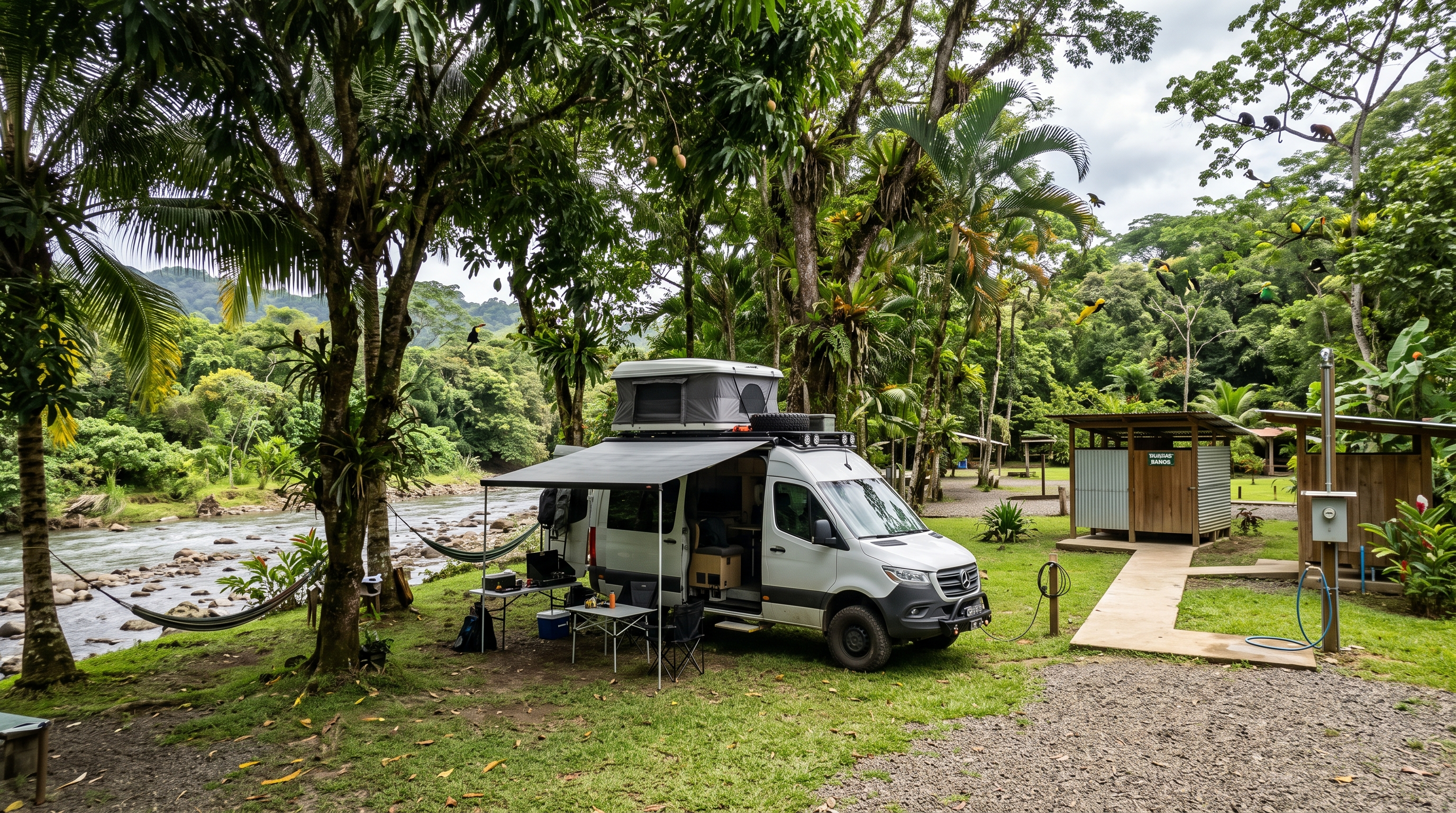
“Verified” here means the property or current listing publicly describes camping or accommodation. It does not guarantee space for every rig, an unchanged rate or full RV hookups. Contact each stop before arrival—especially with anything larger than a campervan.
| Stop | What is publicly confirmed | Useful for | Price note |
|---|---|---|---|
| Cañas Castilla, La Cruz | Campervans and tents welcome; sites by the Sapoa River or farm; separate cold-water shower | A calm first or last night near the Nicaragua border, farm/nature time | Contact for current camping rate and rig fit |
| Camping Volcanoes View | About 1.5 km / four minutes from Tenorio park; natural-pool access; electricity, restrooms/shower, shared kitchen and phone coverage listed | Río Celeste park day without a long same-day drive | Confirm current price, road and vehicle-size access |
| Posada Río Celeste camping | Tent or car-camper area; bathroom, Wi-Fi and cooking area; page lists hot water and electricity | Low-cost camping near Río Celeste | Page currently publishes US$6 per person; verify before arrival |
| Río Niño Lodge, San José de Upala | Private A/C room, en-suite bath, common areas and safe on-site parking suitable for larger vehicles | Weatherproof reset, meals, fishing/wildlife add-ons and flexible nights | Two-night meals-included stay from US$300 per guest; flexible-night pricing varies |
Stop One: Cañas Castilla Near La Cruz
After a slow border day, the smartest mileage may be almost none. Cañas Castilla welcomes campervans and lets campers choose space by the Sapoa River or within the farm. The property also lists nature trails, the river, horseback riding and nearby La Cruz-area activities.
The published campground page confirms a separate cold-water shower but does not present a current camping price. Ask about toilets, cooking access, electricity, potable water, pets, gate hours and maximum vehicle size instead of assuming cottage facilities are included with camping.
Stop Two: Bijagua and Río Celeste
Bijagua is the natural pause on the scenic route. Tenorio Volcano National Park currently lists entry from 8:00 a.m. to 2:00 p.m., with departure by 4:00 p.m. The listed non-resident price is US$12. Reserve or verify through SINAC and recheck before driving; hours, trail access and ticket procedures can change.
Camping is outside the national park. Both Camping Volcanoes View and Posada Río Celeste publish features suited to tent or vehicle campers. Confirm whether electricity is a usable hookup for your rig, whether water is potable and whether the access road works for your dimensions. “Electricity available” does not automatically mean a 30- or 50-amp RV pedestal.
Campground vs Río Niño Lodge
The honest comparison is not “cheap versus expensive.” It is self-contained camping versus a serviced room-and-meals stay.
| Need | Campground | Río Niño Lodge |
|---|---|---|
| Sleeping | Your own vehicle or tent | Private air-conditioned room with en-suite bathroom |
| Food | Self-cook or find local meals | Two-night package includes breakfasts, dinners, snacks and lodge beverages |
| Vehicle services | Varies; verify power, water and waste | Safe parking—not advertised as hookups, dump station or parking-only camping |
| Weather recovery | Depends on your setup | Dry room, shower, lounge and shaded areas |
| Activities | Independent local exploration | Fishing, wildlife float and lodge add-ons may be arranged |
| Best fit | Budget overlanders with a complete camping system | Travellers wanting a reset, local base or hosted experience |
Río Niño Lodge is not a campground. It is, however, intentionally overlander-friendly: the lodge page describes flexible nights and safe on-site parking suitable for larger vehicles. Before bringing a large expedition rig, send dimensions and confirm the final approach, overhead clearance, gate width and turning room.
What to Do Around Upala and Río Niño
- Rest and reset: laundry planning, device charging, showering, route research and a night out of humidity can be legitimate trip maintenance.
- Fish the Río Niño: ask about guided packages, seasons, skill level and what equipment is included.
- Take a wildlife float: a non-fishing river option works for couples or families with mixed interests.
- Explore northern Costa Rica: use the lodge as a base rather than moving the rig every morning.
- Work remotely: shaded common areas can support a planning or work day, but confirm current connectivity for anything critical.
Road and Security Habits That Matter
- Use Waze, but save offline maps too.
- Avoid unfamiliar shortcuts after dark.
- Fill fuel before remote sections.
- Carry water and a basic food reserve.
- Do not leave passports or electronics visible.
- Ask before overnighting on private property.
- Never camp in a flood channel or on soft riverbank ground.
- Check bridge and branch clearance.
- Know your rig height, width, length and weight.
- Confirm potable water rather than assuming.
- Keep border and vehicle documents together.
- Recheck weather and closures on travel day.
Costa Rica’s main roads can be entirely manageable while a final kilometre changes with rain, construction or an app reroute. Stop in a safe place before accepting a shortcut. Local confirmation beats a map line.
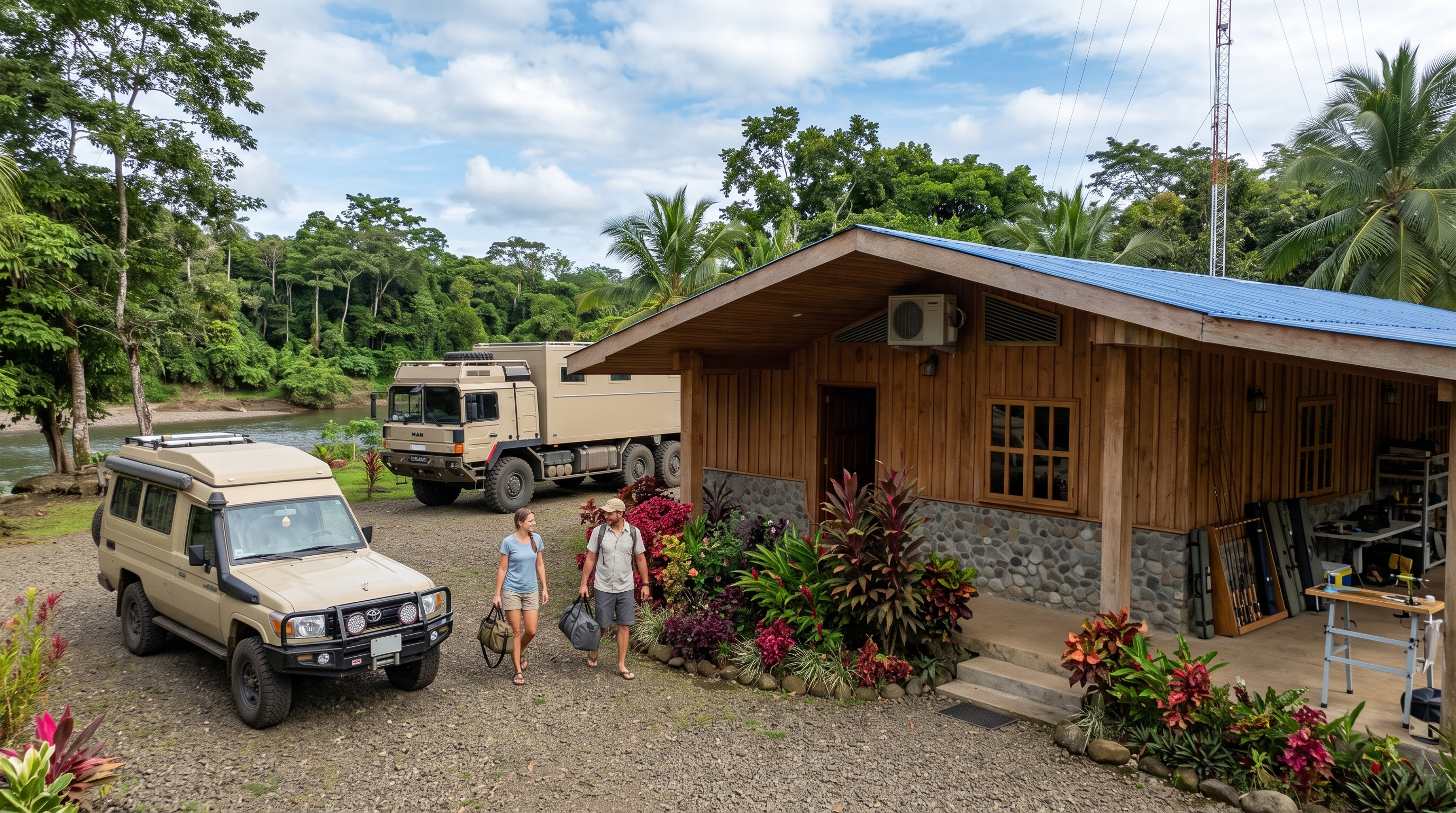
A Comfortable Four-Night Northern Plan
- Night 1—La Cruz: finish the border, camp at Cañas Castilla and avoid forcing a long drive after paperwork.
- Night 2—Río Celeste area: travel through Liberia and the Route 1 corridor, set camp near Bijagua and prepare for an early park entry.
- Day 3—Río Celeste to Upala: hike in the morning, then continue on Route 4 in daylight to Río Niño Lodge.
- Nights 3–4—Río Niño: reset in a private room, add fishing or a wildlife float, and plan the next road segment with clean clothes, charged devices and current information.
This is a route framework, not a promise of drive time. Border delays, weather, road work, park availability and vehicle speed can change the day.
Ask Río Niño Before You Drive
Send your travel date, direction of travel, vehicle type and dimensions, number of guests and whether you want camping information, a lodge reset, fishing or a wildlife float. We can confirm the lodge’s current arrival details and help you decide whether the Upala stop fits your route.
Sources and Current Checks
- SINAC: Tenorio Volcano National Park
- SINAC online reservations
- Cañas Castilla campground
- Costa Rica Campsites: Camping Volcanoes View
- Posada Río Celeste camping
- INS: Costa Rica compulsory vehicle-insurance information
Frequently Asked Questions
What is the best overlanding route from Nicaragua to Upala?
For a scenic main-road plan, use Peñas Blancas, La Cruz, Liberia, Route 1, Route 6 through Bijagua and Route 4 toward Upala. For a faster direct route, ask locally and check Waze on the day rather than relying on an unverified shortcut.
Do I need a 4×4 for northern Costa Rica?
Not automatically for the main paved corridor. High clearance or 4×4 is more useful for rough side roads, campsites and rainy-season access.
Can I camp at Río Niño Lodge?
No campground or RV hookups are advertised. The lodge offers private rooms, common areas, meals options and safe on-site parking suitable for larger vehicles; confirm your rig dimensions.
Where can campervans stay near Peñas Blancas?
Cañas Castilla near La Cruz publicly welcomes campervans and tent campers. Contact the property for the current price, facilities and vehicle-size fit.
How much is camping near Río Celeste?
Posada Río Celeste currently publishes US$6 per person, but rates and inclusions should be confirmed directly before arrival. Other sites require a current quote.
Can I take a rental car across the Nicaragua–Costa Rica border?
Do not assume so. Cross-border use requires explicit rental-company authorization and is often prohibited; many travellers change vehicles at the border.
Does Río Niño Lodge have space for a large overland truck?
The lodge advertises safe parking suitable for larger vehicles, but large rigs should send exact height, width and length to confirm the approach and turning room.