
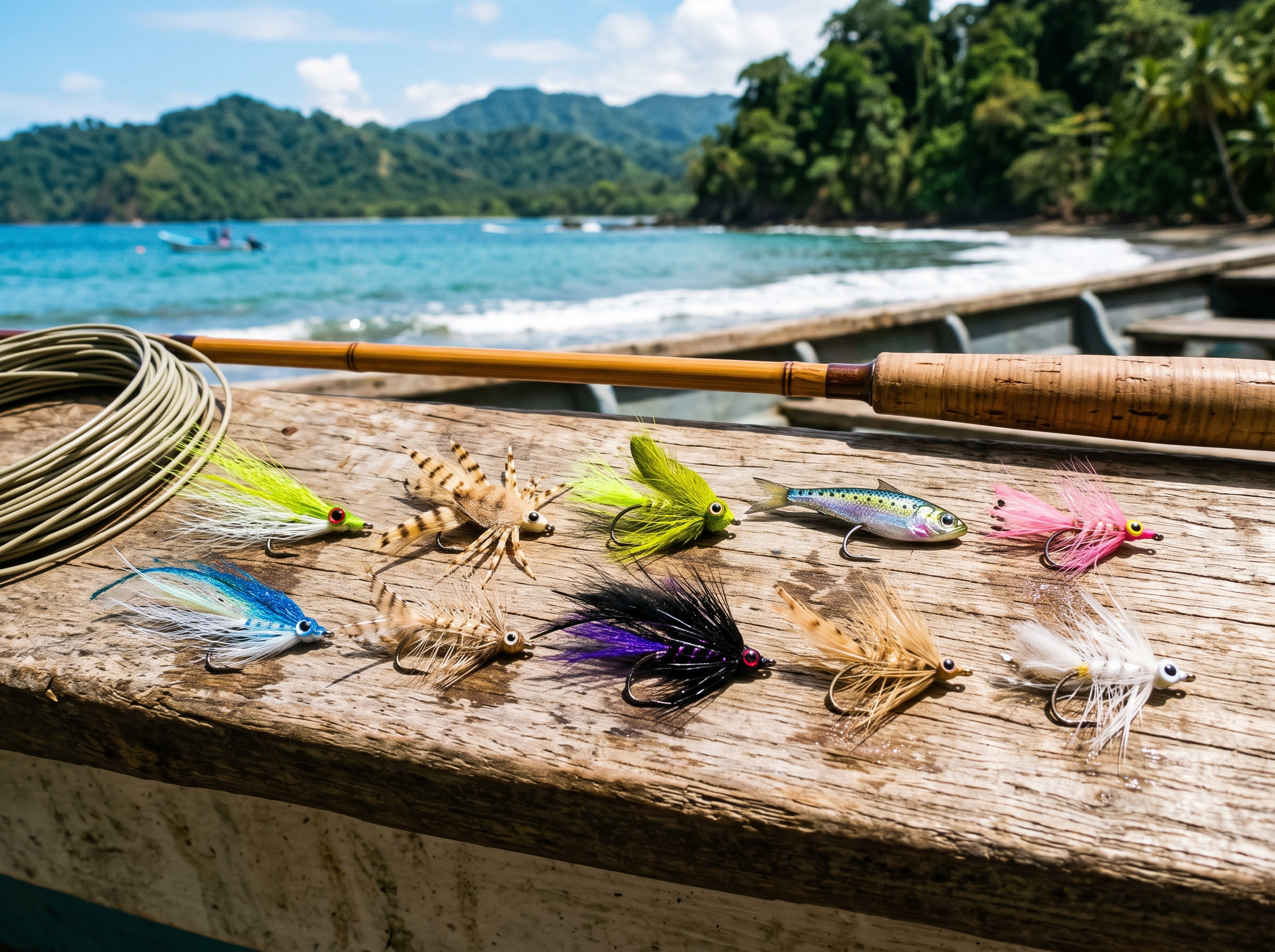
Most anglers heading to Costa Rica eventually ask the same question:
What flies should I bring?
The answer is not “everything in your fly-tying room.” It is a focused selection of patterns that can handle tropical freshwater, jungle structure, changing clarity, surface activity, and aggressive species like guapote and machaca.
A good Costa Rica fly box should cover three jobs: make noise on top, imitate bait below, and survive being thrown toward places where fish and branches both seem interested.
Quick Answer: Which Flies Should Never Leave Your Costa Rica Box?
If your box includes surface flies, baitfish patterns, dark streamers, and a few terrestrials, you are already covering a lot of useful water.
Why Fly Selection Matters in Costa Rica
Costa Rica freshwater fly fishing is heavily shaped by structure.
Logs, roots, shaded banks, submerged branches, current seams, deeper pools, and jungle edges all influence where fish hold and how they feed. That means the right fly is not simply the prettiest pattern in the box. It is the fly that can be placed where fish live and moved in a way that triggers them.
Some days fish want noise on the surface. Other days they want a streamer moving deeper. After rain, bright or contrasting flies may stand out better. In clear water, natural patterns and cleaner presentations often make more sense.
That is why a compact but varied fly box beats a giant box full of nearly identical patterns.
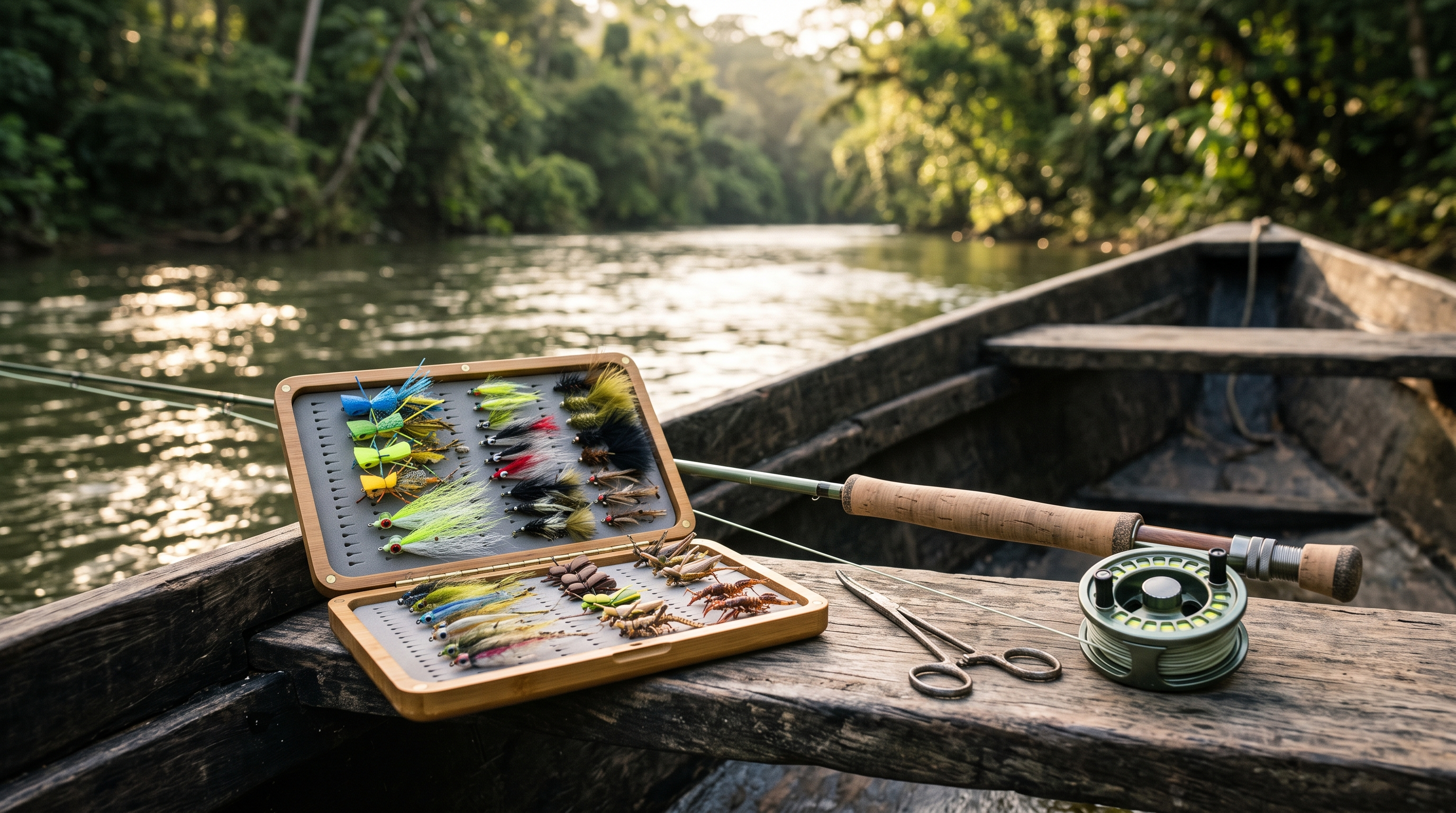
The Top 10 Costa Rica Freshwater Fly Patterns
This list is built for rivers like the Río Niño and for anglers targeting tropical freshwater species rather than trout, salmon, steelhead, or saltwater flats fish.
You do not need every pattern in every size and color. Think of these as categories that give you a practical range of presentations.
Priority Tiers
- Must never leave home: Foam poppers, Clouser Minnows, Woolly Buggers.
- Bring for most trips: Lefty’s Deceivers, baitfish streamers, crawfish patterns, foam beetles.
- Situational but useful: Hoppers, ants and terrestrials, mouse patterns.
Local advice should always win over a generic list. Water level, clarity, season, and current fish behavior can change what belongs at the front of your box.
1. Foam Poppers
Foam poppers are one of the most exciting flies you can carry in Costa Rica because they turn quiet water into instant chaos.
They work by creating surface disturbance that attracts attention and triggers territorial or predatory responses. Guapote may strike them near banks, fallen wood, root systems, and other ambush cover.
The pause is often more important than the pop. Make the fly move, then let it sit. Fish frequently strike when the pattern appears vulnerable instead of while it is being dragged constantly across the surface.
- Carry several sizes.
- Use bright colors in lower visibility.
- Try darker silhouettes in bright conditions.
- Choose durable hooks and strong construction.
- Expect trees to show interest too.
2. Clouser Minnow
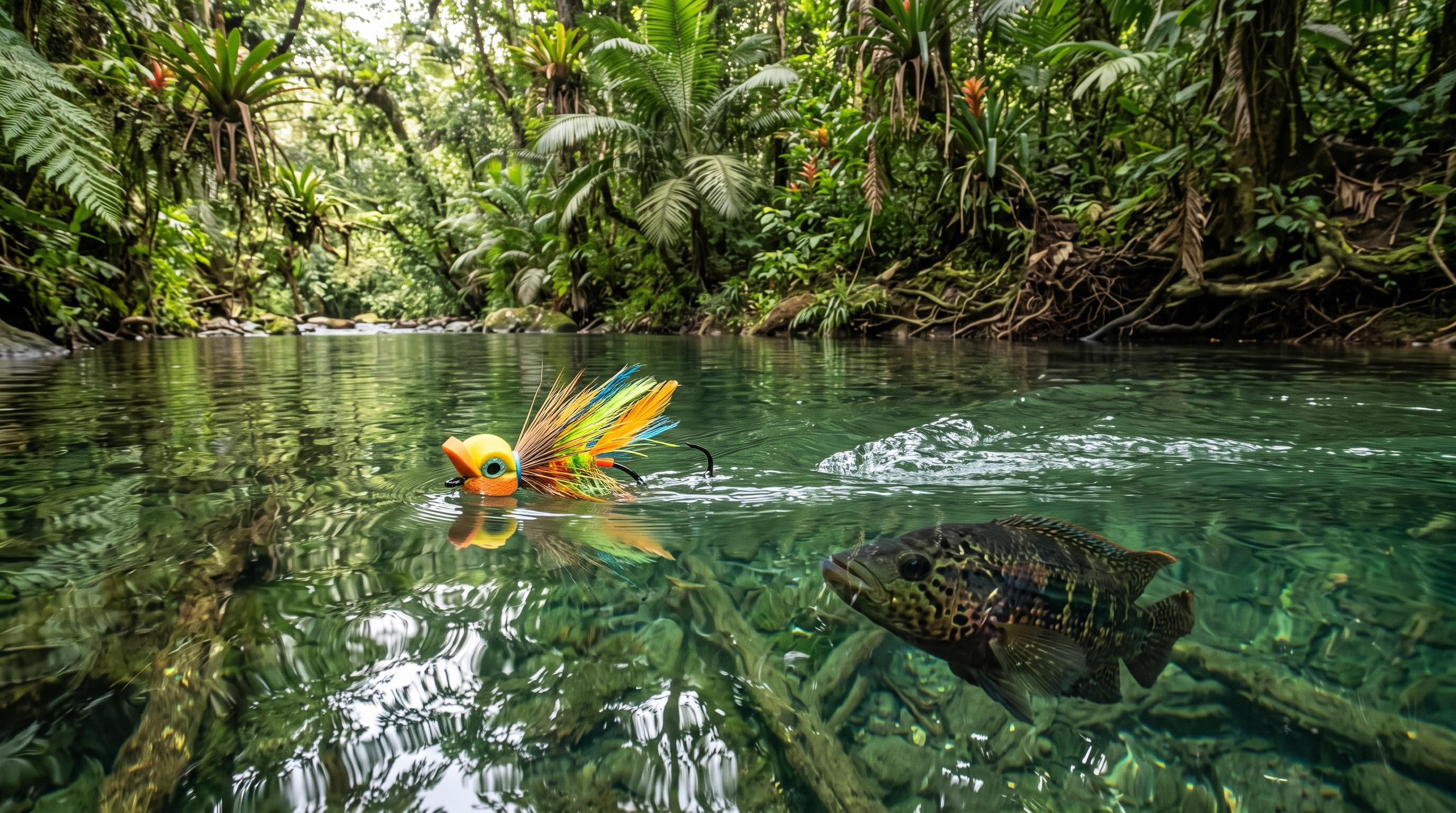
The Clouser Minnow earns its place in almost every travel fly box because it imitates baitfish, sinks effectively, and can be worked through a wide range of water.
White and chartreuse is a classic combination, but olive and white, black, tan, and brighter contrasting patterns can all be useful depending on clarity.
Use a steady strip when fish are chasing. Add pauses when they seem interested but hesitant. In deeper water, allow the fly to sink before beginning the retrieve.
The weighted eyes also help it ride hook-point-up, which can reduce snagging around some structure. Reduce does not mean eliminate. The river still gets a vote.
3. Lefty’s Deceiver
Lefty’s Deceiver is another dependable baitfish pattern that moves well without needing complicated retrieves.
Its profile can represent many small fish, making it useful when you know predators are feeding but cannot identify one exact prey species. Natural colors work well in clearer water, while added flash or stronger contrast can help when visibility drops.
It is also easier to cast than some bulky patterns, which makes it useful when you need repeated presentations along a bank or across a wider section.
4. Woolly Bugger
The Woolly Bugger is not glamorous, but it catches fish in an unreasonable number of situations.
Its marabou tail and flexible body create movement even during slow retrieves. It can resemble a small baitfish, aquatic insect, leech, or simply something alive enough to eat.
Black, olive, brown, and darker mixed colors are useful starting points. Weighted versions help reach deeper pockets, while lighter patterns can be worked through soft water and shallower edges.
When louder surface flies are ignored, the Woolly Bugger is often the fly that quietly gets back to work.
5. General Baitfish Streamers
Not every useful streamer needs a famous name.
Simple baitfish patterns in natural or contrasting colors can be extremely effective when placed close to structure and retrieved like an injured or fleeing fish.
Carry a few different sizes and weights so you can adjust to depth, current speed, and water clarity. Olive, white, black, silver, tan, and chartreuse combinations give you a flexible range.
The most important part is usually not the exact pattern. It is whether you can place it near the fish, keep it in the strike zone, and move it convincingly.
6. Crawfish Patterns
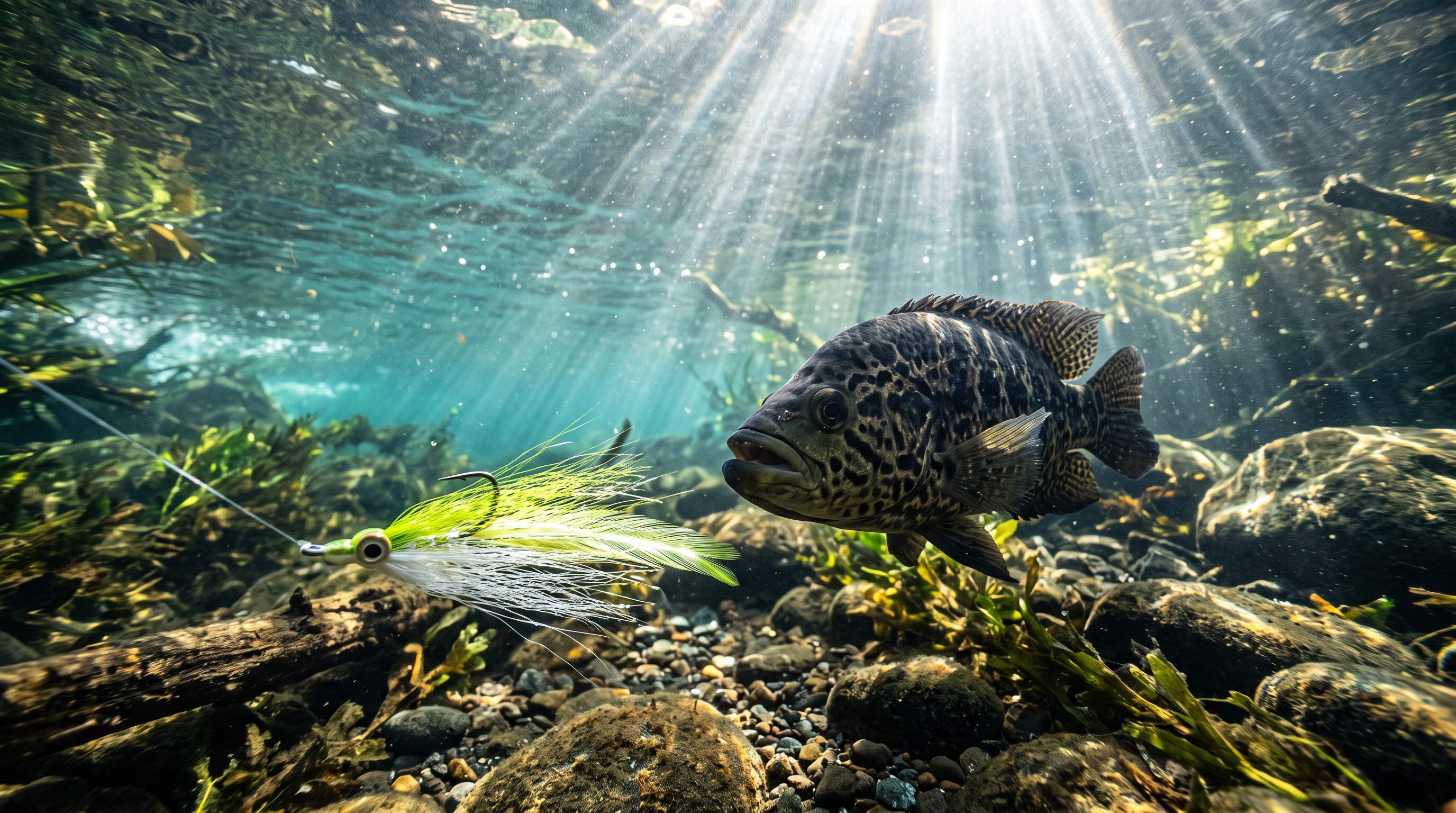
Crawfish patterns are often overlooked by anglers visiting Costa Rica for the first time, but predatory fish rarely ignore an easy meal crawling along the bottom.
Work these flies slowly around rocks, submerged logs, and deeper pockets. Resist the temptation to strip them too quickly. Crawfish do not sprint across the river unless something is trying to eat them.
7. Foam Beetles
Jungle rivers naturally drop beetles into the water every day. Fish know this.
A simple foam beetle drifting naturally beneath overhanging trees can produce surprisingly explosive takes, especially when fish are feeding close to the surface.
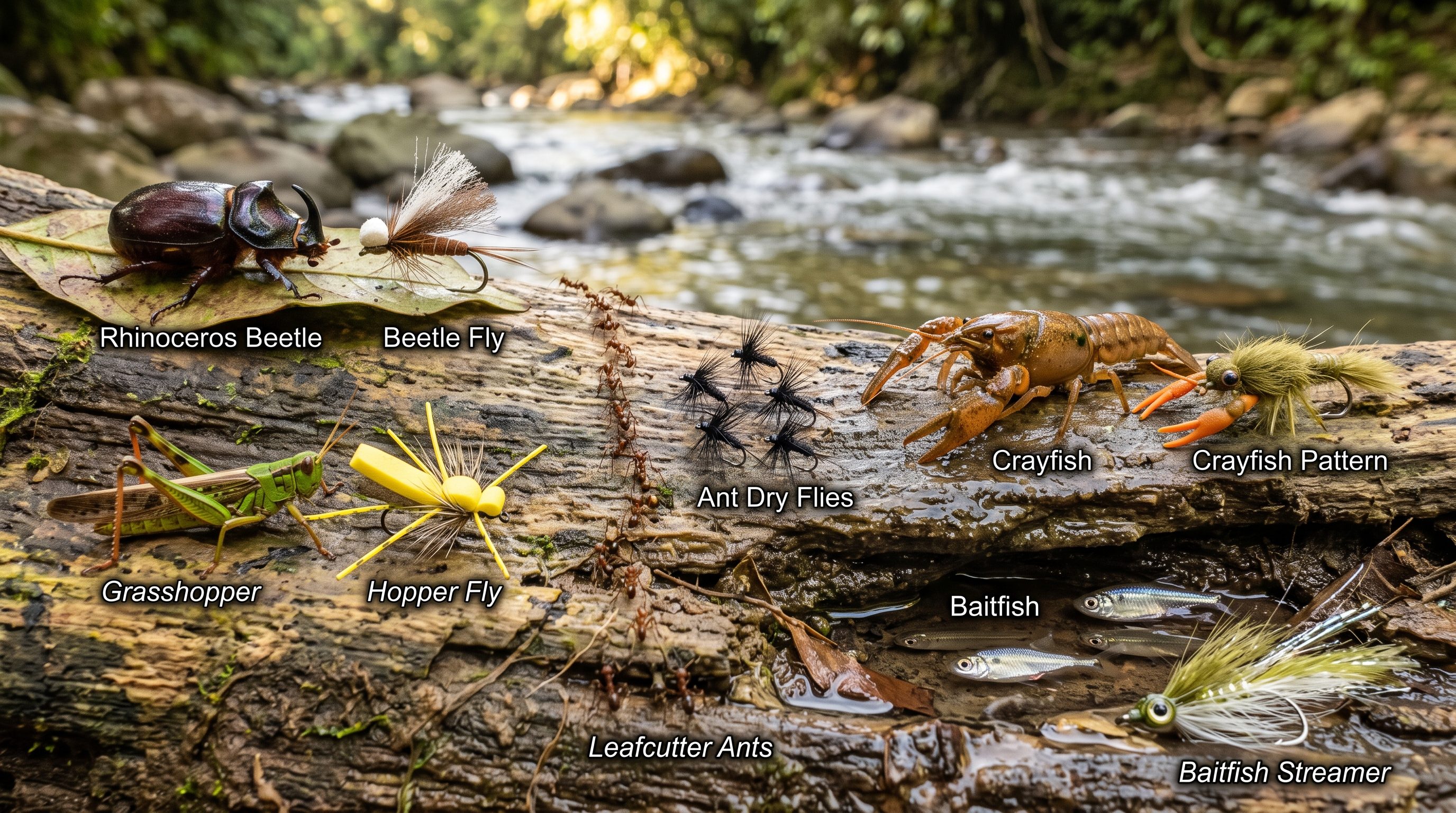
8. Hopper Patterns
While not an everyday pattern, hopper flies can be surprisingly effective during certain times of year when terrestrial insects are abundant around the river.
Keep a few in your box. They take up very little room and occasionally become exactly what the fish are looking for.
9. Ant & Terrestrial Patterns
Nature drops ants, beetles, spiders, and other terrestrial insects into tropical rivers every day.
Matching these accidental meals can often outperform flashier flies when fish become cautious or water is exceptionally clear.
10. Mouse Patterns
This isn’t an everyday fly.
But when conditions line up, mouse patterns can produce unforgettable strikes from large predatory fish that are willing to attack surprisingly large prey.
It is one of those flies you may only throw for an hour… but you will remember the eat for years.
How to Choose the Right Fly Today
Rather than asking, “What’s the best fly?”, ask yourself:
“What are today’s conditions telling me?”
| River Conditions | Recommended Fly |
|---|---|
| Early morning | Foam Poppers |
| Clear water | Natural baitfish, beetles |
| Stained water | Bright Clousers or Woolly Buggers |
| Fishing logs & roots | Crawfish or Streamers |
| Surface activity | Poppers, Beetles, Ants |
| Aggressive fish | Large Streamers & Mouse Patterns |
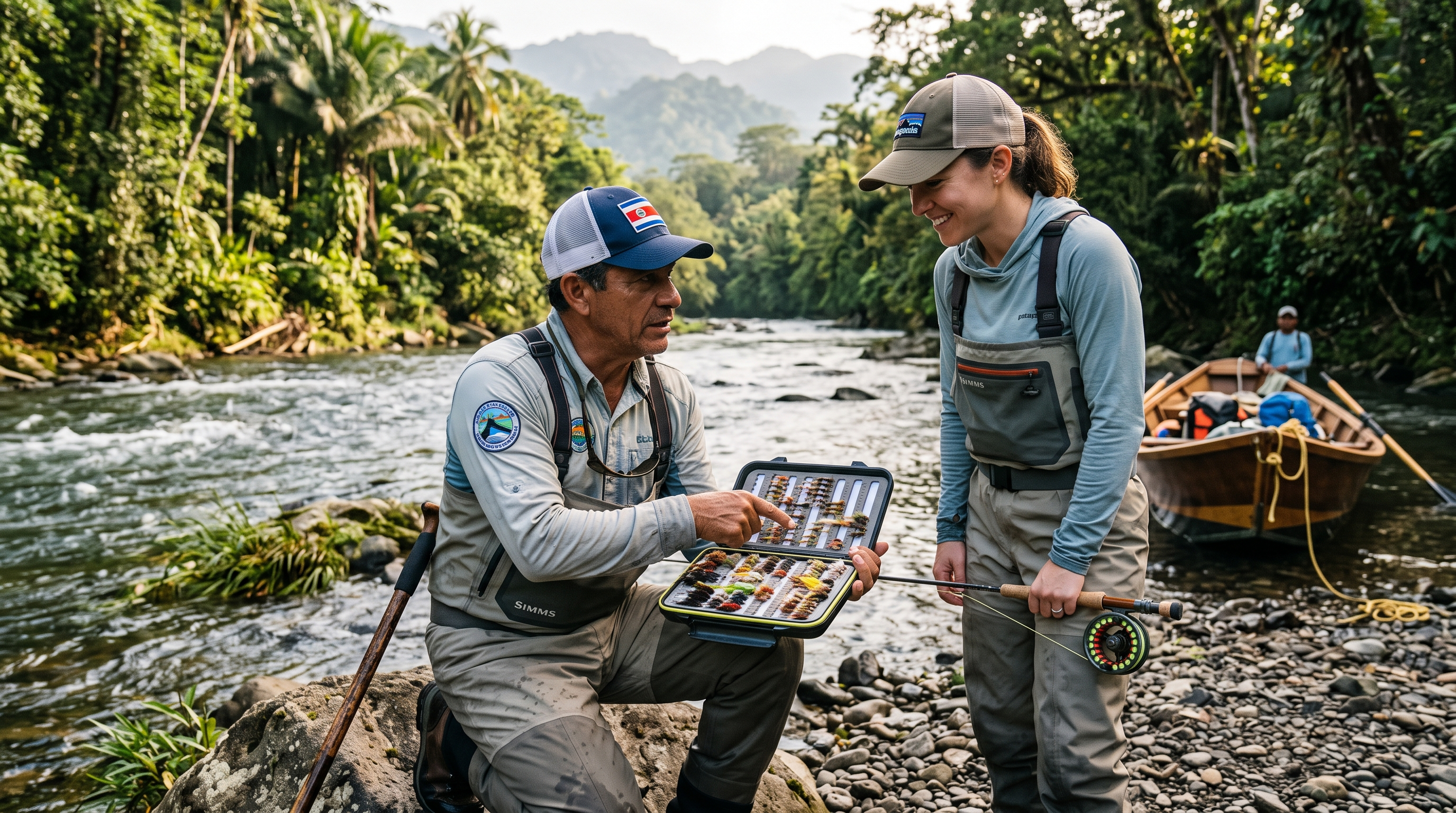
Building a Practical Costa Rica Fly Box
You do not need hundreds of flies.
A thoughtfully organized box with confidence patterns, a variety of sizes, and several colors will outperform an overflowing collection that leaves you guessing every time you open it.
As you spend more time on Costa Rica’s rivers, you will naturally develop favorites. Until then, these ten fly categories provide an excellent foundation for almost any freshwater adventure.
Affiliate Disclosure: Some links below may earn FlyFishCR a small commission at no additional cost to you.
Recommended Fly Fishing Gear
If you need to stock your fly box before your trip, here are a few excellent places to start.
Related Reading
- Best Time to Fly Fish in Costa Rica
- Guapote Fly Fishing Guide
- How to Read Water for Fly Fishing
- Flying with Fly Fishing Gear
- Costa Rica Fly Fishing Packing Checklist
Ready to Put These Fly Patterns to Work?
The best fly in your box is the one tied on at the right moment.
At Río Niño Outfitters, our guides help anglers choose flies based on current river conditions, water clarity, fish activity, and years of local experience—not guesswork.
Frequently Asked Questions
What is the best fly for guapote?
Foam poppers, Clouser Minnows, Woolly Buggers, and baitfish streamers consistently rank among the most productive patterns for guapote.
Do I need dozens of fly patterns?
No. A well-rounded fly box with ten reliable categories is more useful than carrying hundreds of duplicate flies.
Should I use bright or natural colors?
Natural colors often excel in clear water, while brighter or high-contrast flies can perform better when rivers become stained after rain.
What flies should beginners bring?
Start with foam poppers, Clousers, Woolly Buggers, baitfish streamers, and a few terrestrial patterns. They cover a wide variety of fishing situations.
How often should I change flies?
If conditions change or fish stop responding, switch patterns. Sometimes a small adjustment in size, color, or presentation is all that’s needed.