
The wheels touch down at Liberia International Airport, your fly rods arrive safely at baggage claim, and the warm Costa Rican air greets you outside the terminal.
From there, the journey continues north toward Bijagua, Upala, and eventually the Río Niño Lodge—an old church that has been carefully transformed into an open-concept fishing lodge beside the river.
Somewhere along the way, you may realize that your guide, Gilberto, speaks Spanish and you speak English. That is exactly where this guide becomes useful.
You do not need to become fluent before fly fishing in Costa Rica. A few practical words, fishing commands, food phrases, and friendly expressions can help you feel more comfortable from the moment you leave Liberia until your final breakfast at the lodge.
Quick Answer
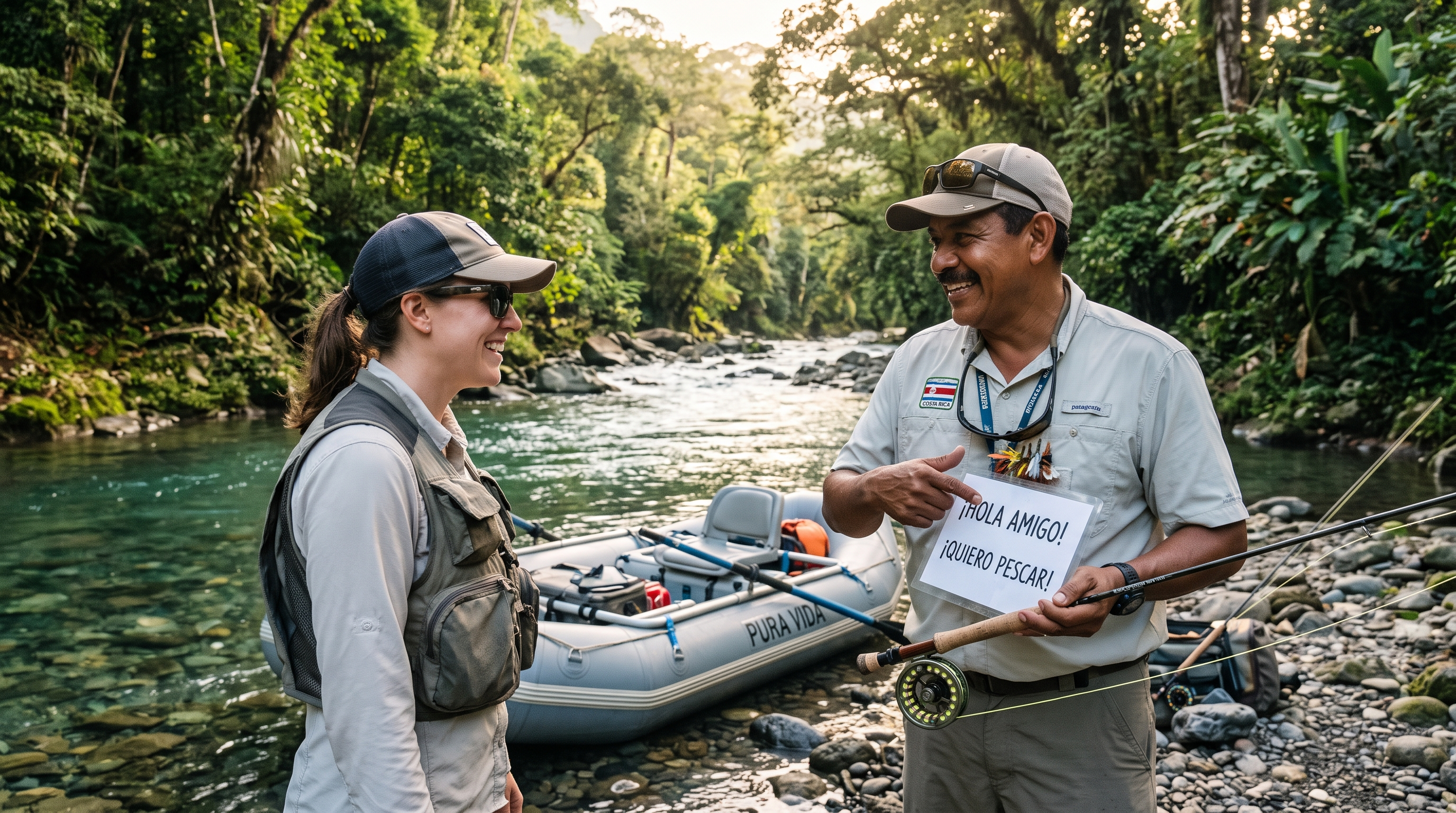
The most useful Spanish words for a Costa Rica fly fishing trip are simple expressions such as listo for ready, vamos for let’s go, allí for over there, despacio for slowly, grande for big, la pesca for fishing, and of course pura vida.
Knowing a few phrases for transportation, meals, safety, wildlife, casting, and landing fish will be far more useful than memorizing an enormous textbook vocabulary list.
Your Trip Begins at Liberia Airport
Liberia International Airport is the closest major airport to the Río Niño Lodge. From the airport, guests generally have two practical options: arrange transportation with a local tourism van or rent a vehicle and make the drive toward Upala.
The route takes you through the landscapes of northern Costa Rica, including the area around Bijagua de Upala. You will pass through Bijagua before continuing toward Upala in Alajuela Province.
Even before reaching the lodge, a few simple transportation phrases can help at the airport, rental counter, gas station, restaurant, or roadside stop.
| English | Spanish | Simple Pronunciation | When You May Use It |
|---|---|---|---|
| Airport | Aeropuerto | ah-eh-roh-PWER-toh | At Liberia or when confirming transportation. |
| Rental car | Carro de alquiler | KAR-roh deh al-kee-LER | At the rental desk. |
| Driver | Conductor | kohn-dook-TOR | When meeting a shuttle driver. |
| Where is the car? | ¿Dónde está el carro? | DON-deh es-TAH el KAR-roh | At the airport or rental office. |
| We are going to Upala | Vamos a Upala | VAH-mohs ah oo-PAH-lah | Confirming your destination. |
| How long does it take? | ¿Cuánto tiempo se tarda? | KWAN-toh tee-EM-poh seh TAR-dah | Asking about the drive. |
| Gas station | Gasolinera | gah-soh-lee-NEH-rah | When you need fuel. |
| Fill it up, please | Lleno, por favor | YEH-noh por fah-VOR | At a full-service gas station. |
| Bathroom | Baño | BAHN-yoh | At the airport, gas station, or restaurant. |
| Where is the bathroom? | ¿Dónde está el baño? | DON-deh es-TAH el BAHN-yoh | One of the most useful travel phrases anywhere. |
Finding the Río Niño Lodge
The drive becomes increasingly rural as you leave the busier roads behind. After passing through Bijagua, continue toward Upala. When you reach Upala, turn left instead of continuing through the centre of town.
| English | Spanish | Simple Pronunciation |
|---|---|---|
| Turn left | Gire a la izquierda | HEE-reh ah lah ees-kee-ER-dah |
| Turn right | Gire a la derecha | HEE-reh ah lah deh-REH-chah |
| Go straight | Siga recto | SEE-gah REK-toh |
| The bridge | El puente | el PWEN-teh |
| The river | El río | el REE-oh |
| Do not cross the bridge | No cruce el puente | noh KROO-seh el PWEN-teh |
| Are we close? | ¿Estamos cerca? | es-TAH-mohs SER-kah |
| We are lost | Estamos perdidos | es-TAH-mohs per-DEE-dohs |
| Where is Río Niño? | ¿Dónde está Río Niño? | DON-deh es-TAH REE-oh NEEN-yoh |
Meeting Gilberto at the Lodge
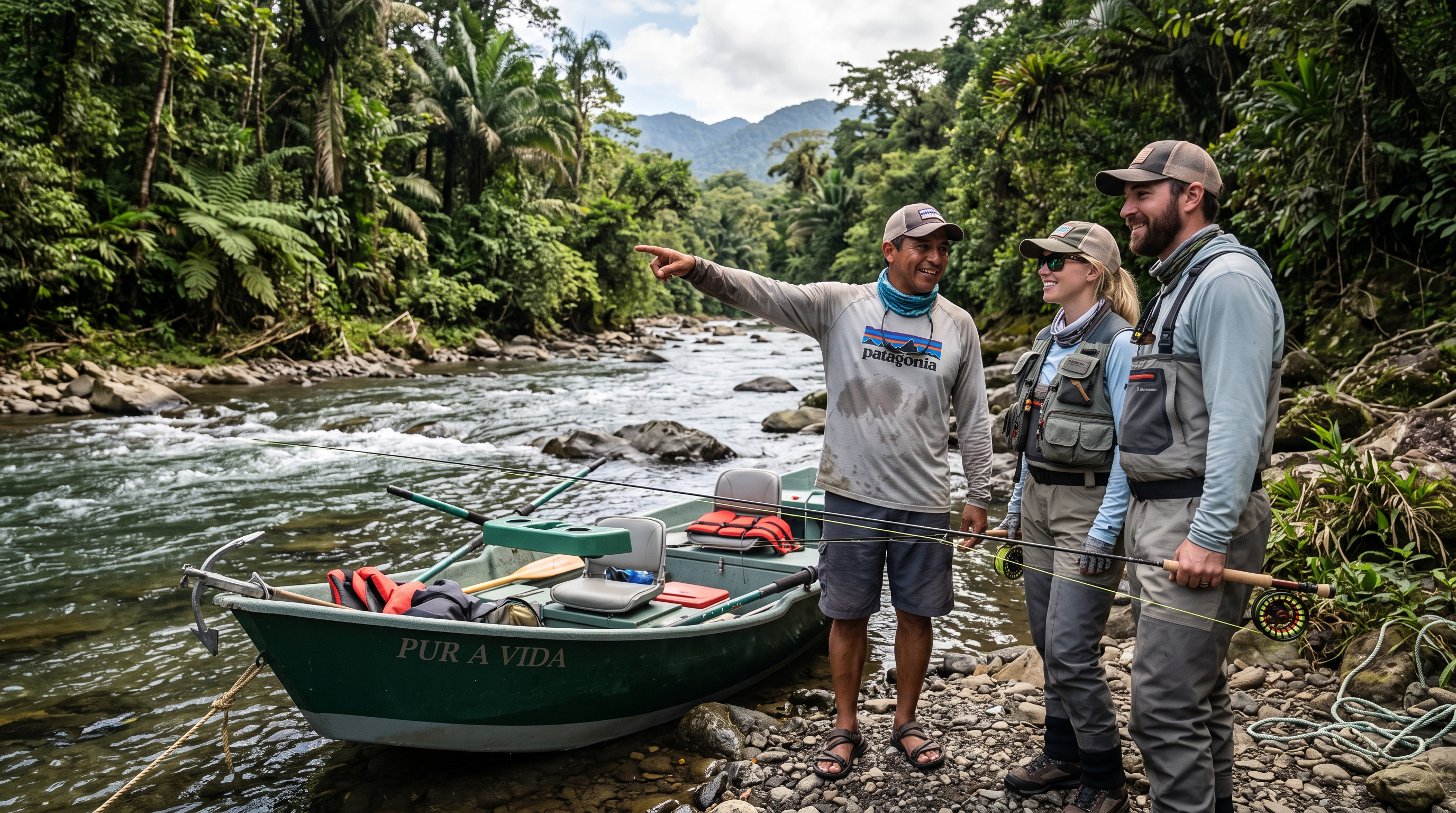
The lodge is directly beside Gilberto’s house, so he is almost always nearby. Guests are not arriving at a large resort with a distant front desk. They are arriving at a personal, locally guided fishing operation where the people, river, lodge, and community are closely connected.
Gilberto speaks Spanish. Dale speaks both English and Spanish when he is present and fishing with guests. Jeremy speaks mainly English and continues learning Spanish.
That means English-speaking anglers should expect some conversations to involve simple words, gestures, pointing, laughter, and a little patience. Fortunately, fishing creates its own shared language.
| English | Spanish | Simple Pronunciation | Use |
|---|---|---|---|
| Hello | Hola | OH-lah | A simple greeting. |
| Good morning | Buenos días | BWEH-nohs DEE-ahs | At breakfast or before fishing. |
| Good afternoon | Buenas tardes | BWEH-nahs TAR-dehs | When arriving later in the day. |
| Nice to meet you | Mucho gusto | MOO-choh GOOS-toh | Meeting Gilberto or other local hosts. |
| My name is… | Me llamo… | meh YAH-moh | Introducing yourself. |
| Thank you | Gracias | GRAH-see-ahs | Useful all day. |
| Please | Por favor | por fah-VOR | For requests. |
| I understand | Entiendo | en-tee-EN-doh | When instructions make sense. |
| I don’t understand | No entiendo | noh en-tee-EN-doh | When you need clarification. |
| Can you repeat that? | ¿Puede repetir? | PWEH-deh reh-peh-TEER | When a phrase is spoken quickly. |
| More slowly, please | Más despacio, por favor | mahs des-PAH-see-oh por fah-VOR | One of the most helpful phrases for beginners. |
What “Pura Vida” Really Means
You will hear pura vida throughout Costa Rica. A direct translation would be “pure life,” but that does not fully explain how Costa Ricans use it.
Depending on the moment, pura vida can mean hello, goodbye, thank you, everything is good, no problem, excellent, or simply an expression of appreciation for life.
On the Río Niño, it might be said after a good cast, a fish release, a cold drink, a wildlife sighting, or the end of a successful day.
Your First Evening at the Lodge
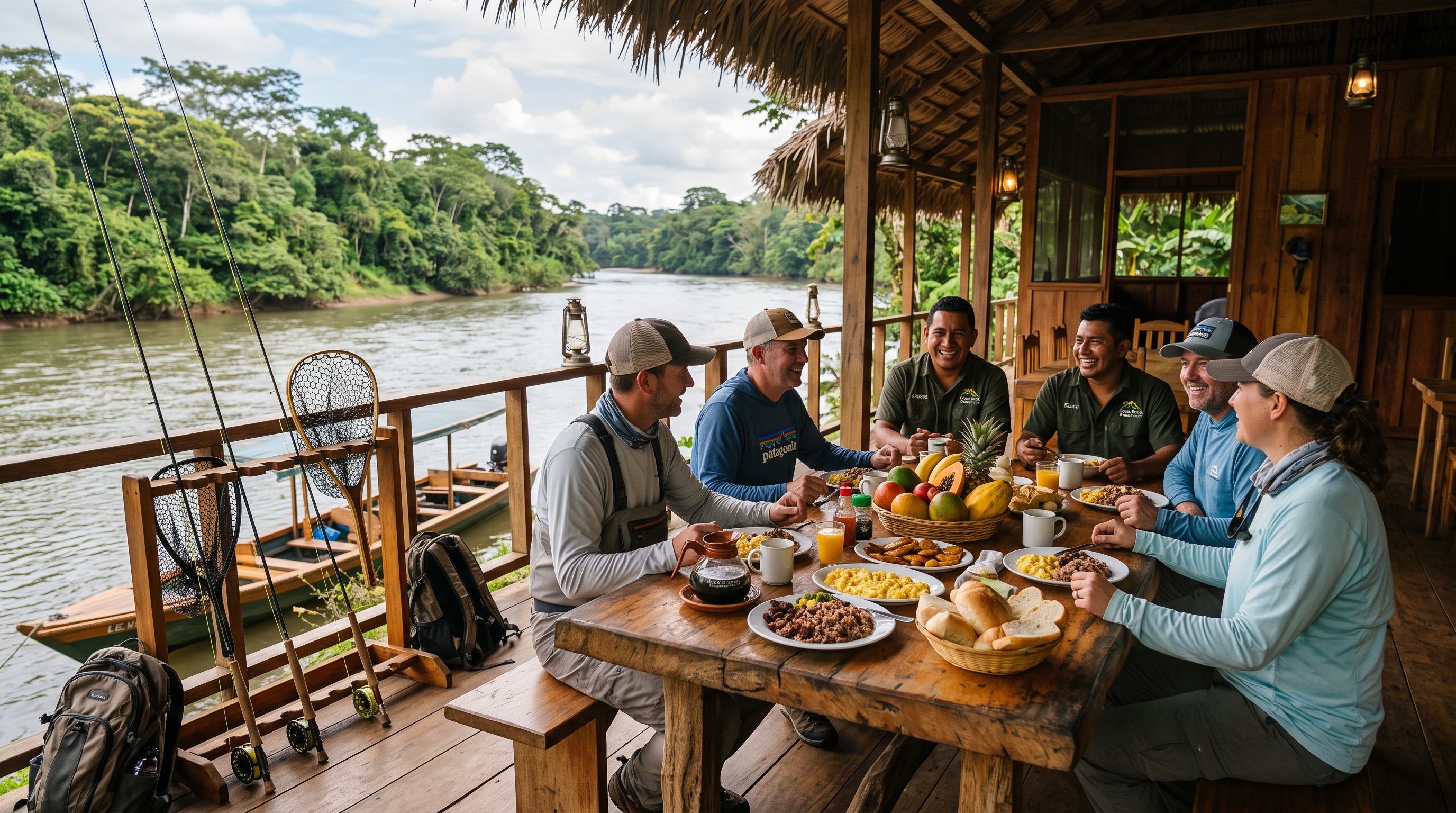
The lodge is open-concept, comfortable, and designed around the fishing experience. Guests staying in the private rooms have air conditioning and en-suite bathrooms.
Packages include breakfasts and dinners. The operation is flexible and all-inclusive in spirit: when guests have specific food or drink preferences, the goal is to stock what they want when reasonable notice is provided.
That could mean coffee, fruit, water, soft drinks, beer, snacks, or dietary preferences discussed before arrival.
| English | Spanish | Simple Pronunciation |
|---|---|---|
| Coffee | Café | kah-FEH |
| Water | Agua | AH-gwah |
| Beer | Cerveza | ser-BEH-sah |
| Breakfast | Desayuno | deh-sah-YOO-noh |
| Dinner | Cena | SEH-nah |
| Rice | Arroz | ah-ROHS |
| Beans | Frijoles | free-HOH-lehs |
| Chicken | Pollo | POH-yoh |
| Fish | Pescado | pehs-KAH-doh |
| Fruit | Fruta | FROO-tah |
| It is delicious | Está delicioso | es-TAH deh-lee-see-OH-soh |
| Another one, please | Otro, por favor | OH-troh por fah-VOR |
| Without… | Sin… | seen |
| I am allergic to… | Soy alérgico a… | soy ah-LER-hee-koh ah |
Getting Ready for Your Río Niño River Day
River days do not begin by simply launching at the lodge. Guests and equipment are normally transported approximately 30 minutes upstream.
The exact drop location depends on the river section, water conditions, fishing style, and the day’s plan. From there, the group fishes and floats downstream for approximately four to six hours before returning to the lodge area.
Fishing styles can include drift boat fishing, wading, or a more scenic float depending on conditions and the package itinerary.
| English | Spanish | Simple Pronunciation |
|---|---|---|
| Are you ready? | ¿Listo? | LEES-toh |
| I am ready | Estoy listo | es-TOY LEES-toh |
| Let’s go | Vamos | VAH-mohs |
| Fishing | La pesca | lah PEHS-kah |
| To fish | Pescar | pehs-KAR |
| Good fishing | Buena pesca | BWEH-nah PEHS-kah |
| The boat | El bote | el BOH-teh |
| The life jacket | El chaleco salvavidas | el chah-LEH-koh sal-vah-BEE-dahs |
| The paddle | El remo | el REH-moh |
| Upstream | Río arriba | REE-oh ah-REE-bah |
| Downstream | Río abajo | REE-oh ah-BAH-hoh |
Fly Fishing Gear in Spanish
Most equipment discussions can be handled by pointing, demonstrating, or showing a fly box. Still, knowing the basic names makes it easier to ask questions and understand what Gilberto is referring to.
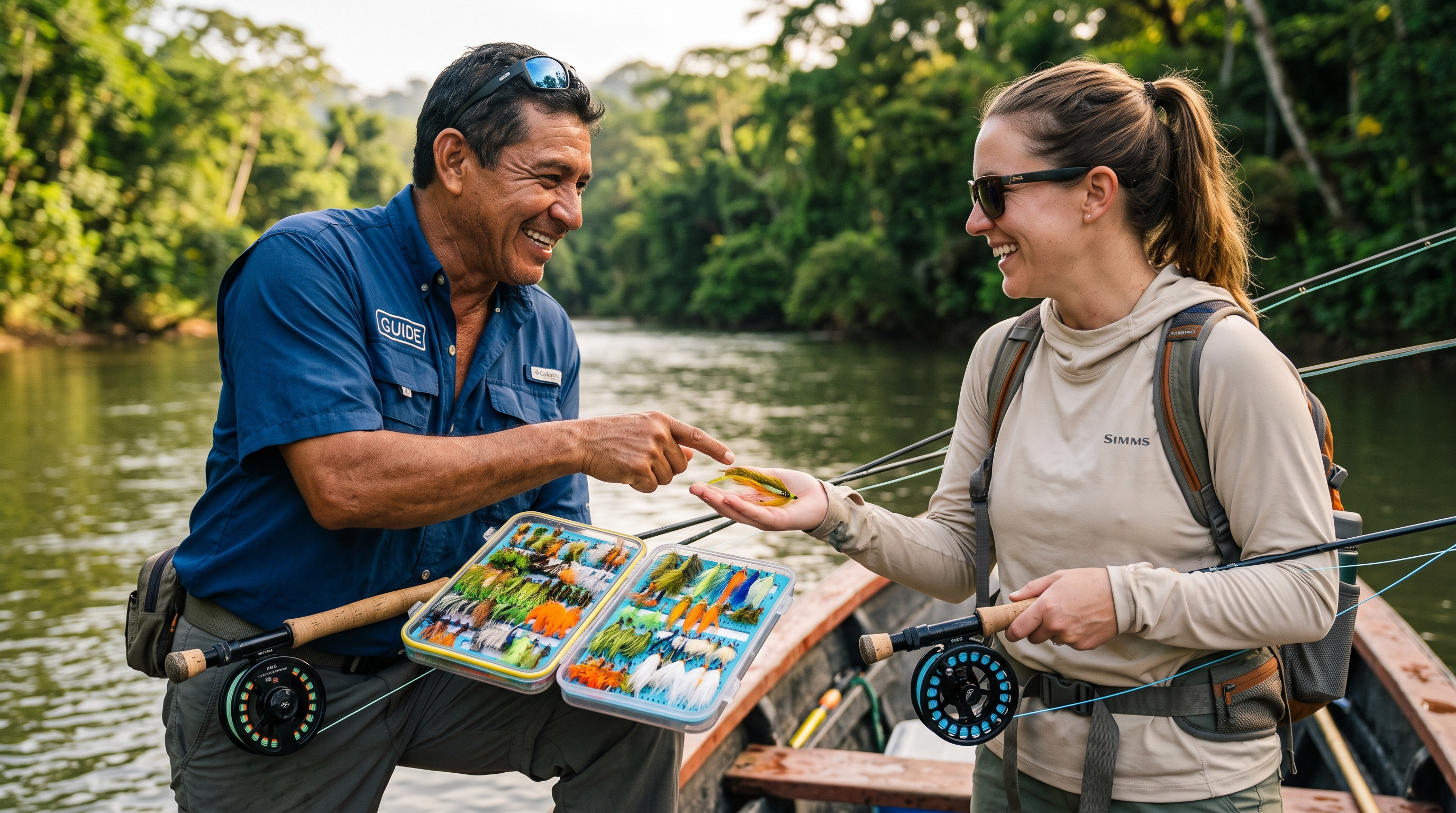
| English | Spanish | Simple Pronunciation |
|---|---|---|
| Fishing rod | Caña de pescar | KAHN-yah deh pehs-KAR |
| Fly rod | Caña de mosca | KAHN-yah deh MOHS-kah |
| Reel | Carrete | kah-REH-teh |
| Fishing line | Línea de pesca | LEE-neh-ah deh PEHS-kah |
| Leader | Bajo de línea | BAH-hoh deh LEE-neh-ah |
| Hook | Anzuelo | ahn-SWEH-loh |
| Fly | Mosca | MOHS-kah |
| Fly box | Caja de moscas | KAH-hah deh MOHS-kahs |
| Knot | Nudo | NOO-doh |
| Net | Red | red |
| Waders | Vadeadores | bah-deh-ah-DOH-rehs |
| Boots | Botas | BOH-tahs |
| Sunglasses | Lentes de sol | LEN-tehs deh sol |
| Sunscreen | Protector solar | proh-tek-TOR soh-LAR |
Before travelling, use our Costa Rica fly fishing packing checklist to prepare your rods, clothing, sun protection, footwear, and travel documents.
Travelling with rods and reels can also create airport questions, so review our guide to flying with fly fishing gear before departure.
The Commands You May Hear Most Often
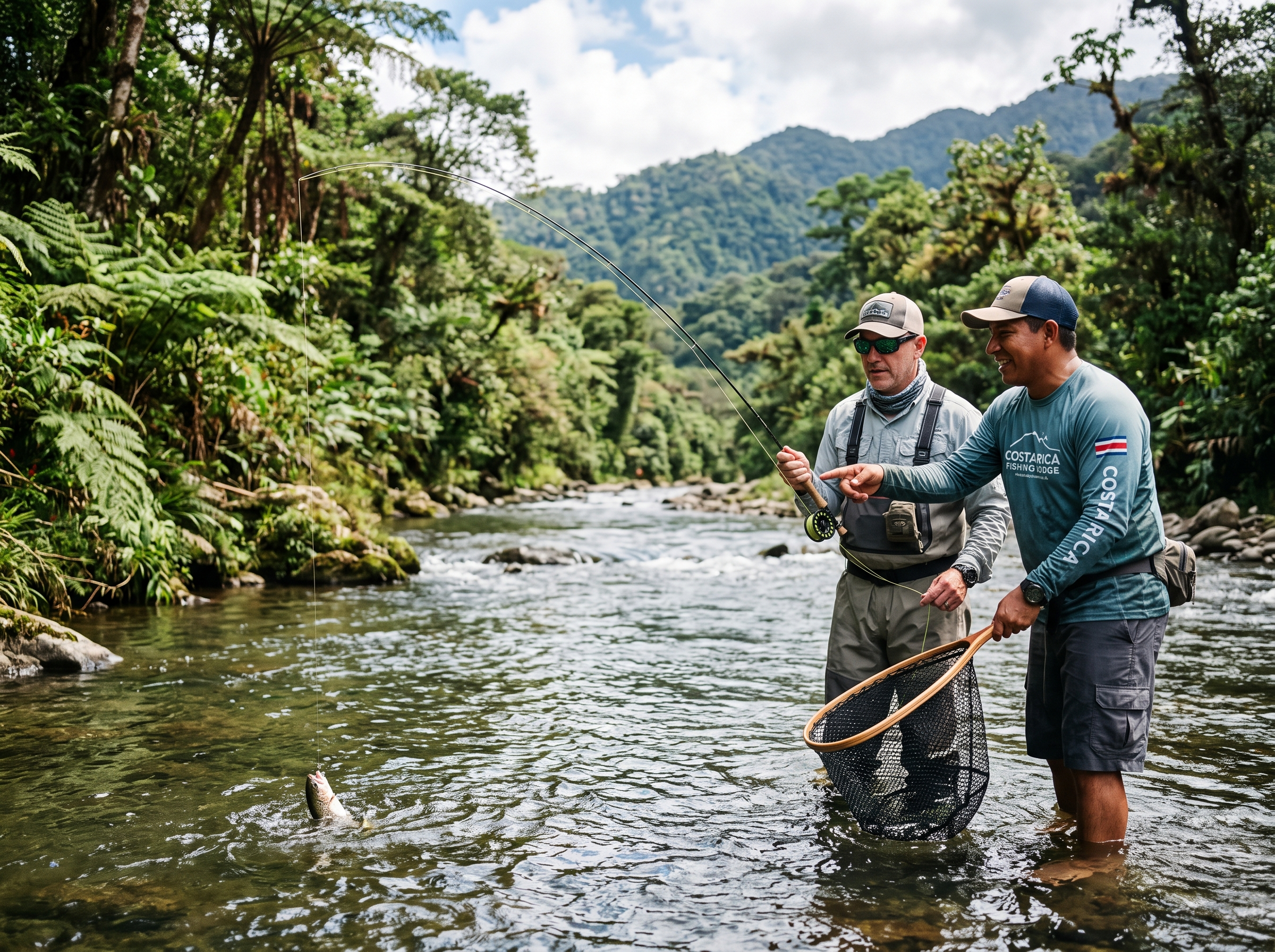
On the river, Spanish becomes short and practical. There may not be time for a long explanation when a guapote is sitting beside submerged timber or when a branch is approaching behind your casting shoulder.
Listen for directional words, changes in speed, and simple encouragement.
| What You May Hear | Meaning | Simple Pronunciation | What To Do |
|---|---|---|---|
| ¡Listo! | Ready / all set | LEES-toh | Prepare to launch, cast, or move. |
| ¡Vamos! | Let’s go | VAH-mohs | Move, begin, or continue. |
| ¡Allí! | Over there | ah-YEE | Look where Gilberto is pointing. |
| ¡Aquí! | Here | ah-KEE | Cast or position yourself nearby. |
| Más cerca | Closer | mahs SER-kah | Place the fly closer to structure. |
| Más lejos | Farther | mahs LEH-hohs | Extend the cast. |
| Despacio | Slowly | des-PAH-see-oh | Slow the retrieve or movement. |
| Más rápido | Faster | mahs RAH-pee-doh | Speed up the retrieve. |
| Otra vez | Again | OH-trah bes | Make another cast or drift. |
| Muy bien | Very good | mwee bee-EN | You did it correctly. |
| Grande | Big | GRAHN-deh | A larger fish may be following or hooked. |
| Pequeño | Small | peh-KEH-nyoh | Possibly the size of your first fish. |
| Cuidado | Careful | kwee-DAH-doh | Watch your footing, cast, branch, or obstacle. |
| Espere | Wait | es-PEH-reh | Pause before casting or moving. |
| Ahora | Now | ah-OH-rah | Cast, strike, move, or act immediately. |
What Gilberto Often Says
Guests may hear phrases and expressions including más clientes, pura vida, la pesca, and listo.
Más clientes literally means “more clients.” In the fishing context, it can become a lighthearted expression: good fish, happy anglers, great stories, and hopefully more people returning to experience the Río Niño.
Casting Around Trees and River Structure
The Río Niño is not an open casting pond. It is a tropical river surrounded by trees, branches, rocks, current seams, submerged wood, and overhanging vegetation.
Those features create excellent fish habitat, but they also demand awareness. Anglers should pay particular attention to their back casts.
You may arrive expecting the fish to be the biggest challenge. Sometimes the trees catch more flies than the fish do.
| English | Spanish | Simple Pronunciation |
|---|---|---|
| Cast here | Lance aquí | LAHN-seh ah-KEE |
| Cast over there | Lance allí | LAHN-seh ah-YEE |
| Beside the log | Al lado del tronco | ahl LAH-doh del TRON-koh |
| Under the branch | Debajo de la rama | deh-BAH-hoh deh lah RAH-mah |
| Watch the tree | Cuidado con el árbol | kwee-DAH-doh kohn el AR-bol |
| Watch your back cast | Cuidado con el lance hacia atrás | kwee-DAH-doh kohn el LAHN-seh AH-see-ah ah-TRAS |
| The fly is in the tree | La mosca está en el árbol | lah MOHS-kah es-TAH en el AR-bol |
| I am stuck | Estoy enganchado | es-TOY en-gahn-CHAH-doh |
| Short cast | Lance corto | LAHN-seh KOR-toh |
| Good cast | Buen lance | bwen LAHN-seh |
Improving accuracy and line speed before the trip can make these situations easier. Our guide to the double-haul cast explains how anglers can generate more efficient line speed without simply overpowering the rod.
It also helps to understand where fish hold around structure, current, and depth changes. Read our complete guide on how to read water while fly fishing.
Hooking and Landing Fish
Be prepared to catch small fish as well as larger ones. Not every take will produce a trophy guapote, and that variety is part of fishing a natural tropical river.
A small fish can still teach you how the species takes a fly, where it holds, and how the river section is fishing that day.
| English | Spanish | Simple Pronunciation |
|---|---|---|
| Fish! | ¡Pez! | pehs |
| I have a fish | Tengo un pez | TEN-goh oon pehs |
| Set the hook | Clave el anzuelo | KLAH-beh el ahn-SWEH-loh |
| Keep the line tight | Mantenga la línea tensa | mahn-TEN-gah lah LEE-neh-ah TEN-sah |
| Let it run | Déjelo correr | DEH-heh-loh koh-RER |
| Bring it closer | Acérquelo | ah-SER-keh-loh |
| Use the net | Use la red | OO-seh lah red |
| Nice fish! | ¡Buen pez! | bwen pehs |
| It is a guapote | Es un guapote | es oon gwah-POH-teh |
| Take a picture | Tome una foto | TOH-meh OO-nah FOH-toh |
| Release it | Suéltelo | SWEL-teh-loh |
| Catch and release | Captura y liberación | kap-TOO-rah ee lee-beh-rah-see-ON |
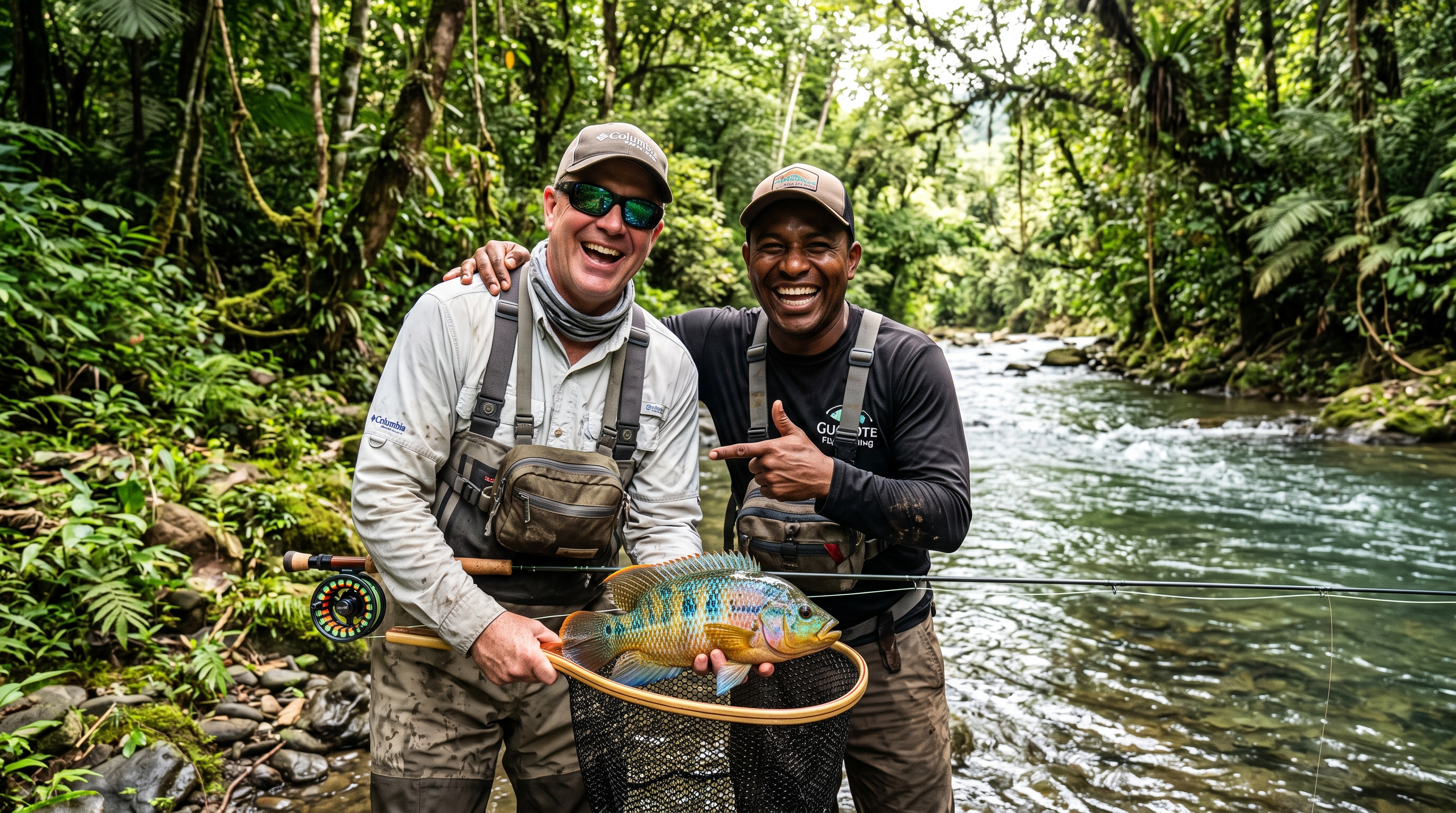
For more information about one of northern Costa Rica’s most exciting freshwater predators, read our complete guide to guapote fly fishing in Costa Rica.
Fly selection changes with water, weather, structure, and fish behaviour. Our guide to the best flies for Costa Rica fly fishing provides a practical starting point.
Wildlife You May See Along the Río Niño
The fish are only part of the river experience. Guests may see howler monkeys, capuchin monkeys, kingfishers, storks, iguanas, basilisks commonly called Jesus lizards, the occasional toucan, and caimans.
Some sightings are brief. A monkey may move through the canopy above the boat. A kingfisher may fly ahead from branch to branch. A caiman may be noticed along the bank before quietly slipping into the water.
| Wildlife | Spanish | Simple Pronunciation |
|---|---|---|
| Howler monkey | Mono aullador | MOH-noh ow-yah-DOR |
| Capuchin monkey | Mono carablanca | MOH-noh kah-rah-BLAHN-kah |
| Toucan | Tucán | too-KAHN |
| Kingfisher | Martín pescador | mar-TEEN pehs-kah-DOR |
| Stork | Cigüeña | see-GWEN-yah |
| Iguana | Iguana | ee-GWAH-nah |
| Basilisk / Jesus lizard | Basilisco | bah-see-LEES-koh |
| Caiman | Caimán | ky-MAHN |
| Look! | ¡Mire! | MEE-reh |
| In the tree | En el árbol | en el AR-bol |
| On the riverbank | En la orilla | en lah oh-REE-yah |
Lunch, Snacks, and Drinks on the River
River days commonly include snacks or sandwiches, along with water or beer based on guest preferences and the day’s plan.
Because a float may last four to six hours, guests should communicate food restrictions and preferred drinks before the trip. That gives the lodge time to prepare and stock the right items.
| English | Spanish | Simple Pronunciation |
|---|---|---|
| I am hungry | Tengo hambre | TEN-goh AHM-breh |
| I am thirsty | Tengo sed | TEN-goh sed |
| Sandwich | Sándwich | SAHND-weech |
| Snack | Merienda | meh-ree-EN-dah |
| More water, please | Más agua, por favor | mahs AH-gwah por fah-VOR |
| A beer, please | Una cerveza, por favor | OO-nah ser-BEH-sah por fah-VOR |
| No alcohol, please | Sin alcohol, por favor | seen al-koh-OL por fah-VOR |
| That is enough | Es suficiente | es soo-fee-see-EN-teh |
Important Safety Phrases
Tropical rivers require the same basic respect as any moving water: pay attention to footing, instructions, weather, branches, rocks, wildlife, and boat movement.
Read our complete collection of fly fishing safety tips before your trip, particularly if you have limited experience with drift boats or wading.
| English | Spanish | Simple Pronunciation |
|---|---|---|
| Careful | Cuidado | kwee-DAH-doh |
| Stop | Pare | PAH-reh |
| Wait | Espere | es-PEH-reh |
| Help | Ayuda | ah-YOO-dah |
| I need help | Necesito ayuda | neh-seh-SEE-toh ah-YOO-dah |
| Are you okay? | ¿Está bien? | es-TAH bee-EN |
| I am okay | Estoy bien | es-TOY bee-EN |
| Watch your step | Cuidado al caminar | kwee-DAH-doh ahl kah-mee-NAR |
| The rock is slippery | La roca está resbalosa | lah ROH-kah es-TAH res-bah-LOH-sah |
| Deep water | Agua profunda | AH-gwah proh-FOON-dah |
| Snake | Serpiente | ser-pee-EN-teh |
| Caiman | Caimán | ky-MAHN |
What the Premium Río Niño Package Looks Like
Premium Fishing Package
This is the sweet spot for anglers who want the Río Niño experience to feel complete without committing to the longest stay. It allows more time on the water, flexibility in fishing styles, and a comfortable pace between river days.
What Is Included
- Three nights at the lodge.
- Private air-conditioned room with en-suite bathroom.
- Breakfasts and dinners.
- Two guided river days on the Río Niño.
- Drift boat fishing, wading, or a scenic float depending on river conditions.
- Time to explore different sections of the river and adjust the second fishing day based on what was learned during the first.
Typical Itinerary
Group Size and Fishing Rotation
The drift boat can carry up to three anglers per session. When Dale joins a drift session, guest capacity may be reduced to two. Wading sessions are best suited to one or two anglers at a time.
Mixed or larger groups can be managed using a simple rotation so each guest receives meaningful fishing time.
Ask About the Premium PackageA One-Page Costa Rica Fly Fishing Cheat Sheet
This condensed reference includes the phrases most likely to help during arrival, meals, fishing, wildlife sightings, and river safety. Save the page on your phone or print this final section before travelling.
Pronunciation note: these are simplified English approximations, not formal phonetic spellings. Costa Rican accents and natural speaking speeds will vary.
| English | Spanish | Pronunciation |
|---|---|---|
| Hello | Hola | OH-lah |
| Good morning | Buenos días | BWEH-nohs DEE-ahs |
| Nice to meet you | Mucho gusto | MOO-choh GOOS-toh |
| Please | Por favor | por fah-VOR |
| Thank you | Gracias | GRAH-see-ahs |
| I don’t understand | No entiendo | noh en-tee-EN-doh |
| More slowly | Más despacio | mahs des-PAH-see-oh |
| Ready? | ¿Listo? | LEES-toh |
| Let’s go | Vamos | VAH-mohs |
| Fishing | La pesca | lah PEHS-kah |
| Fly | Mosca | MOHS-kah |
| Rod | Caña | KAHN-yah |
| Reel | Carrete | kah-REH-teh |
| Hook | Anzuelo | ahn-SWEH-loh |
| Boat | Bote | BOH-teh |
| River | Río | REE-oh |
| Here | Aquí | ah-KEE |
| Over there | Allí | ah-YEE |
| Closer | Más cerca | mahs SER-kah |
| Slowly | Despacio | des-PAH-see-oh |
| Faster | Más rápido | mahs RAH-pee-doh |
| Again | Otra vez | OH-trah bes |
| Good cast | Buen lance | bwen LAHN-seh |
| Careful | Cuidado | kwee-DAH-doh |
| Watch the tree | Cuidado con el árbol | kwee-DAH-doh kohn el AR-bol |
| Fish! | ¡Pez! | pehs |
| Big | Grande | GRAHN-deh |
| Small | Pequeño | peh-KEH-nyoh |
| Nice fish | Buen pez | bwen pehs |
| Take a picture | Tome una foto | TOH-meh OO-nah FOH-toh |
| Release it | Suéltelo | SWEL-teh-loh |
| Look! | ¡Mire! | MEE-reh |
| Monkey | Mono | MOH-noh |
| Toucan | Tucán | too-KAHN |
| Caiman | Caimán | ky-MAHN |
| Water | Agua | AH-gwah |
| Beer | Cerveza | ser-BEH-sah |
| I am hungry | Tengo hambre | TEN-goh AHM-breh |
| I am thirsty | Tengo sed | TEN-goh sed |
| Help | Ayuda | ah-YOO-dah |
| Stop | Pare | PAH-reh |
| Wait | Espere | es-PEH-reh |
| Everything is good | Pura vida | POO-rah BEE-dah |
Final Advice Before Your Trip
Do not worry about speaking perfect Spanish. The goal is not to deliver flawless sentences. The goal is to recognize a few important words, communicate basic needs, understand simple river instructions, and show a willingness to connect with your guide.
Dale can help bridge English and Spanish when he is fishing with guests. Gilberto brings local river knowledge and a lifetime of familiarity with the area. Jeremy continues learning Spanish alongside the operation’s English-speaking visitors.
You may catch a large guapote. You may catch several tiny fish. You will almost certainly cast into at least one tree if you stop watching your back cast.
By the time you return to the lodge after floating the Río Niño, phrases such as listo, vamos, grande, and pura vida will probably make much more sense than they did when your plane first landed in Liberia.
Frequently Asked Questions
Do I need to speak Spanish to fish at Río Niño Lodge?
No. English-speaking guests can still enjoy the trip. Dale speaks English and Spanish when he is present, and fishing instructions can often be communicated through simple words, demonstrations, and gestures. Learning a few key phrases will make the experience easier and more personal.
Which airport should I use for Río Niño Lodge?
Liberia International Airport is the closest major airport. Guests can arrange transportation with a tourism van or rent a vehicle and drive toward Bijagua and Upala.
How do I find the lodge from Upala?
Turn left instead of continuing through central Upala. Continue approximately 10 to 15 minutes toward the Río Niño. When you reach the bridge, do not cross it. Turn right before the bridge and continue approximately 1.5 kilometres to the lodge.
How long is a typical Río Niño fishing day?
Guests are generally driven approximately 30 minutes upstream and then fish and float back for about four to six hours. The exact duration and drop zone depend on conditions and the chosen river section.
What food and drinks are provided?
Fishing packages include breakfasts and dinners. Snacks or sandwiches, water, and sometimes beer are brought on river days. Guests should share dietary needs and preferred drinks before arrival so the lodge can prepare.
What wildlife might I see?
Possible sightings include howler monkeys, capuchin monkeys, kingfishers, storks, iguanas, Jesus lizards, caimans, and the occasional toucan.
What is the most important casting tip for the Río Niño?
Watch your back cast. Trees and branches closely surround many productive fishing areas. Short, accurate, controlled casts are often more effective than long casts.
What does pura vida mean?
Pura vida literally means pure life, but in Costa Rica it can also mean hello, goodbye, thank you, everything is good, excellent, or no problem. Its meaning depends on the situation.