
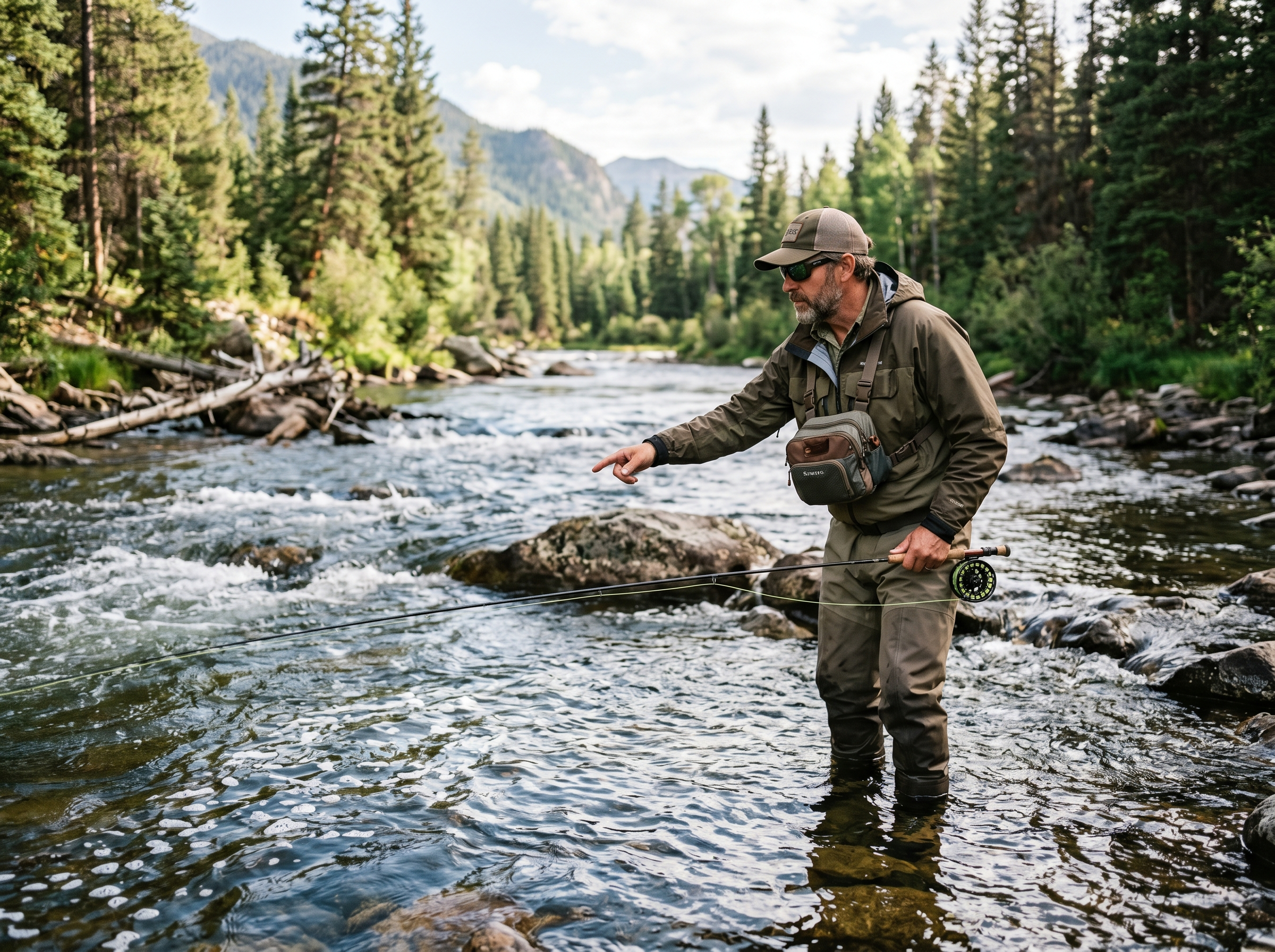
Most anglers want to know what fly to use.
A good guide usually looks at the water first.
That is the difference between casting because the river looks pretty and casting because something about that current, shadow, seam, log, or bank says, “There should be a fish there.”
Learning how to read water for fly fishing does not mean turning the river into a science textbook. It means slowing down long enough to notice what the river is already telling you before your first cast ever lands.
Quick Answer: How Do You Read Water for Fly Fishing?
The fly matters. The cast matters. But where you put them matters first.
Why Reading Water Matters More Than Your Fly
Fly selection gets a lot of attention because it is easy to talk about. Anglers can debate color, size, flash, legs, weight, shape, and whether that one fly in the corner of the box is genius or nonsense.
But even the perfect fly will not do much if it lands in dead water where fish are not feeding, resting, hiding, or hunting.
Reading water helps you answer the important questions before you cast:
- Where is food likely moving?
- Where can fish hold without wasting energy?
- Where can predators hide?
- Where does fast water meet slow water?
- Where does depth change?
- Where would a fish feel safe enough to wait?
If you can answer those questions, your cast becomes more than hope with a fly line attached.
Current Seams: The River’s Conveyor Belt
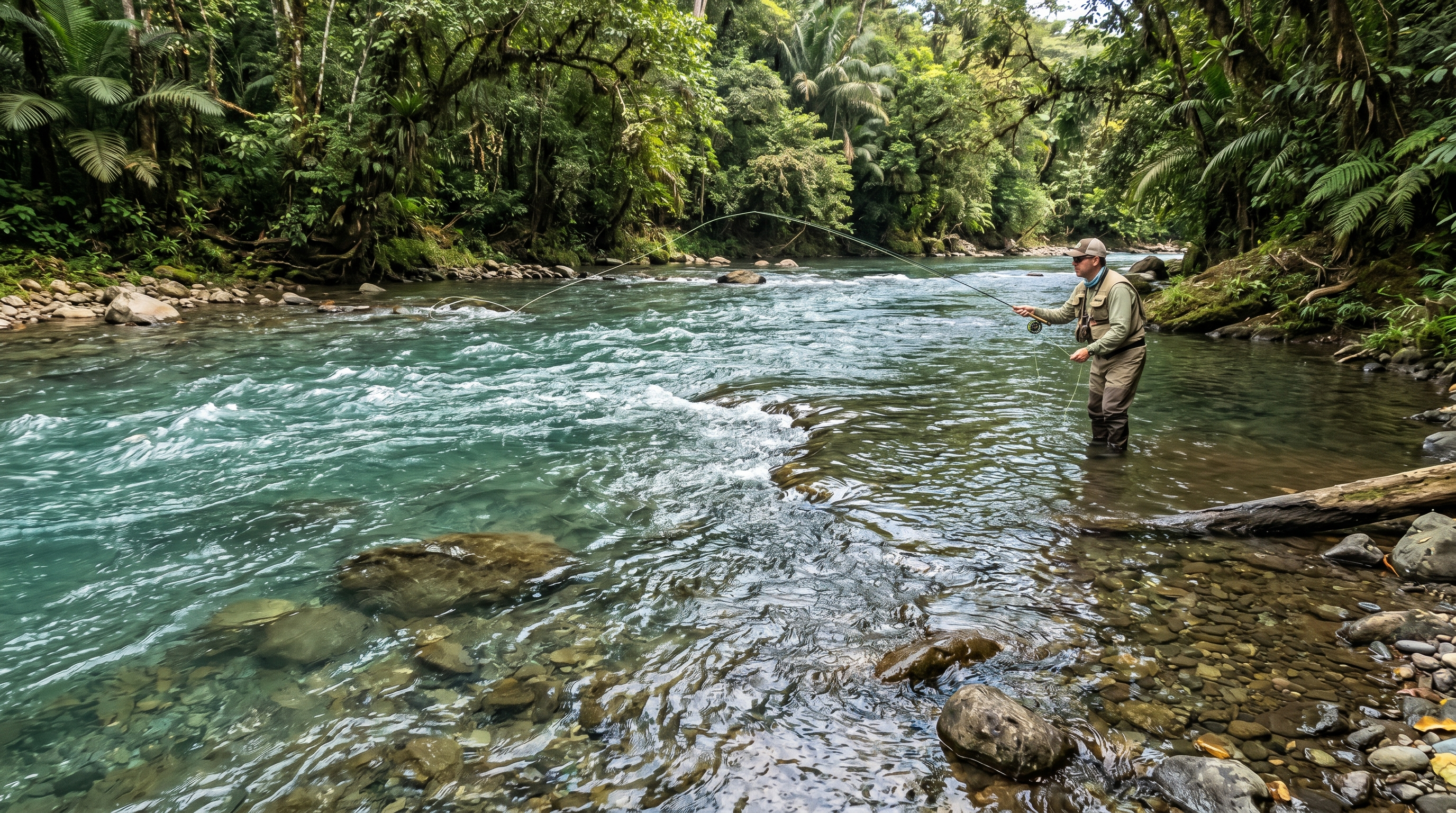
A current seam is where two different speeds of water meet. One side may be moving faster. The other may be slower, softer, or deeper.
To a fish, that seam can be a perfect feeding lane.
Food drifts down with the faster current, while the fish can sit just off to the side in easier water. It is efficient. And fish, despite their dramatic strikes and questionable life choices around hooks, are often very efficient.
How to Spot a Current Seam
- Look for a visible line between smooth and choppy water.
- Watch foam, leaves, bubbles, or debris moving downstream.
- Notice where one lane of water moves faster than the lane beside it.
- Look for subtle color changes that suggest depth or current speed.
- Cast along the seam, not randomly across the whole river.
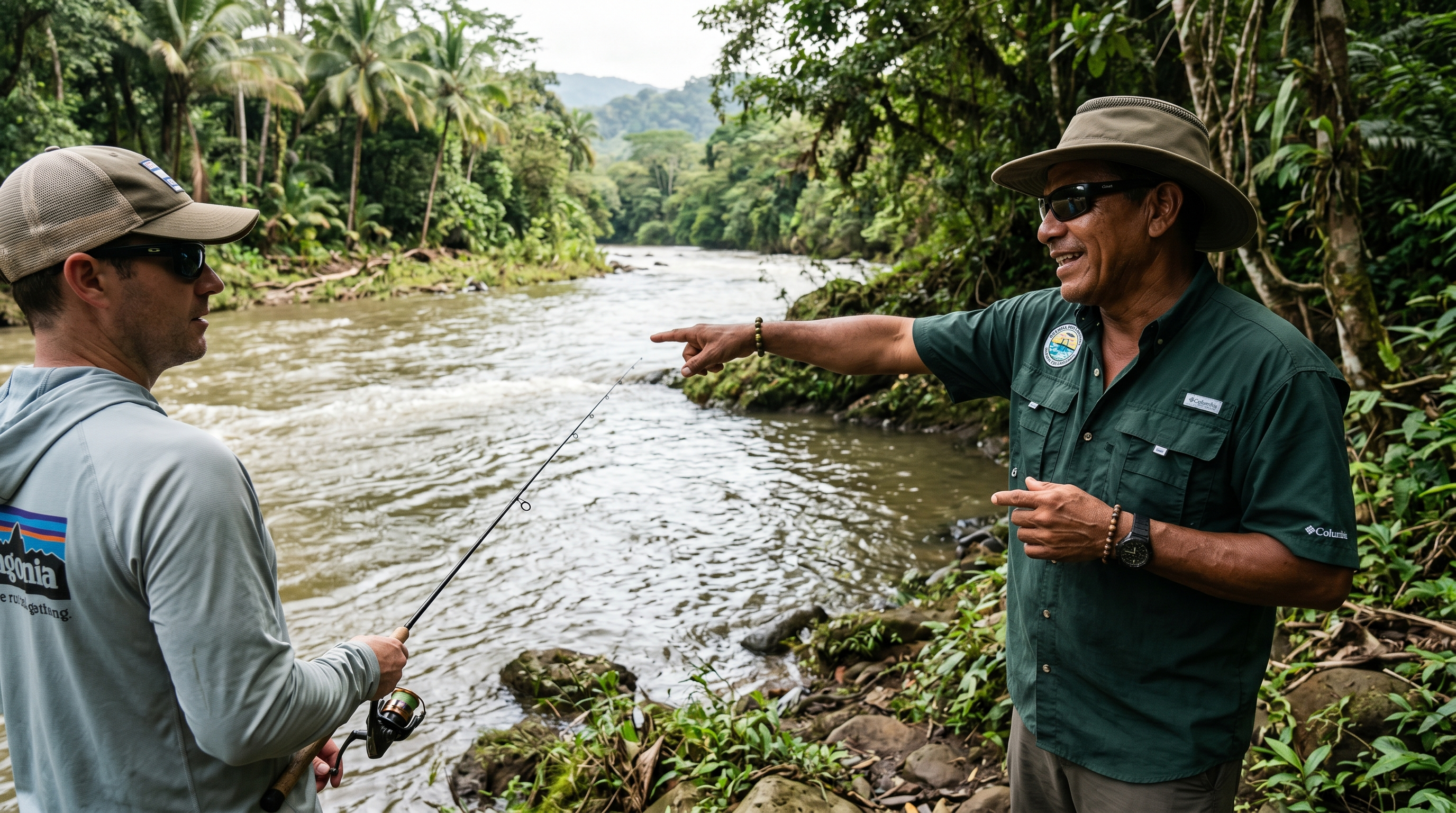
On the Río Niño, a guide may point at a line in the water that looks like nothing at first. Then you see leaves drifting down one lane while the edge beside it barely moves. That edge is often worth your attention.
Structure Creates Opportunity
Structure is anything in or around the river that changes flow, creates cover, or gives fish a place to hide.
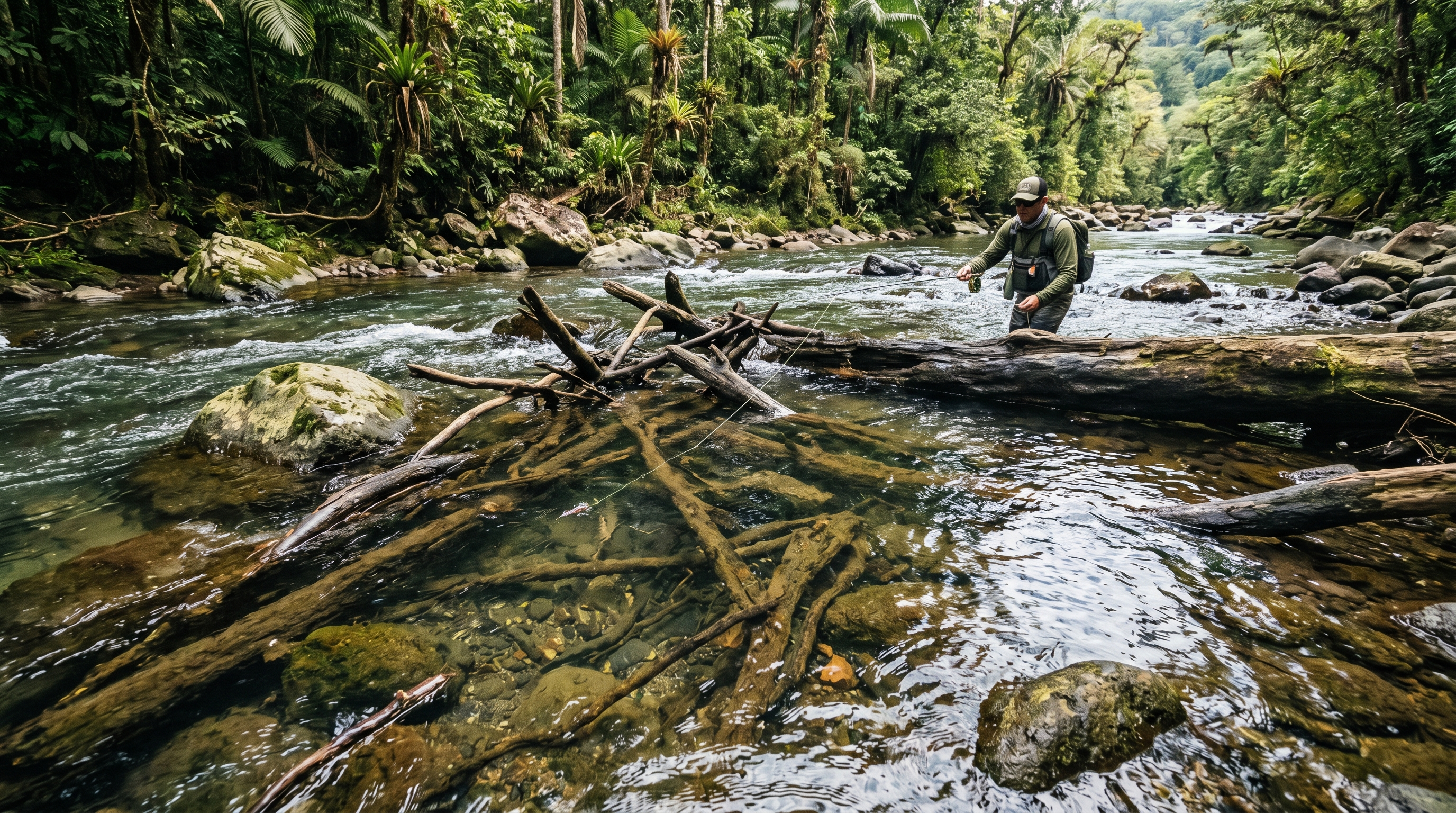
In Costa Rica rivers, structure can be obvious or sneaky. A fallen tree is obvious. A submerged root line under a shaded bank is less obvious. A rock that breaks the current may be barely visible, but the soft pocket behind it can hold fish.
For species like guapote, structure matters a lot. They are ambush-minded fish. They like places where they can hold close to cover and attack something that gets too close.
Structure Worth Casting To
- Fallen trees: Great cover, but very good at stealing flies.
- Root systems: Excellent ambush zones for predatory fish.
- Rocks: Create soft pockets and current breaks.
- Undercut banks: Fish can tuck under the edge and wait.
- Shade lines: Often more productive in bright sun.
- Depth changes: Fish may hold where shallow water drops into deeper water.
Structure fishing is a game of close enough. Too far away and the fly never enters the strike zone. Too close and congratulations, you have fed another tree.
Related read: Guapote Fly Fishing in Costa Rica
Eddies: The River’s Rest Stops
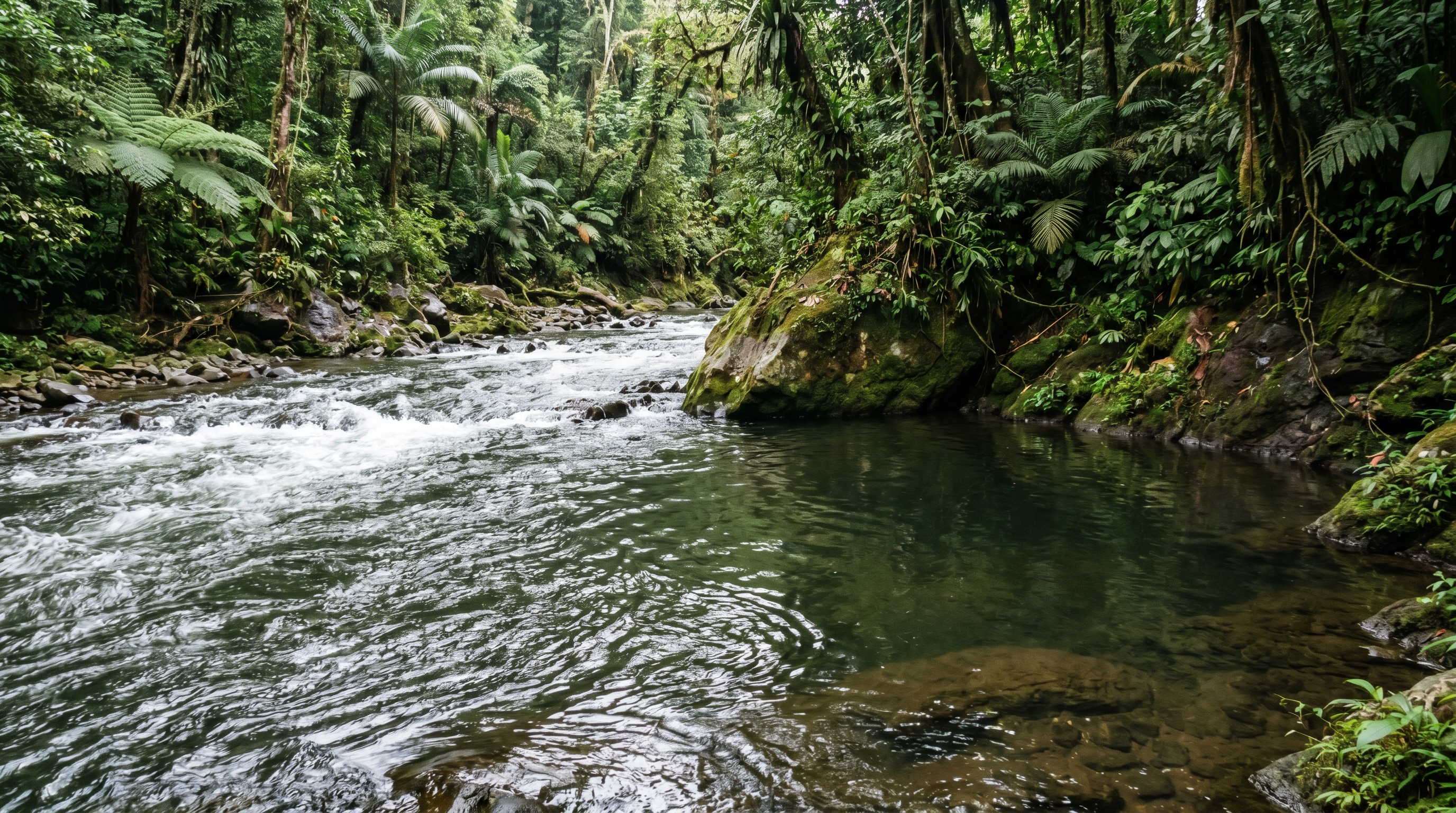
An eddy forms when current moves around an obstacle and creates a slower, circular, or softer pocket of water.
Fish like eddies because they offer a break from the main current while still keeping food nearby. That makes them especially important when water is moving quickly or fish are conserving energy.
From shore, an eddy may look like a calm swirl beside faster water. From a drift boat, it may look like a softer pocket that briefly pulls bubbles, leaves, or foam in a different direction.
How to Fish an Eddy
- Cast to the edge where fast current meets the slower eddy.
- Let the fly move naturally before adding action.
- Watch your line carefully because currents may pull in different directions.
- Try the inside edge, outside edge, and tail of the eddy.
- Do not rush. Fish may need time to commit.
Eddies are not always loud, obvious places. Sometimes the best water is the quiet pocket beside the chaos.
Undercut Banks and Ambush Zones
Undercut banks are one of the classic places fish hide.
The bank hangs over the water, creating shade, cover, and a protected edge where fish can sit out of the main flow. In tropical rivers, those banks may also include roots, overhanging plants, and tight casting lanes that make things interesting in the same way a kitchen fire is “interesting.”
Fish use these areas because they provide security and access to food.
- Shade helps fish feel less exposed.
- Roots and banks create ambush cover.
- Insects and small food items may fall from vegetation.
- Predatory fish can strike from cover and return quickly.
The trick is to get your fly close without slapping the water too hard or hanging it in the greenery. This is where short, accurate casts often beat long, dramatic ones.
Reading Tropical Rivers Like the Río Niño
Tropical rivers do not always read like classic trout streams.
The water can be warmer, darker, fuller after rain, and more influenced by jungle structure. Fish behavior can shift with water levels, light, temperature, and seasonal flows. Some days the river looks calm but hides strong current. Other days the surface looks messy, but the edges are full of opportunity.
On a river like the Río Niño, reading water means paying attention to more than one clue at a time.
What to Watch on Costa Rica Rivers
- Water color: Clear, stained, or rising water changes how fish feed.
- Bank structure: Roots, branches, and shade often matter more than open water.
- Rain patterns: A river can change quickly after heavy rain.
- Light levels: Early and late windows may push fish closer to edges.
- Food movement: Leaves, insects, baitfish, and surface disturbance can all offer clues.
The goal is not to memorize every possible river feature. The goal is to build the habit of looking before casting.
Related read: Best Time to Fly Fish in Costa Rica
Watch Before You Cast
This may be the simplest water-reading rule, and also the one anglers ignore the most.
Stand on shore or sit quietly in the boat for a minute. Watch what moves. Watch what does not. Watch where bubbles travel. Watch where leaves slow down. Watch where shadows sit against structure.
If you are with a guide, pay attention to what they look at before they tell you where to cast. Experienced guides are usually reading several things at once without making a speech about it.
Common Water Reading Mistakes
Most water-reading mistakes come from rushing.
The river looks good, the rod is ready, the fly is tied on, and suddenly the angler starts casting before they have made a plan. Sometimes that works. Sometimes fish are generous. But relying on generosity is not exactly a strategy.
Mistakes to Avoid
- Casting first, looking second: You may spook fish before you understand the water.
- Ignoring soft edges: Fish are not always in the fastest or most obvious current.
- Fishing only open water: Structure often matters more than empty space.
- Missing shade lines: Shade can hold fish during bright conditions.
- Using the same retrieve everywhere: Different water calls for different movement.
- Standing too close too soon: Fish may be holding near the bank you just stomped toward.
The first cast into a good piece of water is often your best chance. Spend it wisely.
How Reading Water Changes Your Fly Choice
Reading water does not replace fly selection. It improves it.
If fish are tight to banks or structure, a popper or streamer may make sense. If they are deeper, a weighted fly or different line may be better. If the current is fast, you may need to mend, adjust angle, or shorten the drift.
- Surface activity near banks: Try poppers or topwater patterns.
- Deeper pockets: Use streamers or weighted flies.
- Fast seams: Cast upstream or across and manage drag carefully.
- Soft eddies: Slow the retrieve and let the fly linger.
- Heavy structure: Use stronger tippet and be ready to control the fish quickly.
The water tells you what kind of presentation has a chance. The fly is just part of the conversation.
Related read: Costa Rica Fly Fishing Packing Checklist
Putting It All Together Before Your First Cast
Before you cast, build a quick mental map.
You do not need to overthink it. Just identify the most likely places fish would hold and decide how your fly should move through them.
The 60-Second Water Reading Checklist
- Where is the fastest water?
- Where is the slowest water?
- Where do those two meet?
- What structure is available?
- Where is the shade?
- Where could a fish rest without wasting energy?
- Where could a predator ambush food?
- What is the safest casting position?
- What is the best first cast?
That one minute can save you twenty minutes of random casting and a few flies sacrificed to the jungle for no good reason.
Final Thoughts: The River Usually Tells You First
Reading water is one of the most useful skills in fly fishing because it travels with you.
It works from shore, from a drift boat, while wading, on familiar rivers, and on water you are seeing for the first time.
The better you get at reading current, seams, eddies, structure, shade, and depth changes, the less random your fishing becomes.
You will still make bad casts. You will still misread water. You will still occasionally convince yourself a submerged branch is definitely a fish because hope is a powerful drug.
But over time, the river starts making more sense.
And when that happens, you are not just casting anymore.
You are fishing.
Want to Learn the River While You Fish It?
Río Niño Outfitters gives anglers a chance to learn water reading in real time, whether from the drift boat, the bank, or a quiet stretch where the river finally starts making sense.
Local guidance helps you understand where fish hold, how conditions change, and why the best cast usually starts before the rod moves.
Frequently Asked Questions
What does it mean to read water in fly fishing?
Reading water means observing current, seams, eddies, depth, structure, shade, and fish behavior to decide where fish are likely holding before you cast.
Where do fish usually hold in rivers?
Fish often hold near current seams, eddies, rocks, logs, undercut banks, depth changes, shade lines, and soft water beside faster current.
What is a current seam in fly fishing?
A current seam is the visible or subtle line where faster water meets slower water. Fish often hold along seams because food drifts past while they conserve energy.
Why do fish hold near structure?
Structure such as logs, rocks, roots, and undercut banks gives fish protection, shade, current breaks, and ambush opportunities.
Should I watch the water before casting?
Yes. Watching the water before casting helps you identify feeding lanes, holding areas, safe casting positions, and the best first cast into productive water.