
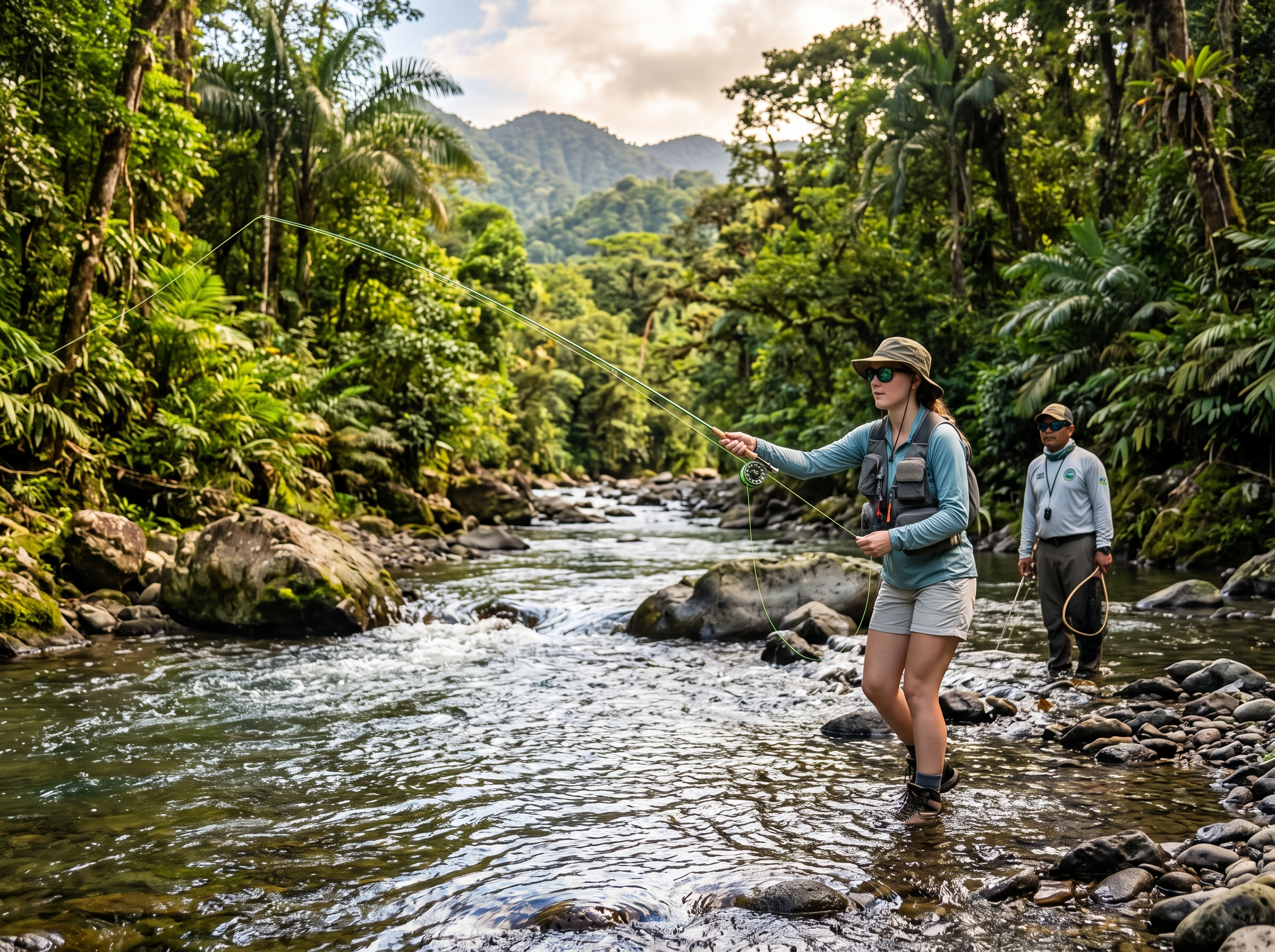
Yes, a beginner can fly fish in Costa Rica. You do not need a perfect double haul or years of trout-stream experience before booking the Río Niño. You do need curiosity, a willingness to listen, and realistic expectations about a guided day on a tropical river.
This is not a promise that every cast produces a fish. It is a look at how the day actually unfolds—from an early breakfast at the lodge to casting help, a long float and a relaxed evening back with the people looking after you.
Quick Answer for First-Time Anglers
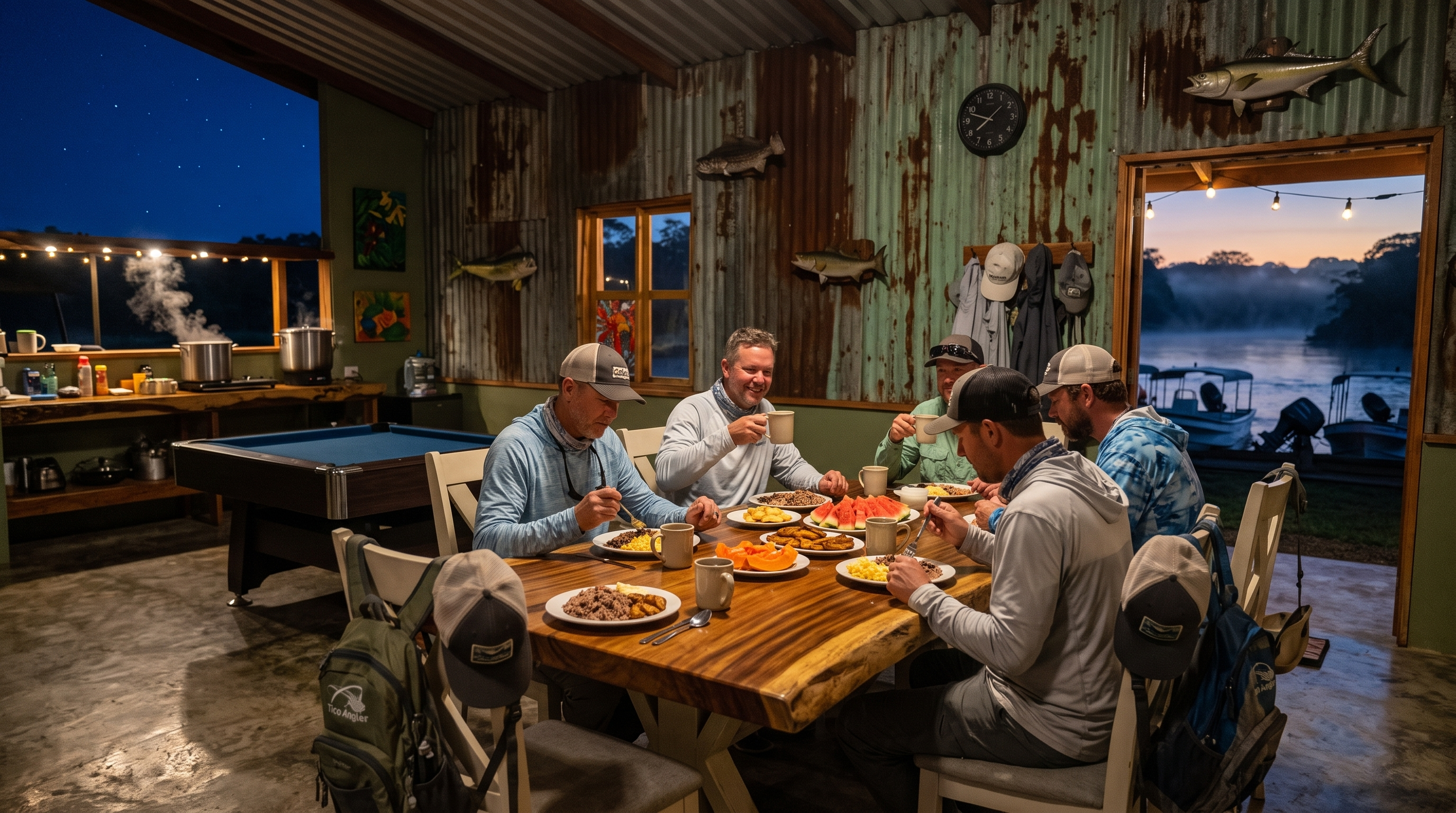
- Breakfast is served before departure around 6 a.m.
- The drive to a designated upstream launch is usually 35–45 minutes.
- Guides can provide casting instruction before and during the float.
- A normal river experience lasts roughly 4–6 hours.
- Water, requested drinks and snacks can travel in the coolers.
- After the boat is trailered, you return to the lodge to unwind and have supper.
Before 6 A.M.: Breakfast and Preparation
The day starts earlier than the first cast. Guests wake, eat breakfast and organize what they want for the river. Starting early is useful in tropical conditions: the air is generally kinder, the lodge is quiet, and there is time to deal with small adjustments before committing to several hours on the water.
Ask in advance what tackle is included in your particular package and what you should bring. A hat, polarized sunglasses, sun protection and quick-drying clothing are sensible basics. Our Costa Rica fly-fishing packing checklist covers the details.
The 35–45 Minute Drive Upstream
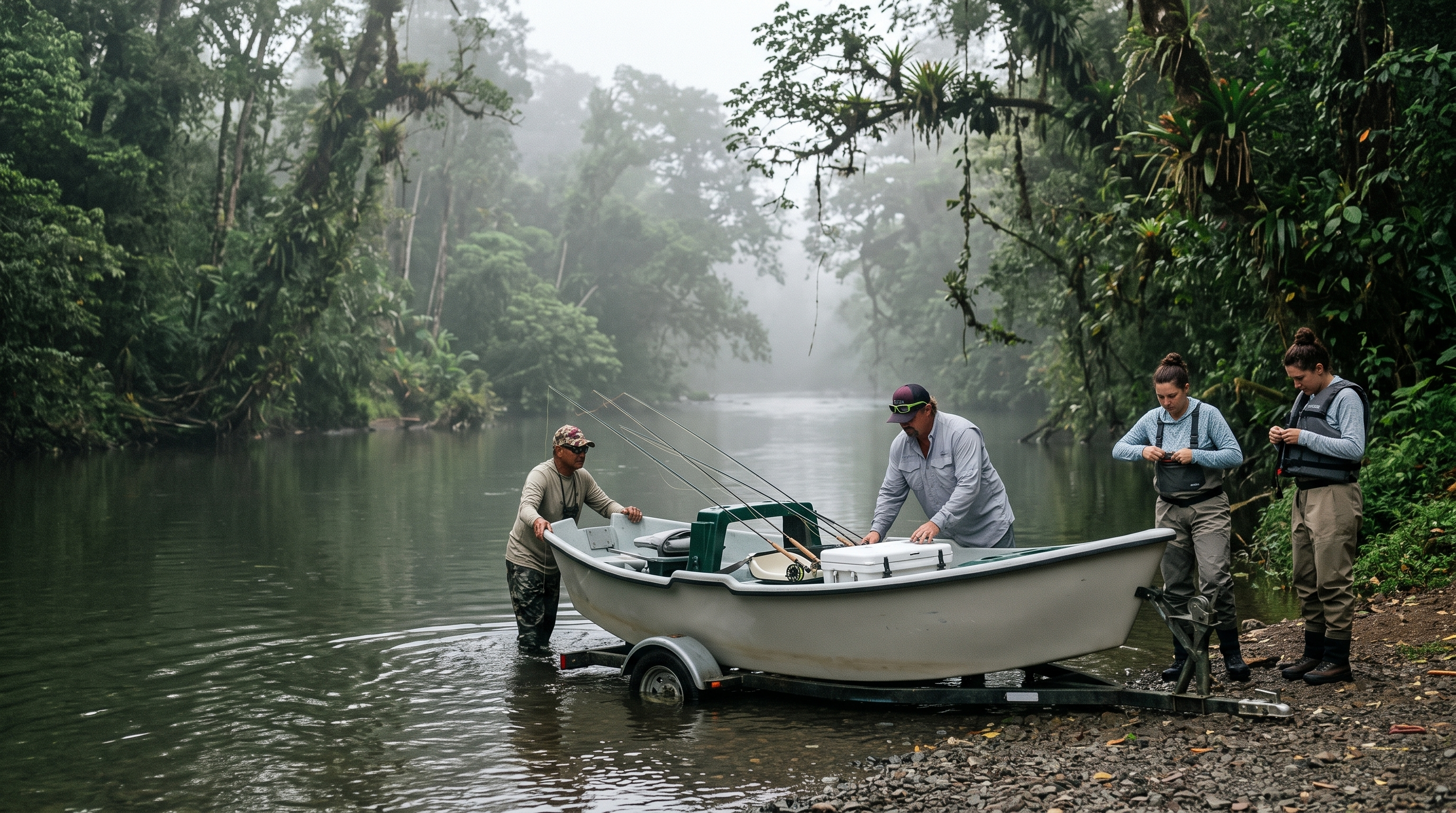
The launch point changes with river conditions and the day’s plan. Guests travel approximately 35–45 minutes upstream to a designated access point while the boat is transported. This is part of why local knowledge matters: a river is not a fixed attraction with one entrance and a guaranteed script.
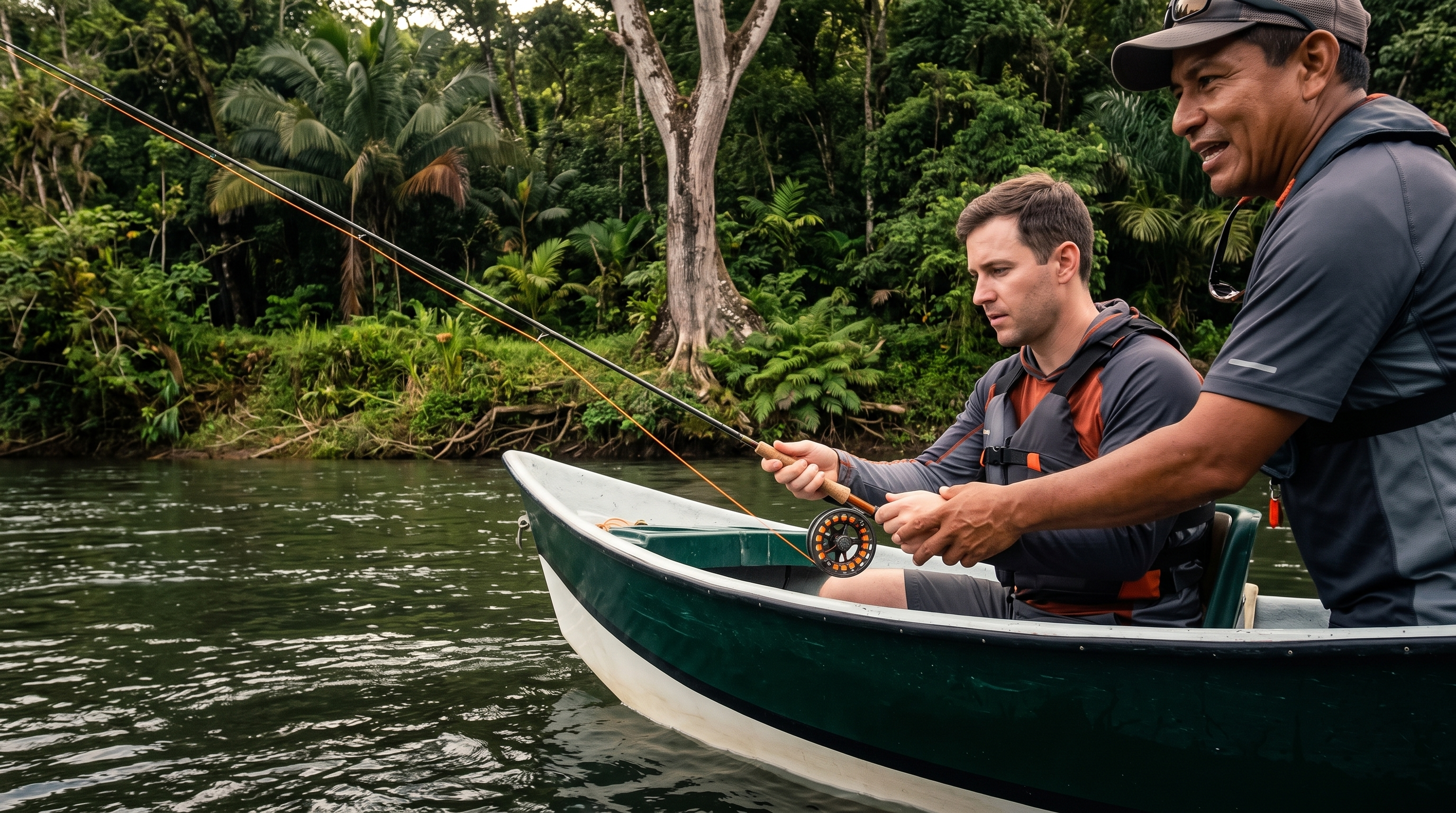
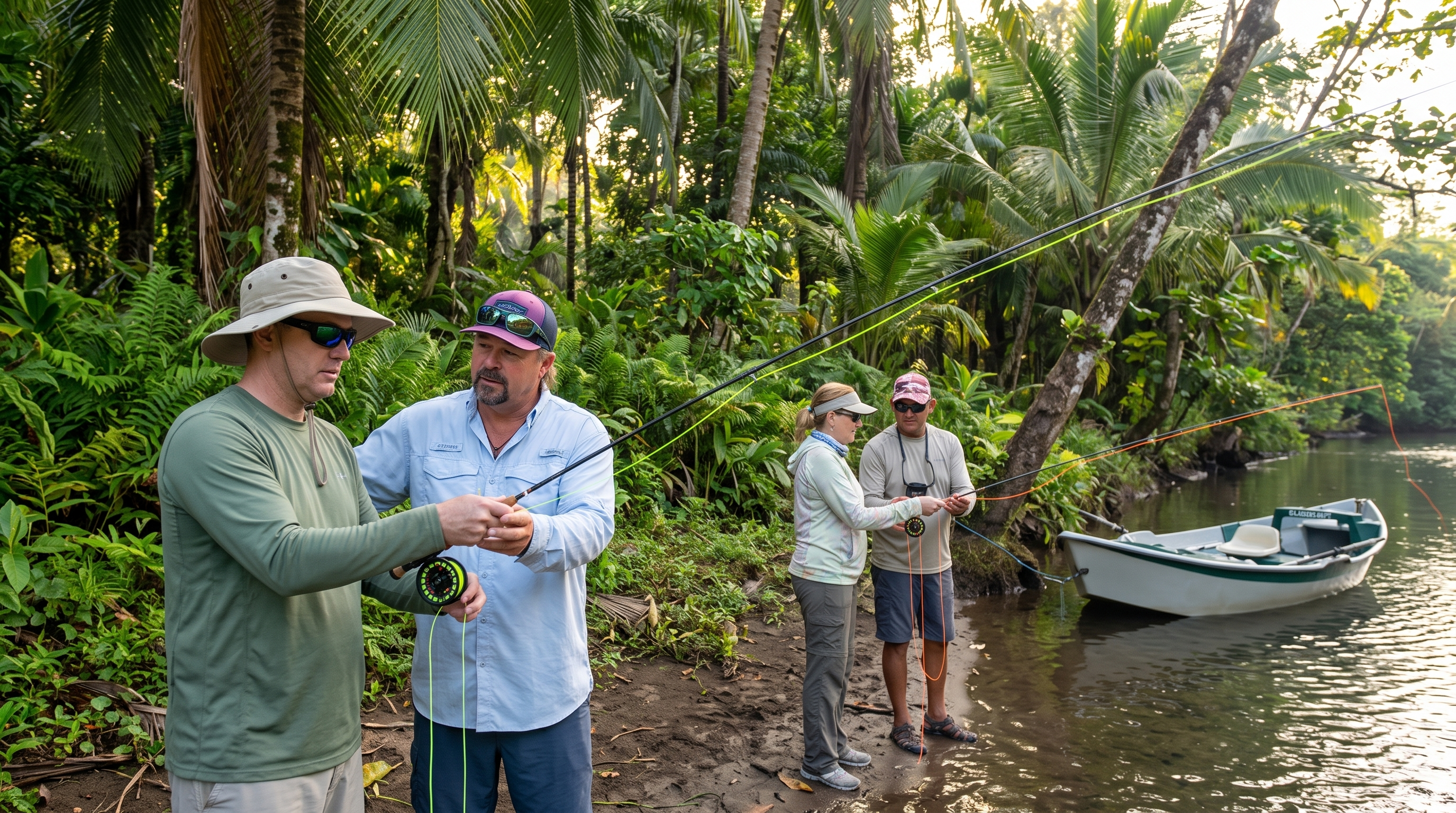
At the water, Gilberto and Dale help organize the boat, talk through safety and work with guests who need casting instruction. A beginner’s first useful cast does not have to be beautiful. It needs to deliver the fly safely to fishable water.
Watch How a Typical Morning Begins
The following Río Niño Facebook reel runs about 2 minutes 43 seconds. It opens with Gilberto standing in the boat at the lodge, then shows the boat going into the water, guests interacting with Gilberto and Dale, a few casting lessons and the group floating downriver.
“What a typical day would look like if you book a stay at The Lodge and take the 6AM morning fishing tour!”
Four to Six Hours on the Río Niño
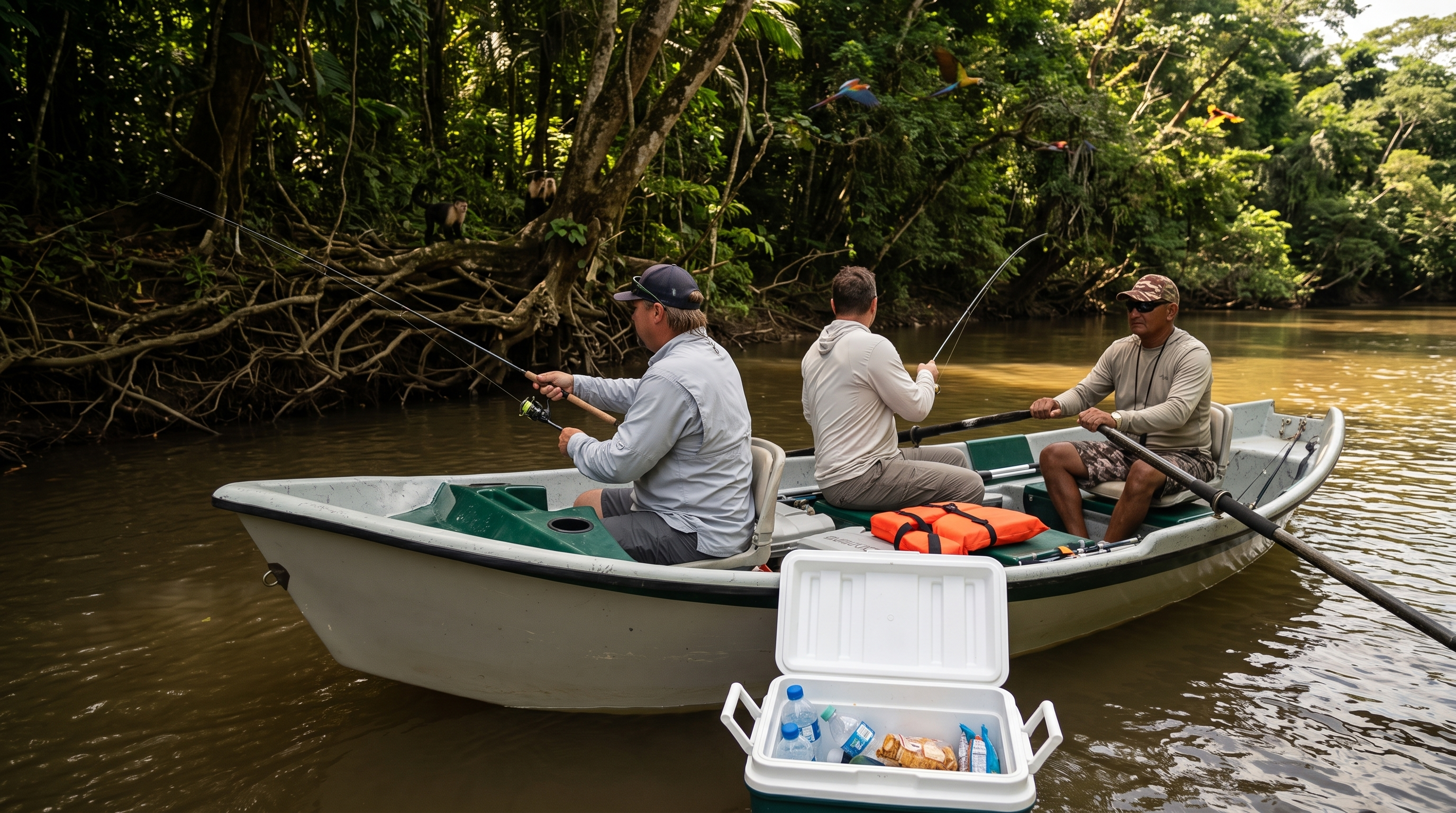
Once on the river, guests normally spend about four to six hours floating downstream. The pace creates time to learn. A guide can point out structure, explain where machaca or guapote may hold, and help correct a cast without turning the day into a formal classroom.
Machaca often reward flies that imitate natural food falling near overhanging vegetation. A local favourite is the green, fruit-shaped chilimate. Guapote—rainbow bass—are more structure-oriented and aggressive. Conditions decide what gets tied on; the guide’s eyes on that day’s water are more valuable than a rigid internet recipe.
What Is in the Cooler?
Water travels with the group, along with snacks and other requested drinks that can reasonably be brought. Tell the lodge what you need before departure. On a warm tropical float, drinking consistently is more useful than waiting until you feel thirsty.
Sun, humidity, hooks, uneven access points and moving water deserve respect. Follow the guide’s direction and review our Costa Rica river safety guide before travelling.
Returning to the Lodge
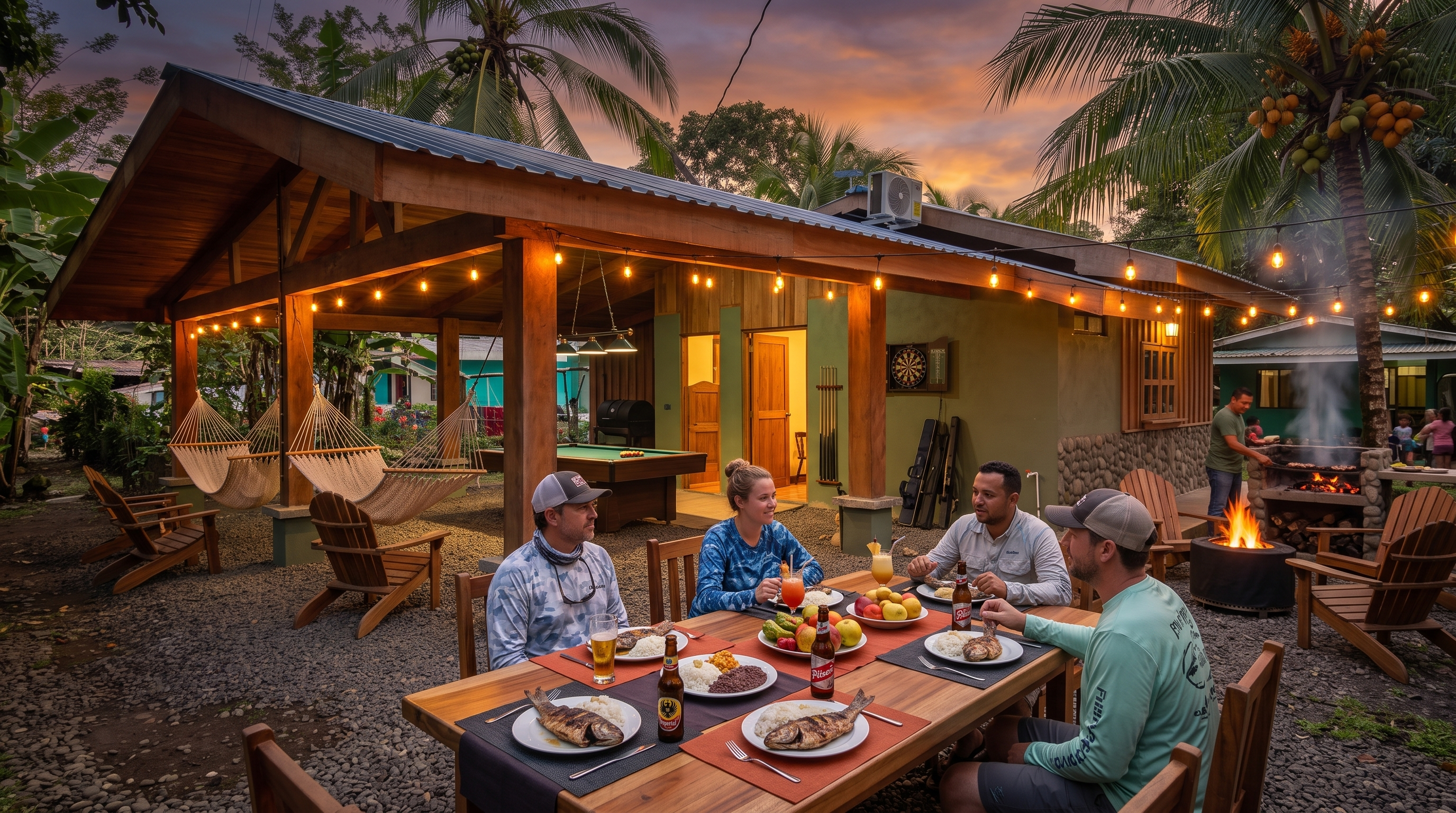
At the end of the float, the boat goes back onto the trailer and everyone returns to the lodge. Supper is provided. The rest of the evening is deliberately uncomplicated: television, lounge seating, a pool table, darts, cornhole, beverages, or time outside beneath the covered back area with a fire or barbecue when conditions permit.
The lodge sits beside Gilberto’s home in a local community. That changes the atmosphere. You are not sealed inside a generic resort bubble; you are around local Costa Ricans while still having a comfortable place to relax. When the coconuts on the property are ready, fresh coconut water may be part of the moment—not a scheduled attraction, simply life at the lodge.
A Typical Day at a Glance
Is This Trip Right for a Complete Beginner?
It can be. The best fit is someone comfortable with an early start, several hours on a small boat, tropical weather and taking direction. If mobility, dietary needs, medical concerns or previous casting experience affect the plan, discuss them before booking so the team can give an honest answer.
More experienced anglers still get a real fishing day. The difference is that beginners can receive more help with fundamentals while experienced guests focus sooner on presentation, reading water and species-specific tactics.
Choose a Río Niño Stay
Current packages range from a shorter introduction to a longer multi-day fishing stay. Inclusions and current availability can change, so review the live package page and confirm the details that matter to you.
- Classic: $700 per person—2 nights and 1 guided fishing day.
- Premium: from $1,200 per person—3 nights and 2 guided fishing days.
- Ultimate: $1,750 per person—4 nights and 3 guided fishing days.
Frequently Asked Questions
Do I need to know how to fly cast?
No. Beginners can receive practical instruction, although practicing basic pickup-and-laydown casts before the trip will help you spend more river time fishing.
What fish will beginners target?
Machaca and guapote are the two main species on the Río Niño. Other fish may be present, but no species or catch can be guaranteed.
Is all fly-fishing gear included?
Package details can change. Confirm rods, reels, flies and personal equipment directly with the lodge before travelling rather than assuming.
How long is the fishing day?
The river portion is generally four to six hours, plus breakfast, the upstream drive, launching and the return process.
Additional reading: How to Read Water · Costa Rica Fly Patterns · Trip FAQ.