

Affiliate disclosure: This article contains selected affiliate links. Río Niño Outfitters may earn a commission when a qualifying purchase is completed through one of these links, at no additional cost to you.
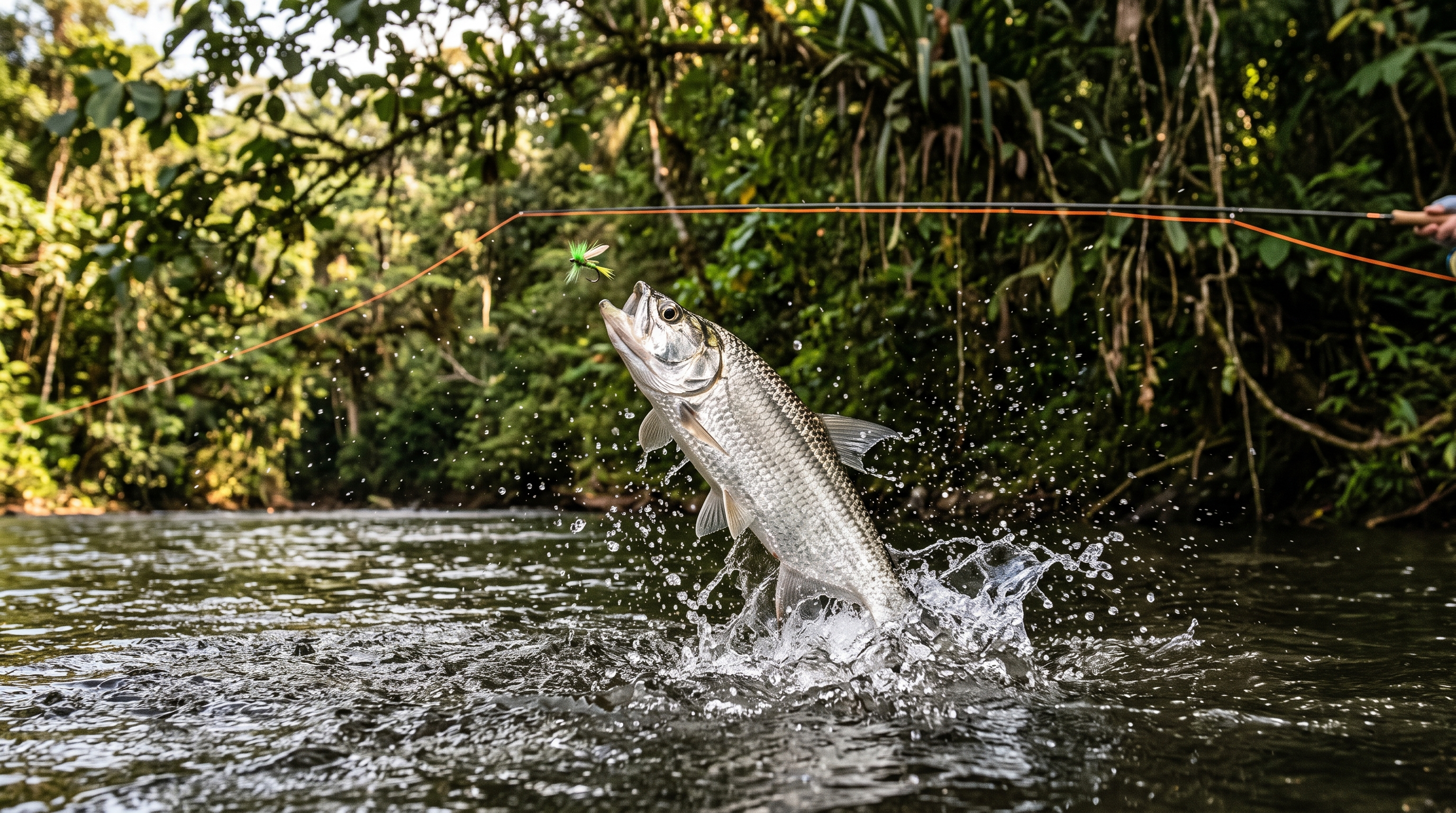
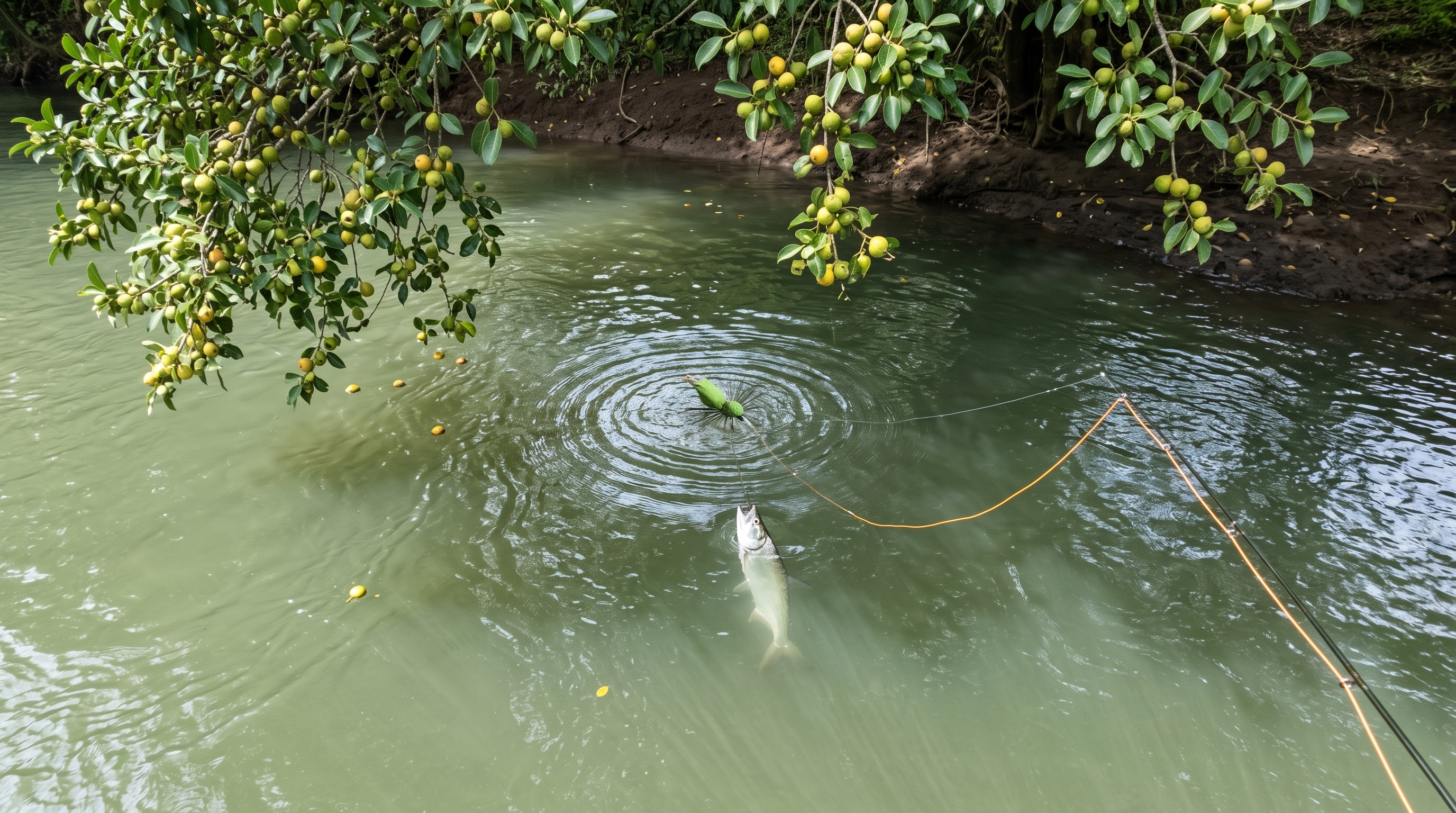
Most fly anglers are trained to imitate insects, baitfish, or crustaceans. Machaca fly fishing asks you to accept a stranger possibility: sometimes the meal falling into the river looks like fruit.
On the Río Niño in Northern Costa Rica, machaca and guapote are the two main species we plan around. They live in the same river system, but they do not ask for the same presentation. Guapote draw your attention toward structure and predatory ambushes. Machaca make you watch the trees.
Quick answer
- Machaca are strong freshwater fish in the genus Brycon, known for eating fruit, seeds, insects, and other available food.
- On the Río Niño, guides use a mix of flies but frequently turn to the chilamate: a green, fruit-shaped fly.
- Accurate casts tight to overhanging cover and a deliberate “plop” can imitate food falling from a tree.
- Machaca have serious teeth. Use appropriate tackle, control slack, and follow your guide’s handling instructions.
- Exact flies, leader construction, and fishing mode change with water and guide judgment.
What is a machaca?
Machaca is a common name used for several related Brycon species in Central America. In Costa Rica, FishBase lists Brycon costaricensis, a freshwater fish associated with river systems on the Pacific side of the country.
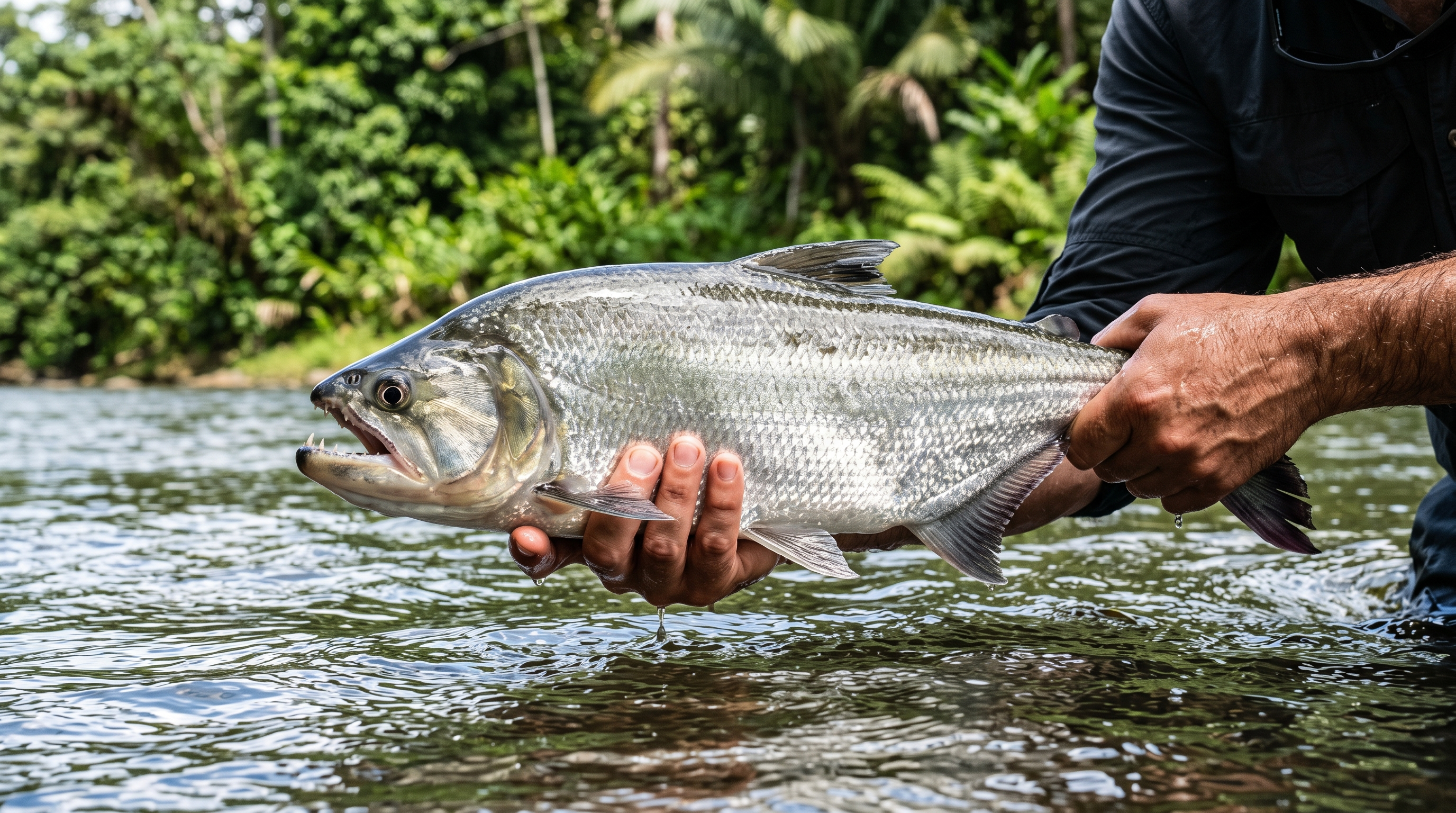
The fish has a deep, powerful body and a mouth that gets every angler’s attention. Those teeth are not decoration. Machaca can crush and cut plant material, and they can make short work of weak tippet or a careless finger.
The “fish that eats fruit” description is memorable, but machaca are opportunistic. Fruit and seeds can be important food, especially where trees overhang the water, but insects and other prey also matter. That varied diet is why a fly box built for machaca can include fruit imitations, terrestrials, and other patterns.
Machaca are built to pull hard and equipped to punish weak connections.
Why the chilamate fly matters on the Río Niño
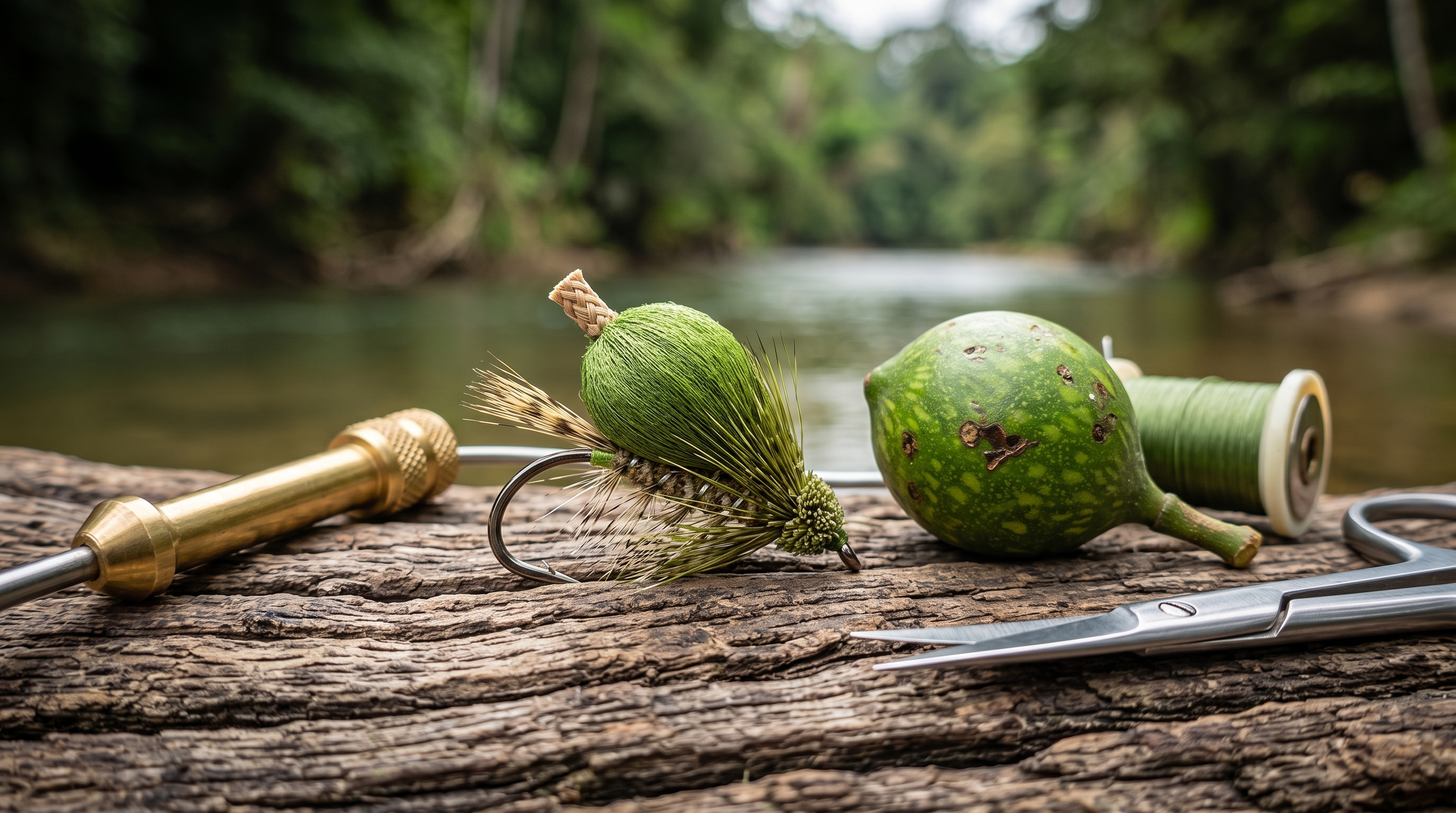
The guides carry and use a combination of patterns, because a jungle river does not follow one script all day. Still, there is one fly that appears again and again: the chilamate.
It is a green, fruit-shaped pattern designed to suggest the kind of natural food that can fall from riverside vegetation. The presentation is part of the imitation. A fruit does not land like a mayfly. It lands with weight. That is why a positive, audible landing can be more convincing than a delicate trout-style touch.
The name refers to the chilamate tree and its fruit. The fly is not magic, and “green fruit shape” should not become an excuse to ignore current, depth, shade, or fish behaviour. It is one tool that makes sense in the ecosystem.
For a wider fly selection, see our guide to the 10 must-have fly patterns for Costa Rica.
Where to look for machaca
Do not cast only at beautiful open water. Read the relationship between current and cover. A target may be a narrow lane beside a branch, the soft water below a faster tongue, or a shaded bank where a falling fruit would naturally enter.
Our full guide to reading water for fly fishing explains how to identify seams, structure, depth changes, and feeding lanes before making the first cast.
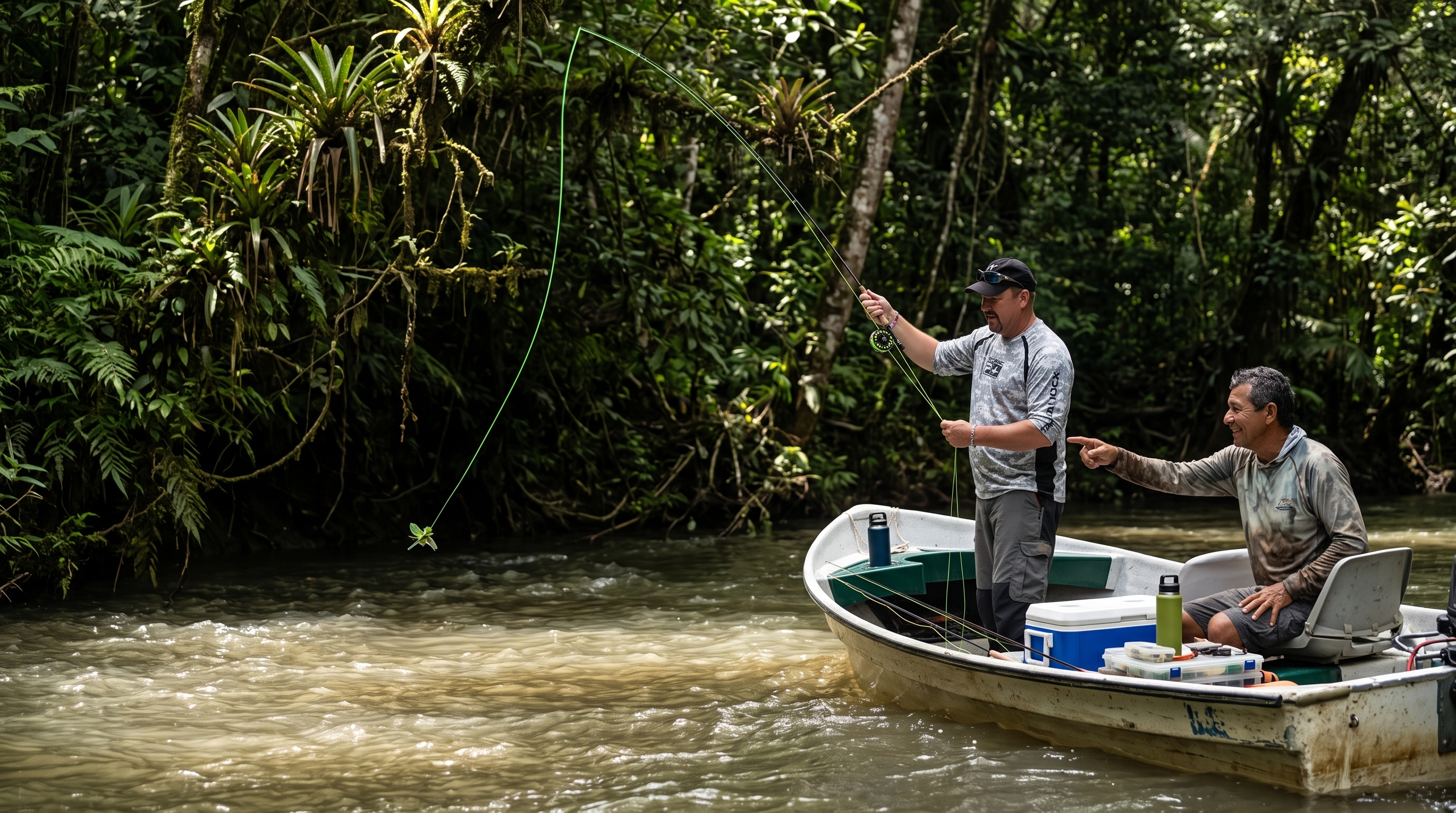
How to present a fruit fly to machaca
- Find the lane before casting. Look for a clean path under or beside the canopy and identify where the current will take the fly.
- Plan the back cast. Trees are not background scenery here. Adjust the casting angle, use a roll cast where appropriate, or follow the guide’s boat positioning.
- Land with purpose. A chilamate imitation often works by suggesting something substantial dropped from above. Aim for an intentional plop, not uncontrolled line slap.
- Manage slack immediately. Too much slack delays the connection; too little can drag the fly unnaturally out of the lane.
- React to the take. Keep the rod under control and use the hook-setting motion your guide recommends for that fly and angle.
- Get the fish away from trouble. Machaca pull hard. Apply appropriate side pressure without exceeding the tackle.
Accuracy is worth more than maximum distance
A sixty-foot cast into the wrong lane is still wrong. The useful cast is the one that lands close enough to cover to look natural without decorating the tree. Practice hitting plates or hoops at several angles before the trip.
A double haul can help—but it is not the whole answer
A controlled haul helps generate line speed and deal with larger flies. It cannot repair a poor casting lane or rushed timing. If you want to practice before Costa Rica, use our double haul casting guide.
Machaca tackle: useful ranges, not one sacred setup
This is where honest advice needs a boundary. Exact rods, leaders, fly weights, and bite protection depend on water level, wind, fishing mode, fly choice, and the guide’s system. We are not going to invent a Río Niño formula and pretend it is universal.
| Component | Common starting point | Why it may change |
|---|---|---|
| Rod | Many traveling anglers use a 6–8 weight class for machaca fishing. | Fly size, wind, casting space, and the possibility of other species affect the choice. |
| Line | A weight-forward tropical floating line is a practical general option. | Water depth and fly behaviour may call for a different approach. |
| Leader/tippet | Strong, abrasion-aware material with a bite strategy appropriate to the fly. | Machaca teeth, water clarity, hook size, and guide preference all matter. |
| Reel | Reliable drag and enough backing for the outfit. | Balance and corrosion resistance matter in tropical travel. |
Browse general fly-fishing equipment through Cabela’s, and review the Costa Rica packing checklist before committing to extra gear.
When is the best time for machaca fly fishing?
Costa Rica does not offer one nationwide freshwater season. Rainfall patterns differ by region, and local river conditions change within a season. Water level, clarity, fruit availability, and recent weather can influence how the day fishes.
That is why “best month” answers can be misleading. Start with our month-by-month freshwater guide, then ask about current Río Niño conditions before the trip.
Year-round opportunity does not mean identical tactics year-round. A higher river may change access and holding water. Clearer or lower water may change approach and leader decisions. A local guide adjusts the day instead of forcing the calendar’s expected pattern.
Machaca and guapote in the same trip
Machaca and guapote are the main targets on the Río Niño, and the contrast makes the fishery interesting.
- Machaca: watch canopy, feeding lanes, fruit drops, current seams, and surface response.
- Guapote: focus more heavily on predatory structure, ambush water, and a fly that can trigger an aggressive response.
The same float may move through both kinds of opportunity. That is one reason guides carry a combination instead of betting the day on one green fly. Read our complete guapote fly fishing guide to prepare for the other main target.
Boat, wade or float?
Río Niño trips may involve drift-boat fishing, wading, or scenic float elements depending on conditions and the package. There is no prize for insisting on one method when the river says otherwise.
A boat can improve positioning and cover water. Wading may offer a focused angle in suitable sections. Either way, listen to the guide about footing, branches, current, wildlife, and casting space. Tropical rivers deserve respect even when the surface looks calm.
Review the Costa Rica river safety guide before arrival.
Landing and handling machaca safely
Machaca teeth change the handling conversation. Keep fingers away from the mouth, use appropriate tools, and let the guide control the fish when asked.
- Keep the fish in or close to the water while preparing for release.
- Wet hands before touching the fish.
- Support the body and avoid squeezing.
- Remove the hook efficiently with suitable pliers.
- Do not extend the air-time for repeated photos.
- Release only when the fish is able to swim under its own power.
Responsible handling is part of sustainable fly fishing travel in Costa Rica. A memorable photo should not cost the fish its recovery.
Do you need a guide?
A guide does more than point at water. Local knowledge helps with access, safe movement, current conditions, fly changes, casting angles, and the small visual clues that are easy to miss on a first tropical freshwater trip.
Licensing requirements can depend on the location and fishing method, and online summaries are not always consistent. Confirm the current requirement with Río Niño Outfitters and INCOPESCA before fishing. Do not assume a coastal answer automatically applies to an inland river trip.
Plan a Río Niño machaca trip
Tell us your travel window, experience level, and whether you want a fishing-first package or a broader Northern Costa Rica stay. We will help match the plan to current river conditions.
Compare fishing packages Contact Río Niño Outfitters Learn about the Río NiñoFinal thought
Machaca fly fishing makes sense when you stop trying to turn a Costa Rican jungle river into a trout stream. Look up. Read the current. Expect tight casting lanes. Let the fly land like something that actually fell from a tree.
The chilamate imitation is part of the story, but the real advantage is local judgment: knowing which tree matters, which seam is alive, when to change patterns, and when the next bend is more promising than another cast.
Frequently asked questions
What do machaca eat?
Machaca are opportunistic feeders. Depending on species, habitat, and season, their diet can include fruit, seeds, insects, and other available food.
What is a chilamate fly?
It is a green, fruit-shaped fly used to imitate chilamate fruit or similar food falling from riverside trees. On the Río Niño, guides use it frequently along with other patterns.
What rod weight is best for machaca?
A 6–8 weight is a common general range, but the correct setup depends on fly size, wind, water, fishing mode, and guide preference. Ask the outfitter before buying or packing.
Are machaca dangerous to handle?
They have powerful teeth and should be handled carefully. Keep fingers away from the mouth, use proper tools, and follow the guide’s instructions.
Can you catch machaca year-round in Costa Rica?
Fishing opportunities exist across the year, but water level, clarity, rainfall, and feeding conditions change. Tactics and access may differ by month.
What other fish are caught on the Río Niño?
Guapote are the other main fly-fishing target. Other species may occur, but machaca and guapote are the fish the Río Niño program primarily plans around.